
The “Why Does This Look Like Three Languages in a Trench Coat?” Guide
Learn Hiragana, Katakana, and beginner Kanji the right way — with less panic, less fluff, and a lot more “ohhh, okay, I get it now.”

YOU WANT TO LEARN JAPANESE !
Great. First, you need to stop treating the writing system like an optional side quest.
If you follow this guide from top to bottom, you will understand how Japanese writing actually works and what to learn first. Not someday. Not after three productivity apps and a color-coded Notion dashboard. Now.
This is still going to take effort. Japanese does not become easy just because you bought a cute notebook. But if you start in the right order, it becomes a lot less chaotic — and way more efficient.
So that is the deal here: we start from zero, we keep it practical, and we move in the order that gives you the fastest real payoff.
| Just because we’re doing it right doesn’t mean it has to be slow. |
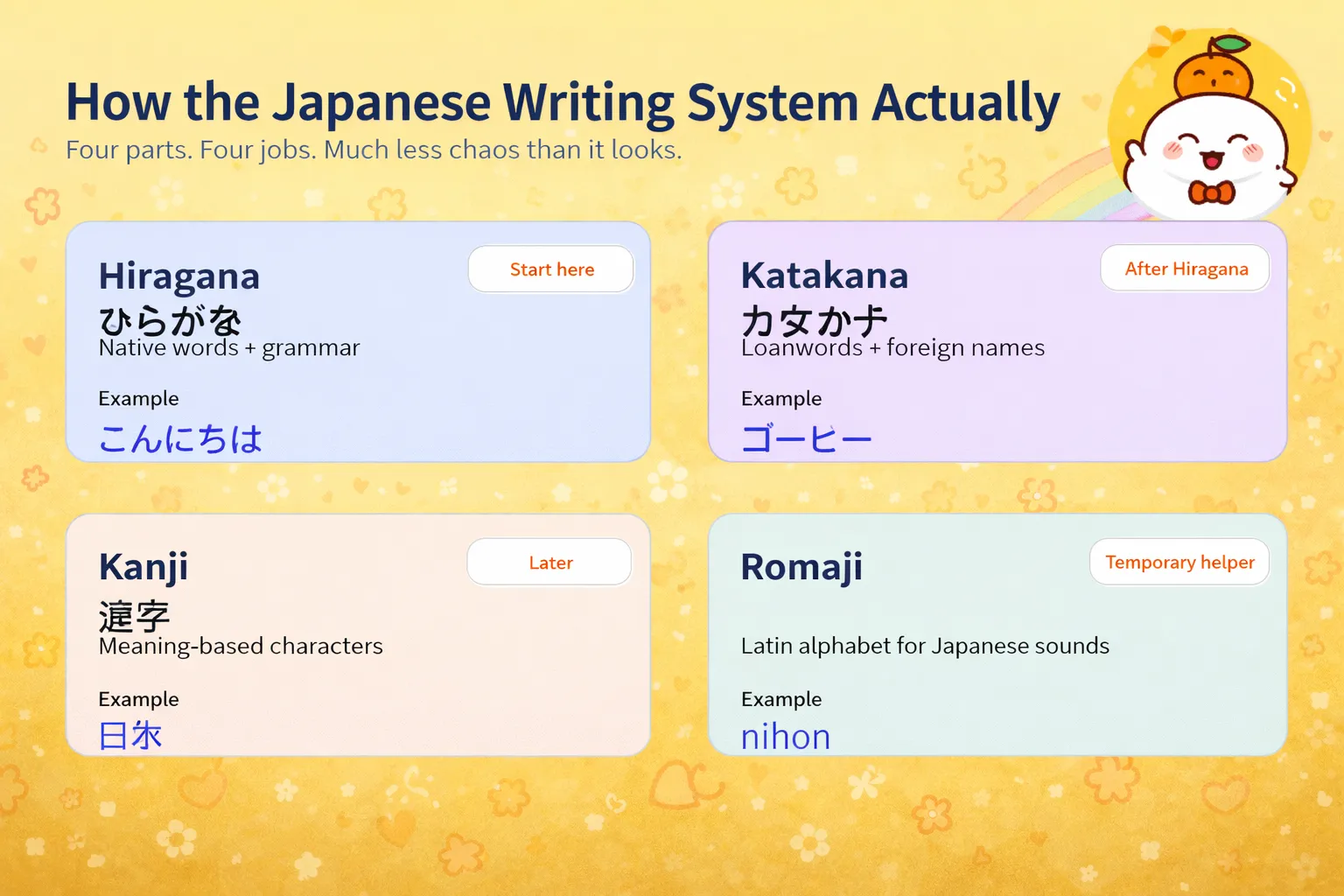
Figure 1. Japanese is not one alphabet. It is a system with different scripts doing different jobs.
Stage 1 — Learn the Rules Before You Panic
| Estimated time | 10–15 minutes |
| What you’ll be able to do | Tell Hiragana, Katakana, Kanji, and Romaji apart — and stop thinking Japanese is one giant mystery font. |
What Is the Japanese Alphabet?
When most people search for the Japanese alphabet, they are not asking for a linguistics lecture. They are asking: “What am I looking at, and where do I start?” That is the real question, so that is the one we are answering.
If you want the bird’s-eye-view first, start with MochiKana’s Japanese Alphabet hub. If you want the slightly bigger beginner roadmap, open Learning Japanese – Guideline for beginner.
Does Japanese Have an Alphabet Like English?
Not really. English uses one alphabet. Japanese uses multiple scripts together. So instead of one neat little set of letters, you get a system where each script has its own job.
That is why Japanese feels dramatic at first. You are not learning a single alphabet. You are learning how four writing tools work together. Once that clicks, the panic level drops immediately.
Meet the 4 Parts of the Japanese Writing System
Here is the short version. Hiragana handles grammar and many native words. Katakana handles foreign loanwords and modern imported vocabulary. Kanji carries meaning. Romaji is the temporary bridge written in the Latin alphabet.
Need the cleaner version with examples? Read the Japanese Writing System guide.
| Read next: Now that the system makes more sense, go learn the script that actually gets you reading fastest: Hiragana. |
Okay. Enough theory. Time to get your first real win.
Stage 2 — Hiragana: Your First Real Win
| Estimated time | 1 day to 1 week |
| What you’ll be able to do | Read every basic Hiragana character, even if you are still slow. Slow is fine. Cheating is not. |
If you are a true beginner, start with Hiragana. Not Kanji. Not “useful anime phrases.” Not whatever random phrasebook page looked fun. Hiragana.
Why? Because Hiragana teaches you the sound system, shows up in grammar, and gets your eyes used to what Japanese actually looks like. It is the foundation. Skip it, and everything later becomes unnecessarily annoying.
The basic Hiragana chart has 46 core characters. That sounds like a lot until you remember you have memorized Wi-Fi passwords, song lyrics, and entire embarrassing text threads without being asked.
If you want the fast path, start with the Hiragana lessons. If you want the overview page, open Learn Hiragana Online Free. If you need a visual backup while you study, keep the Hiragana chart nearby.
| Do it: Start with the Hiragana lessons and get to the point where you can read every basic character without peeking. |
| Practice it: When your brain starts melting, switch to the writing game and turn review into something slightly less painful. |
You can read the basics now. Nice. Let’s make that useful in the real world.
Stage 3 — Katakana: Same Sounds, Different Vibes
| Estimated time | 2–4 days |
| What you’ll be able to do | Read common Katakana words like menus, brand names, and borrowed English vocabulary without feeling personally attacked. |
Katakana uses many of the same sounds as Hiragana, but it shows up in a completely different kind of vocabulary. This is the script you need for words like コーヒー, アメリカ, メニュー, and コンピューター.
This is where a lot of English-speaking learners get a little confidence boost. Suddenly Japanese starts throwing words at you that you can almost recognize. That feeling? Keep it. It helps.
Katakana is also everywhere in modern Japanese. Food packaging, apps, tech, fashion, brands, pop culture — it is booked, busy, and not optional.
Ready to move? Jump into the Katakana lessons or browse Learn Katakana Online Free if you want the overview first.
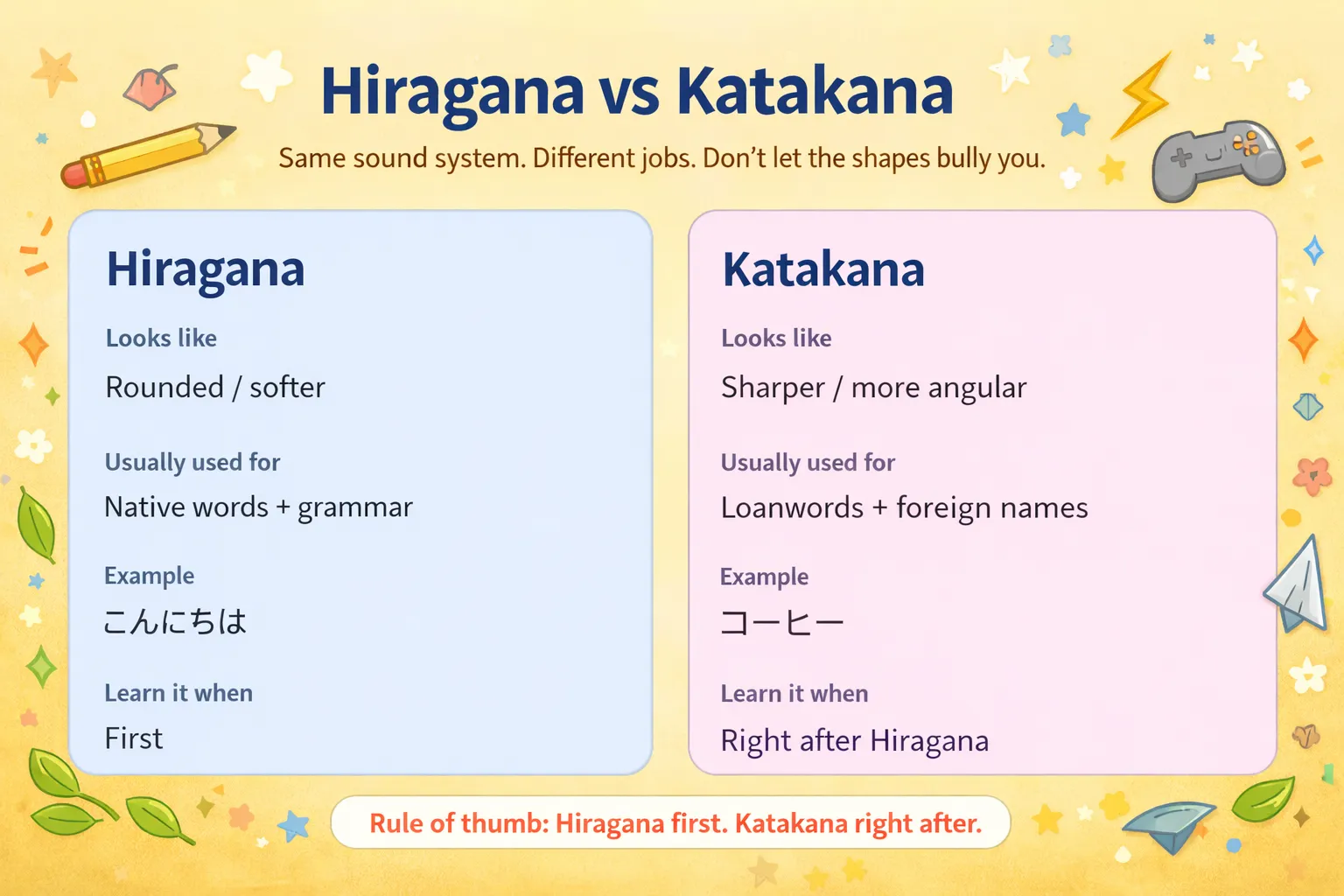
Figure 2. Hiragana and Katakana use similar sounds, but they do very different jobs.
| Read next: Once Hiragana feels comfortable, slide into Katakana lessons while the sound system is still fresh in your head. |
Cool. Now we talk about the thing everyone is scared of for no reason and for good reason at the same time.
Stage 4 — Kanji: Not the First Boss, But Definitely a Boss
| Estimated time | 1–3 weeks to start building momentum |
| What you’ll be able to do | Understand what Kanji does, begin learning the most common beginner characters, and stop treating Kanji like a problem for Future You. |
Kanji is the meaning-heavy part of Japanese writing. It looks intimidating because, honestly, there is a lot of it. But the biggest beginner mistake is pretending that means you should ignore it until later. Later turns into never, and then everything hurts.
That said, Kanji is still not where you begin. You begin with Hiragana. You add Katakana. Then you start basic Kanji once the writing system stops looking like visual noise.
Your first goal with Kanji is not to become a samurai wizard. It is to understand what the characters do and begin building a small, useful base.
When you are ready, start with Learn Kanji & Japanese Vocabulary. Save Kanji123 for later, when you actually want to test yourself instead of just vibes-checking your progress.
| Do it later, not never: When Hiragana and Katakana stop feeling cursed, begin Kanji & Japanese Vocabulary and let the system keep building naturally. |
So what is the actual order? Glad you asked.
Stage 5 — The Fastest Beginner Plan That Still Makes Sense
| Estimated time | 15–20 minutes a day |
| What you’ll be able to do | Follow a repeatable routine: see it, say it, write it, review it, and use it in real words instead of pretending passive scrolling counts as studying. |
Here is the order: Hiragana first. Katakana second. Basic Kanji after that. This is not just the “traditional” order. It is the order that saves you the most confusion later.
And here is the routine: see the character, say it out loud, write it once or twice, review it tomorrow, then use it in a real word. That is it. Not glamorous. Very effective.
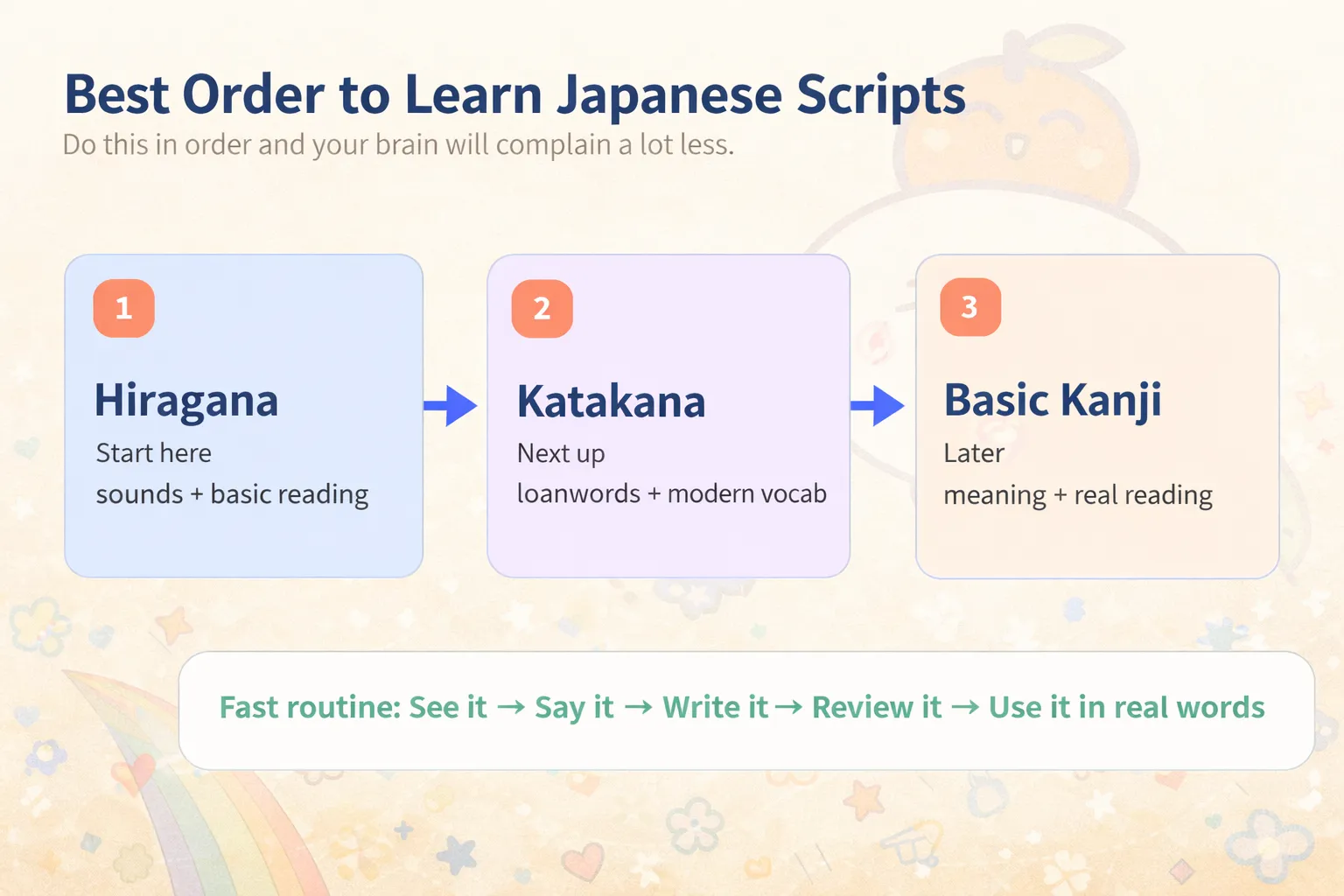
Figure 3. Best beginner order: Hiragana → Katakana → Basic Kanji.
Want a clean place to begin today? Start with Hiragana lessons, continue to Katakana lessons, and use the writing game when your motivation starts acting suspicious.
| Do this today: Open the Hiragana lessons, finish one focused session, and stop overthinking the whole language for at least 20 minutes. |
Common Beginner Mistakes (So You Can Avoid Looking Back and Saying “Well, That Was Dumb”)
· Leaning on Romaji for too long. It helps at the beginning, then slowly becomes a trap.
· Trying to learn everything in one weekend. Your brain is not a suitcase; stop overpacking it.
· Skipping writing practice entirely. Recognition and recall are not the same thing.
· Jumping into Kanji before kana. Ambition is cute. Sequence still matters.
Quick FAQ
Is there a Japanese alphabet A to Z?
No. Japanese uses multiple scripts instead of one alphabet like English.
Should I learn Hiragana or Katakana first?
Hiragana first. Every time.
Is Kanji part of the Japanese alphabet?
Not exactly — but it is an essential part of the Japanese writing system.
How long does it take to learn the basics?
You can learn basic Hiragana and Katakana surprisingly fast if you study consistently and stop treating review like optional cardio.
Last thing, and this part matters.
What to Learn Next
Once you understand the Japanese alphabet, do not just stand there admiring yourself. Use the momentum. Start with Hiragana, move into Katakana, keep writing, then begin beginner Kanji when your reading foundation is solid enough to support it.
The clean next-step path is simple: Hiragana lessons → Katakana lessons → writing game → Learning Japanese – Guideline for beginner → Kanji & Japanese Vocabulary. Later, when you want to test yourself, go to Kanji123.
| Start here: Open the Japanese Alphabet hub or jump straight into Hiragana and begin. Momentum beats perfect planning every single time. |
The Japanese writing system gets much easier once you learn it in the right order. Build your foundation first, and reading Japanese will feel far less confusing from here on out.

Pingback: Learn Katakana: Step-by-Step Guide for Beginners - Kanji123
Pingback: 7 Ways to Learn Kanji: Which Study Method Is Best for You?
Pingback: Kanji Stroke Order: The Beginner-Friendly Rules
Pingback: Learn Hiragana and Katakana With The Best Free Resources
Pingback: 10 Katakana Charts You All Need
Pingback: Kanji Learning Mistakes Every Beginner Should Avoid
Pingback: What is the Japanese Language Proficiency Test (JLPT)?
Pingback: Japanese Grammar: Friendly Guide for Beginners - Kanji123
Pingback: Japanese Grammar: The Best Free Online Resources to Bookmark - Kanji123
Pingback: Best Kanji Learning Program for Beginners
Pingback: Japanese Numbers and How to Count (Almost) Anything
Pingback: Learn Japanese: A Smart Roadmap That Actually Works - Kanji123
Pingback: Kanji Radicals and Mnemonics: The Only Strategy That Sticks.
Pingback: Japanese Study Plan: A Daily Routine That Actually Works - Kanji123
Pingback: How to Install Japanese Keyboard
Pingback: How to Make a Reservation in Japanese: Step-by-Step
Pingback: Japanese Honorifics and How to Use ALL of Them
Pingback: Katakana Chart With Stroke Order - Kanji123