
What It Is, Why It Matters, and How to Start Without Panic
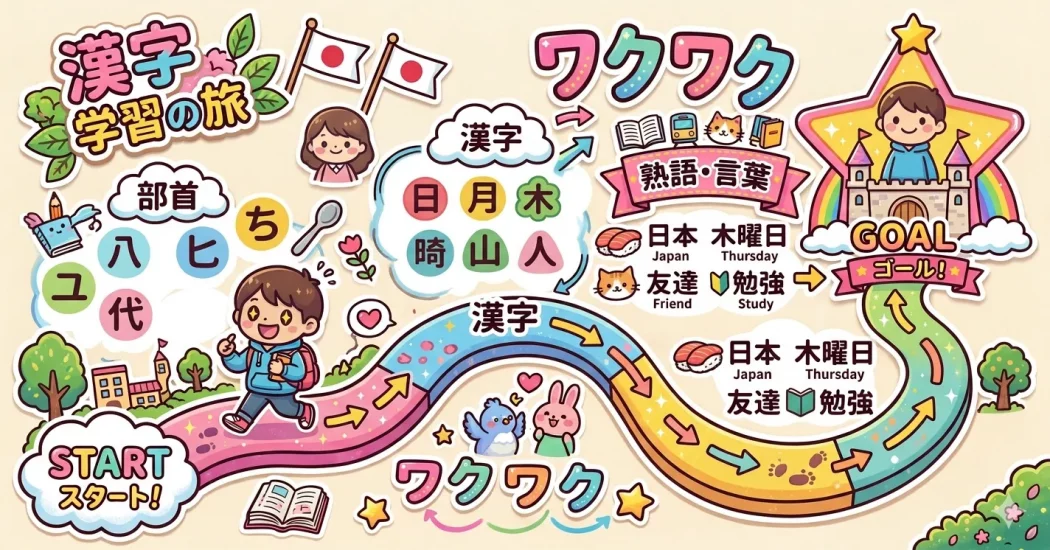
If you are brand new to Japanese, kanji probably looks like the part of the language that shows up late, steals the spotlight, and then refuses to explain itself. That reaction is fair. Kanji can feel like the moment Japanese stops being “interesting” and starts feeling like a personal attack. But here is the good news: kanji for beginners does not have to mean panic, chaos, and making dramatic promises to “come back to it later.” It just means starting in the right order, with the right expectations, and without trying to absorb the entire writing system in one caffeine-fueled weekend.
If you still need the bigger picture first, spend ten calm minutes with MochiKana’s Japanese alphabet hub or the broader Learning Japanese – Guideline for beginner. Those pages make the full writing system feel less like three languages in a trench coat and more like one system with multiple jobs.
This guide is for people who want the practical answer to a very normal beginner question: what is kanji, why does it matter, and how do I start learning it without wrecking my motivation in week one?
Featured snippet version:
Kanji for beginners means learning what kanji is, why Japanese uses it, and how to start with common characters after hiragana and katakana. Beginners should not try to memorize all kanji at once. A better path is to learn common kanji in real words, notice recurring radicals, and review them consistently through vocabulary and quizzes.
What Is Kanji, Exactly?
Kanji are characters used in Japanese writing to represent meaning. Unlike hiragana and katakana, which mainly represent sounds, kanji carries both meaning and sound. That is why one character can feel “heavier” than kana. It is not just telling you how something is pronounced. It is also helping signal what kind of word you are looking at.
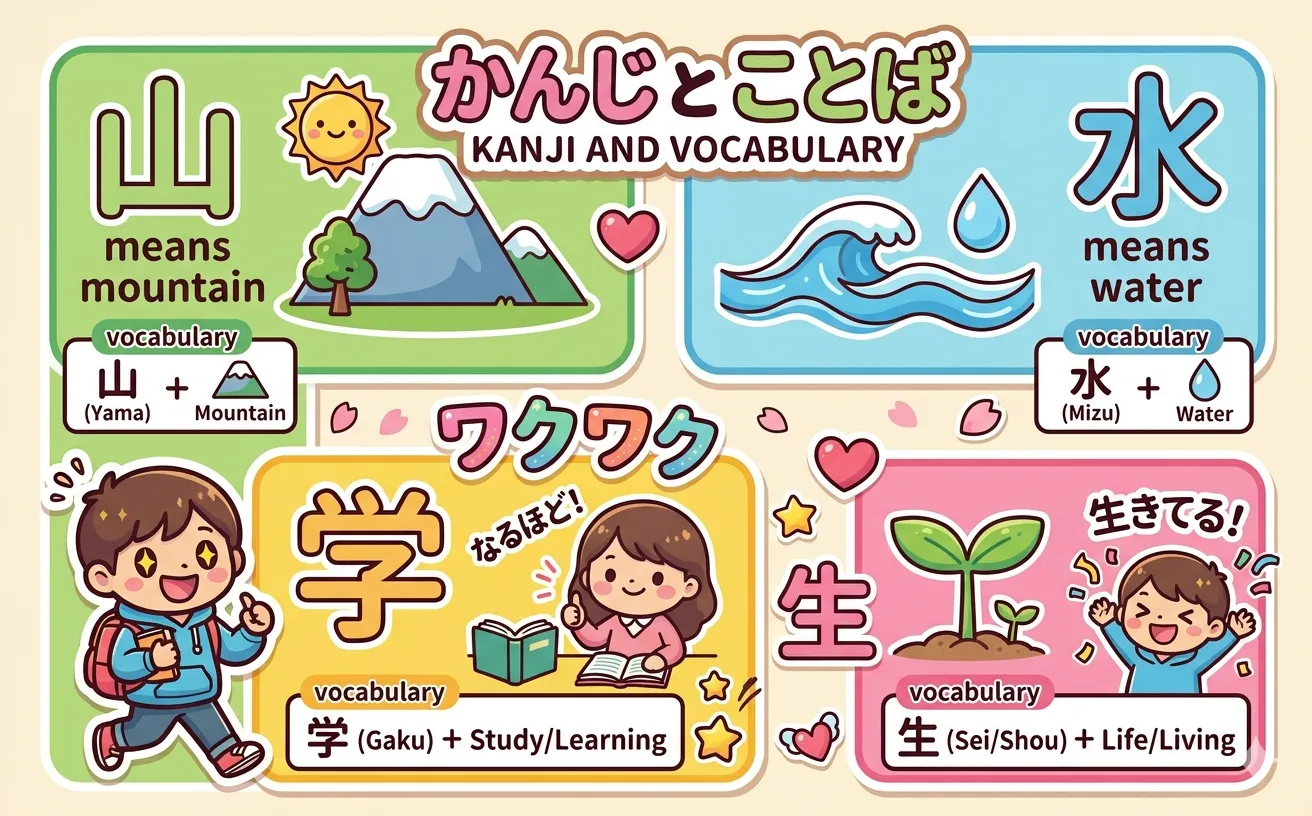
For example:
· 山 means mountain
· 水 means water
· 学 relates to study or learning
· 生 can relate to life, birth, living, or being raw depending on the word
That alone explains why kanji feels intense at first. One character often does more work than a kana symbol, so beginners are not imagining the complexity. But they are often imagining the wrong kind of complexity. The problem is not that kanji is impossible. The problem is that people try to learn it with no system at all.

Why Japanese Uses Kanji at All
This is where beginners ask the very reasonable question: if Japanese already has hiragana and katakana, why not just use those? Because Japanese without kanji gets messy fast. A lot of words sound similar, and kana-only text can become harder to parse because your eye loses many of the visual clues that make meaning obvious.
Kanji helps Japanese writing by:
· making words easier to distinguish
· reducing ambiguity
· packing meaning into fewer characters
· making reading faster once you know the common forms
So yes, kanji is harder upfront. But it also makes Japanese easier to read later. That is the trade-off, and it is a pretty good one once the system starts clicking.
Kanji Is Not the Japanese Alphabet, But It Is Part of the System
Kanji is not “the Japanese alphabet,” because Japanese does not really work like English in the first place. If you want the cleaner overview, the Japanese Writing System guide walks through how hiragana, katakana, kanji, and romaji fit together.
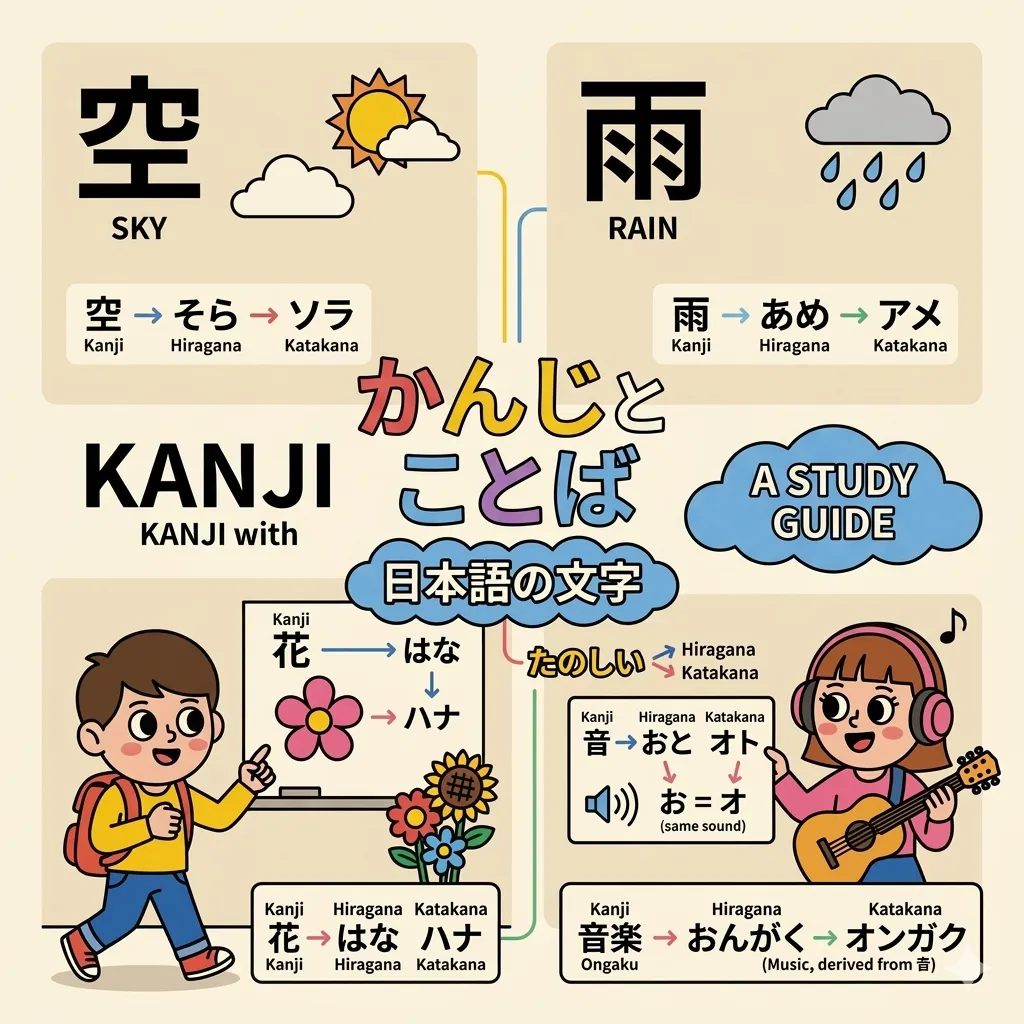
The beginner-safe version looks like this:
· Hiragana handles grammar and many native words
· Katakana handles loanwords, emphasis, and modern imported vocabulary
· Kanji carries meaning-heavy roots and content words
· Romaji is a temporary support system, not a long-term home
That is why the order matters. Start with Learn Hiragana lessons, then move to Learn Katakana lessons, and then begin basic kanji once the writing system stops looking like decorative static.
Why Kanji for Beginners Feels So Intimidating
Because honestly, kanji has terrible first impressions. There are a lot of characters. Many have more than one reading. Some look suspiciously similar. None of them behave like the alphabet most English speakers grew up with. And the first few weeks can feel slow because your brain is learning a new visual logic, not just new “letters.”
Beginners often think the correct response is either:
· memorize aggressively and hope for the best
· avoid kanji until “later”
· bounce between five methods in one week and call it a system
All three are great ways to make kanji feel worse. A better move is much less dramatic: understand what kanji does, get comfortable seeing it, and start building familiarity with common characters that actually appear in beginner Japanese.
When Should Beginners Start Learning Kanji?
Earlier than most people think, but definitely not first.
That distinction matters. You should not start your Japanese journey with kanji before basic hiragana is usable. If kana still feels painful, fix that first with Learn Hiragana Online Free, Learn Katakana Online Free, or keep a Hiragana chart nearby while you practice.
But you also should not postpone kanji forever. A lot of beginners tell themselves they will “do kanji later,” which is how later quietly turns into never. The better sequence is simple:
· learn hiragana first
· add katakana while the sound system is still fresh
· start basic kanji once kana stops feeling cursed
That order keeps the workload manageable and gives you the fastest real payoff.
What Should You Learn First in Kanji?
Not rare newspaper kanji. Not cool-looking kanji from anime screenshots. Not random symbols you found on Pinterest because they “looked deep.”
Start with common, useful beginner kanji — the ones that appear again and again in basic vocabulary, beginner reading, and early JLPT-style material.
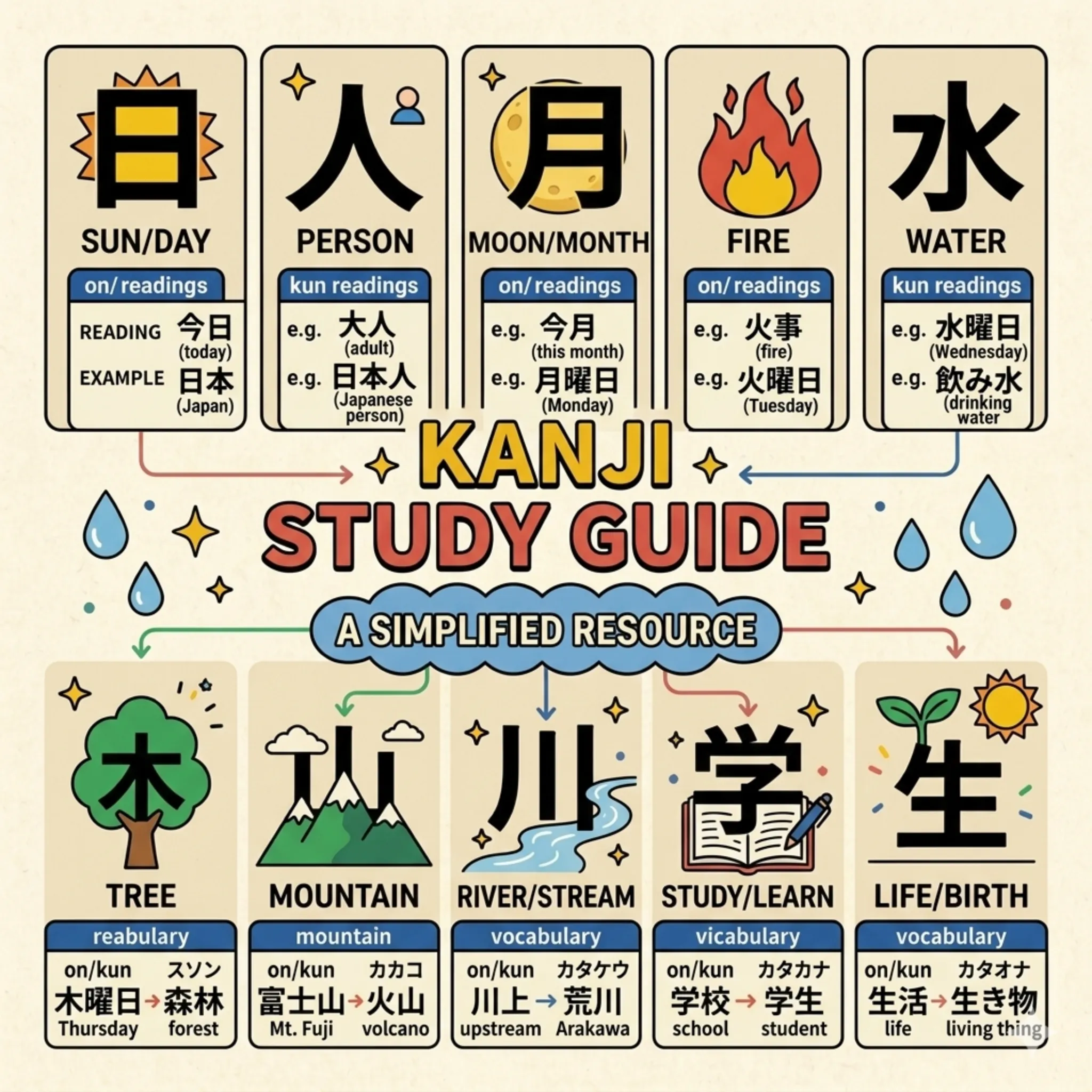
These characters are useful because they come back. If you want quick reality checks rather than theory alone, Kanji123 is great for short recall sessions, while Learn Kanji & Japanese Vocabulary works better when you want something more guided and cumulative.
Do You Need to Learn Readings Right Away?
Yes — but not all of them, and definitely not in one sitting.
This is where beginners accidentally light their own motivation on fire. A single kanji can have on’yomi, kun’yomi, and multiple vocabulary readings, which makes learners assume they need to “finish” each kanji the first time they meet it. You do not.
The smarter beginner approach is smaller:
· learn one core meaning
· learn one common reading
· learn one or two real words that use that kanji
For example, with 学 you might start with 学生(がくせい) and 学校(がっこう). Now the character lives inside real Japanese instead of floating around your notes like decorative wallpaper. That is how reading ability gets built.
Why Kanji Gets Easier Once You Notice the Parts
One of the biggest mindset shifts in kanji study is realizing that kanji is not one giant mystery blob. It has parts. Those parts repeat. And once you start seeing them, characters stop feeling random.
This is where kanji radicals come in. Radicals help beginners break characters into smaller chunks, compare lookalikes, and build memory hooks faster.
You do not need to memorize every official radical this week. That would be a terrible hobby. You just need to start noticing the common pieces that keep showing up. Once that skill clicks, kanji gets much less abstract and much more workable.
What Actually Makes Kanji Stick
Not staring harder. Not buying fancier notebooks. Not telling yourself you will “just absorb it naturally” through vibes.
What makes kanji stick is repeated contact in useful forms:
· real vocabulary
· short example sentences
· pattern recognition
· radicals and components
· review before forgetting
· quizzes that force recall instead of passive recognition
This is why kanji learned through words tends to last longer than kanji learned as a lonely dictionary entry. Learning 山 = mountain is fine. Learning 山, 火山, and 山川 gives your brain more than one hook, which makes the memory a lot harder to lose.
A Simple Kanji for Beginners Study Plan
You do not need an aesthetic study plan. You need one that still works on a Wednesday.
A beginner-friendly routine can look like this:
Daily
· learn 3 to 5 new kanji
· review older kanji for 10 to 15 minutes
· read 1 to 3 real words for each new character
· do one short practice session
Weekly
· review weak kanji
· compare similar-looking characters
· revisit old vocabulary
· test yourself without notes
When motivation starts acting suspicious, switching formats helps. A short round on Kanji123 or a few minutes in the writing game can turn review from “ugh” into “fine, I’ll do one more.”
Common Beginner Mistakes With Kanji
· Starting kanji before hiragana is usable
· Postponing kanji for so long that it becomes mythical
· Learning isolated meanings but ignoring vocabulary
· Trying to memorize every reading immediately
· Adding too many new characters too fast
· Skipping review because it feels less exciting than new content
· Treating kanji like pure memorization instead of a system with structure
The reassuring part is that most kanji pain is procedural. It usually comes from sequence problems, not from some personal inability to learn Japanese.
What to Learn Next
If this is your first serious kanji article, here is the cleanest next-step path:
· strengthen your kana foundation
· understand how the writing system fits together
· start learning beginner kanji through vocabulary
· notice radicals and repeated parts
· test recall with short quizzes
A practical route looks like this: MochiKana → Learning Japanese – Guideline for beginner → Learn Kanji & Japanese Vocabulary → Kanji123.
That sequence makes much more sense than trying to brute-force kanji in isolation while pretending your kana foundation is “probably fine.”
Final Thoughts
Kanji for beginners does not have to mean panic, confusion, or dramatic declarations that Japanese was a mistake.
It just needs a better starting point.
Learn what kanji is. Understand why Japanese uses it. Start with common characters. Study them in real words. Notice the parts inside them. Review before your brain quietly throws them in the trash.
That is enough.
If you want the most practical next step, start with Learn Kanji & Japanese Vocabulary and use Kanji123 when you want to check whether those beginner characters are actually sticking. Momentum beats perfect planning, and yes, that remains annoyingly true.
FAQ
What is kanji in Japanese?
Kanji are characters used in Japanese writing to represent meaning. They are one of the main parts of the Japanese writing system, alongside hiragana and katakana.
Should beginners learn kanji right away?
Beginners should start with hiragana first, then katakana, then basic kanji soon after. Kanji should not be first, but it also should not be postponed forever.
How many kanji should a beginner learn first?
A beginner should focus on a small set of common, high-frequency kanji rather than trying to learn too many at once.
Is kanji harder than hiragana and katakana?
Usually yes. Kanji is more complex because characters carry meaning and may have multiple readings. But it becomes easier when learned gradually through vocabulary and review.
What is the best way to start learning kanji?
The best way to start is with common beginner kanji, simple vocabulary, repeated review, and a structured study path that does not overwhelm you.



Pingback: 7 Ways to Learn Kanji: Which Study Method Is Best for You?
Pingback: Look Up Kanji: 5 Fast Methods Every Learner Should Know - Kanji123
Pingback: Learn Hiragana and Katakana With The Best Free Resources
Pingback: The "Zero Panic" Beginner Kanji List: 50 Must-Know Characters
Pingback: What is the Japanese Language Proficiency Test (JLPT)?
Pingback: Japanese Grammar: Friendly Guide for Beginners - Kanji123
Pingback: How to Find the Kanji Radical: A Literal Life-Saver
Pingback: Learn Japanese: A Roadmap That Actually Works - Kanji123
Pingback: How Long Does It Take to Learn Japanese? - Kanji123
Pingback: Kanji Radicals and Mnemonics: The Only Strategy That Sticks.
Pingback: The Japanese Writing System: Hiragana, Katakana, and Kanji
Pingback: Japanese Language Learning Podcast: 7 Best Ones for Beginners - Kanji123
Pingback: How to Learn Japanese: A Practical Guide - Kanji123
Pingback: Japanese Honorifics and How to Use ALL of Them
Pingback: Japanese Listening Practice for Real Understanding - Kanji123
Pingback: Kanji Stroke Order: The Beginner-Friendly Rules