With meanings, examples, and the handful you’ll keep seeing everywhere.
Once you learn The 100 Common Kanji Radicals, it becomes much easier to spot patterns inside beginner kanji.
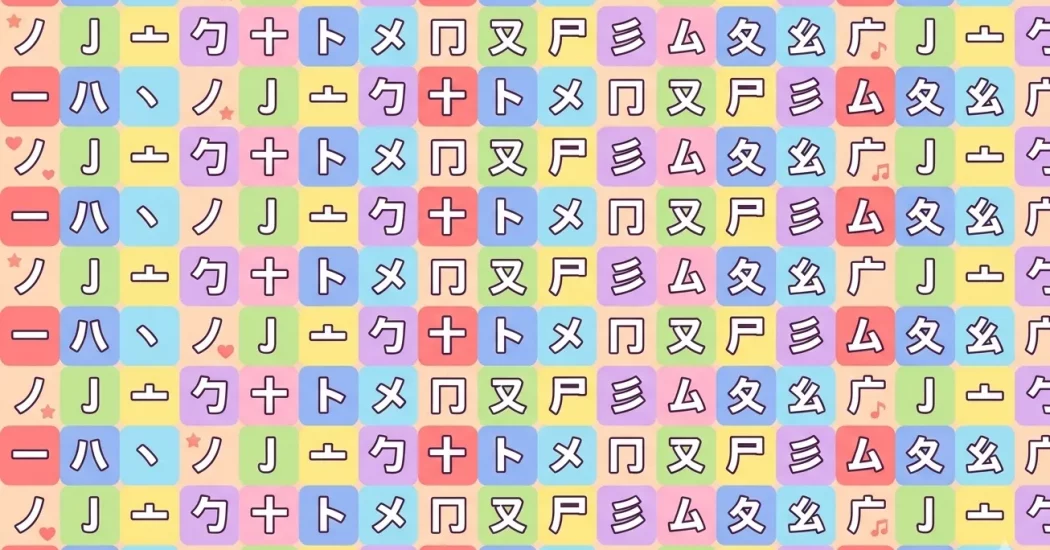
Figure 1. A learner-friendly 100 common radicals
You can stare at kanji harder if you want. It will not help.
What does help is learning to see the parts inside the character — the bits that keep showing up again and again. That is where radicals come in. They are one of the fastest ways to make kanji feel less like abstract art and more like something your brain can actually hold onto.
The beginner-friendly version of this lesson is simple: radicals are not there to make you suffer. Instead, they give you something to hold onto. Some help with dictionary lookup, while others point you toward meaning. Still others are simply the recurring shapes that make mnemonics and pattern recognition possible. Whatever job they are doing, they make the whole system feel much less messy.
If you’re still at the stage where the Japanese writing system feels like three unrelated planets, spend a little time with MochiKana or the Learn Hiragana guide first. Then come back here. Radicals make much more sense when kana is not slowing you down.
In this guide, you’ll get:
· a plain-English explanation of what radicals are
· the 100 common radicals and radical-like forms learners keep seeing
· one quick example kanji for each
· a practical way to study the list without turning it into a second full-time job
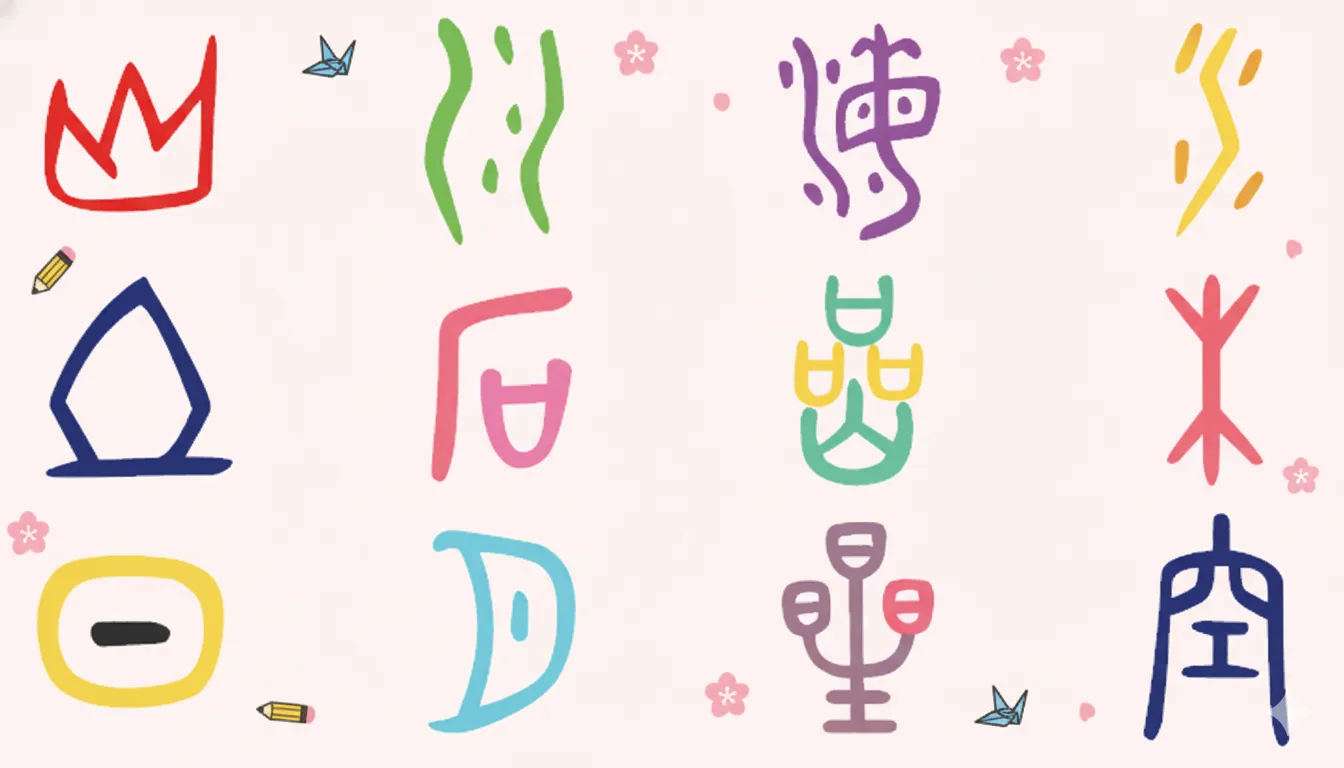
Figure 2. A learner-friendly 100 common radicals
What counts as a radical here?
Strictly speaking, a kanji has one official dictionary radical. In actual study life, though, learners also talk about the other repeated pieces inside kanji because those are the shapes that help you remember, compare, and look things up. This article stays learner-friendly on purpose: it includes official radicals, common variants, and the high-frequency forms you keep meeting in real kanji study.
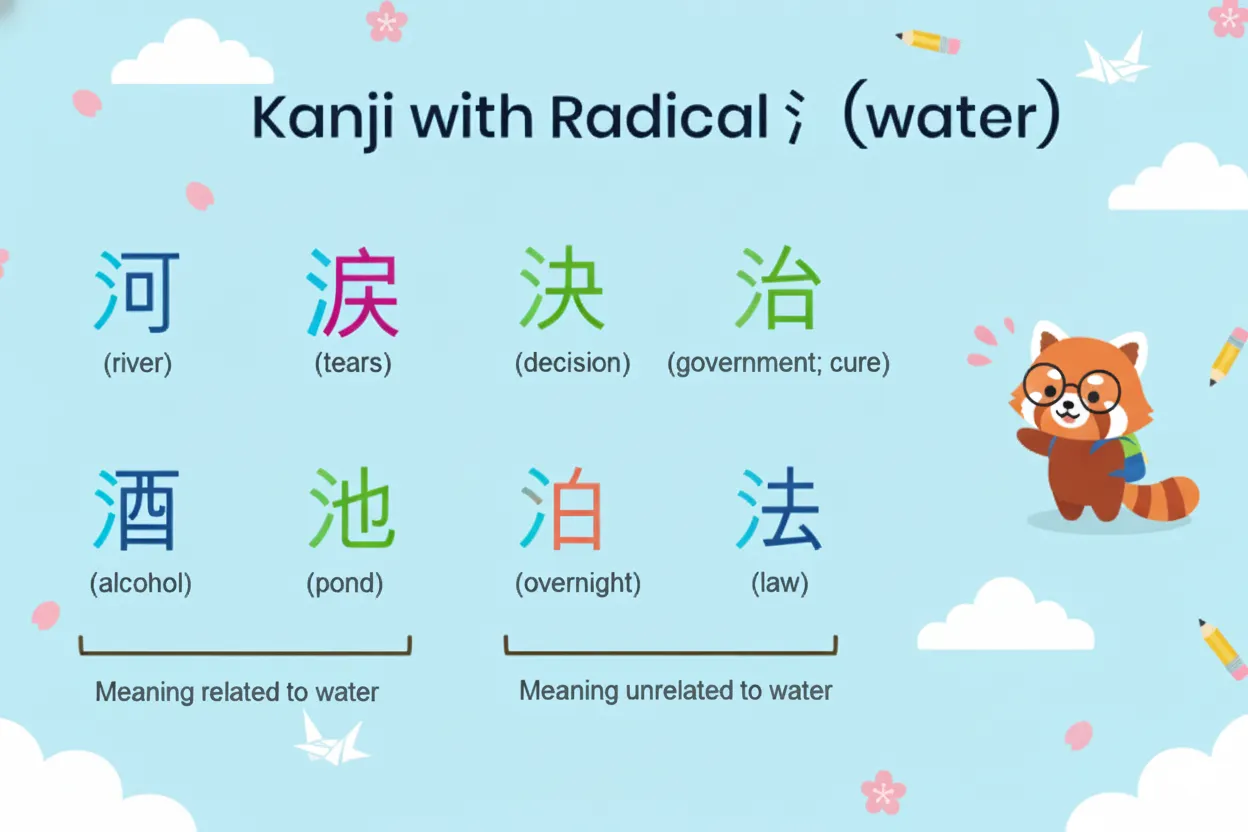
Figure 3. The water radical
Why radicals matter more than people first realize
First, radicals reduce visual overload.
Once you stop treating a character like one giant shape, it becomes much easier to compare similar kanji and remember what you are seeing.
Just as importantly, they make mnemonics shorter. A tiny story built from two or three recognizable pieces is far more memorable than raw stroke soup.
They also make lookup easier. If you meet an unknown character in the wild, radical awareness gives you a way into dictionaries and search tools.
Finally, radicals pair well with real practice. The sweet spot is reading about radicals here, then testing the kanji you know on the free quizzes at Kanji123 so recognition turns into recall.
For the bigger-picture method behind all of this, pair this article with Learn Kanji the Smart Way. That guide explains how radicals, vocabulary, and spaced repetition fit together instead of acting like three separate hobbies.
Group 1: Everyday Radicals You’ll See Constantly
These are the everyday building blocks that show up again and again, which is exactly why learning them early gives you such a fast payoff.
| # | Radical | Meaning / Hint | Example | Example Meaning |
| 1 | 人 / 亻 | person | 休 | rest |
| 2 | 口 | mouth | 味 | taste |
| 3 | 女 | woman | 好 | like |
| 4 | 子 | child | 字 | character |
| 5 | 宀 | roof | 家 | house |
| 6 | 心 / 忄 | heart | 思 | think |
| 7 | 手 / 扌 | hand | 持 | hold |
| 8 | 言 / 訁 | speech | 話 | talk |
| 9 | 日 | sun / day | 時 | time |
| 10 | 月 | moon / month | 明 | bright |
| 11 | 木 | tree | 林 | woods |
| 12 | 水 / 氵 | water | 海 | sea |
| 13 | 火 / 灬 | fire | 焼 | burn |
| 14 | 土 | earth | 地 | ground |
| 15 | 山 | mountain | 岩 | rock |
| 16 | 川 / 巛 | river | 州 | state |
| 17 | 田 | rice field | 男 | man |
| 18 | 禾 | grain | 秋 | autumn |
| 19 | 米 | rice | 料 | materials |
| 20 | 艹 | grass / plant | 花 | flower |
Group 2: Nature, Materials, and the Radicals That Make Kanji Feel Less Random
This group helps kanji feel less random by showing you the recurring parts tied to water, wood, fire, metal, and other high-frequency ideas.
| # | Radical | Meaning / Hint | Example | Example Meaning |
| 21 | 竹 / ⺮ | bamboo | 箱 | box |
| 22 | 石 | stone | 研 | polish |
| 23 | 金 / 釒 | metal / gold | 銀 | silver |
| 24 | 玉 / 王 | jewel | 現 | appear |
| 25 | 糸 / 糹 | thread | 線 | line |
| 26 | 貝 | shell / money | 買 | buy |
| 27 | 車 | vehicle | 転 | turn |
| 28 | 足 / ⻊ | foot | 路 | road |
| 29 | 走 | run | 起 | rise |
| 30 | 辵 / ⻌ | walk / movement | 週 | week |
| 31 | 門 | gate | 開 | open |
| 32 | 雨 | rain | 雪 | snow |
| 33 | 風 | wind | 風 | wind |
| 34 | 食 / 飠 | food / eat | 飲 | drink |
| 35 | 衣 / 衤 | clothing | 初 | beginning |
| 36 | 見 | see | 観 | observe |
| 37 | 目 | eye | 眠 | sleep |
| 38 | 耳 | ear | 聞 | hear |
| 39 | 頁 | head / page | 顔 | face |
| 40 | 首 | neck / head | 道 | road |
Group 3: Movement, Tools, Structures, and Useful Kanji Parts
These radicals appear in a lot of useful beginner kanji, especially the kind connected to actions, objects, places, and everyday function words.
| # | Radical | Meaning / Hint | Example | Example Meaning |
| 41 | 面 | face / surface | 面 | surface |
| 42 | 立 | stand | 章 | chapter |
| 43 | 力 | power | 努 | effort |
| 44 | 刀 / 刂 | knife | 切 | cut |
| 45 | 弓 | bow | 引 | pull |
| 46 | 矢 | arrow | 知 | know |
| 47 | 戈 | spear | 戦 | war |
| 48 | 攵 / 攴 | strike / action | 教 | teach |
| 49 | 文 | writing | 文 | sentence |
| 50 | 方 | direction | 旅 | trip |
| 51 | 广 | shelter | 店 | shop |
| 52 | 戸 / 戶 | door | 所 | place |
| 53 | 囗 | enclosure | 国 | country |
| 54 | 冖 | cover | 写 | copy |
| 55 | 厂 | cliff | 厚 | thick |
| 56 | 厶 | private | 台 | stand |
| 57 | 又 | hand / again | 友 | friend |
| 58 | 寸 | measurement | 対 | opposite |
| 59 | 小 | small | 少 | few |
| 60 | 大 | big | 太 | thick |
Group 4: Small Radicals, Big Payoff
For beginners, The 100 Common Kanji Radicals are useful not just for memory, but also for dictionary lookup and pattern recognition.
| # | Radical | Meaning / Hint | Example | Example Meaning |
| 61 | 中 | middle | 仲 | relationship |
| 62 | 一 | one / line | 一 | one |
| 63 | 十 | ten / cross | 十 | ten |
| 64 | 八 | divide / eight | 分 | divide |
| 65 | 入 | enter | 全 | whole |
| 66 | 儿 | legs | 先 | ahead |
| 67 | 几 | table / small stand | 机 | desk |
| 68 | 卩 | seal | 印 | stamp |
| 69 | 匕 | spoon | 化 | change |
| 70 | 比 | compare | 皆 | all |
| 71 | 止 | stop | 正 | correct |
| 72 | 歹 | death / bones | 列 | row |
| 73 | 欠 | lack / yawn | 次 | next |
| 74 | 气 | air / steam | 気 | spirit |
| 75 | 爪 / 爫 | claw | 受 | receive |
| 76 | 犬 / 犭 | dog / animal | 猫 | cat |
| 77 | 牛 / 牜 | cow | 物 | thing |
| 78 | 羊 / ⺶ | sheep | 美 | beauty |
| 79 | 虫 | insect | 蚊 | mosquito |
| 80 | 鳥 | bird | 鳴 | chirp |
Group 5: High-frequency helpers for intermediate reading
If you are serious about building a strong foundation, The 100 Common Kanji Radicals can save you a lot of guessing later.
| # | Radical | Meaning / Hint | Example | Example Meaning |
| 81 | 魚 | fish | 鮮 | fresh |
| 82 | 馬 | horse | 駅 | station |
| 83 | 皮 | skin | 波 | wave |
| 84 | 肉 / ⺼ | flesh / body | 胃 | stomach |
| 85 | 自 | self | 息 | breath |
| 86 | 至 | arrive | 室 | room |
| 87 | 舌 | tongue | 舌 | tongue |
| 88 | 舟 | boat | 船 | ship |
| 89 | 酉 | alcohol | 酒 | sake |
| 90 | 豆 | bean | 頭 | head |
| 91 | 里 | village | 野 | field |
| 92 | 青 | blue / green | 晴 | clear weather |
| 93 | 示 / 礻 | spirit / show | 社 | shrine |
| 94 | 穴 | cave | 空 | sky |
| 95 | 疒 | sickness | 病 | illness |
| 96 | 白 | white | 百 | hundred |
| 97 | 羽 | feather | 習 | learn |
| 98 | 邑 / 阝 | city | 都 | capital city |
| 99 | 阜 / 阝 | mound / hill | 階 | stairs |
| 100 | 斤 | axe | 新 | new |
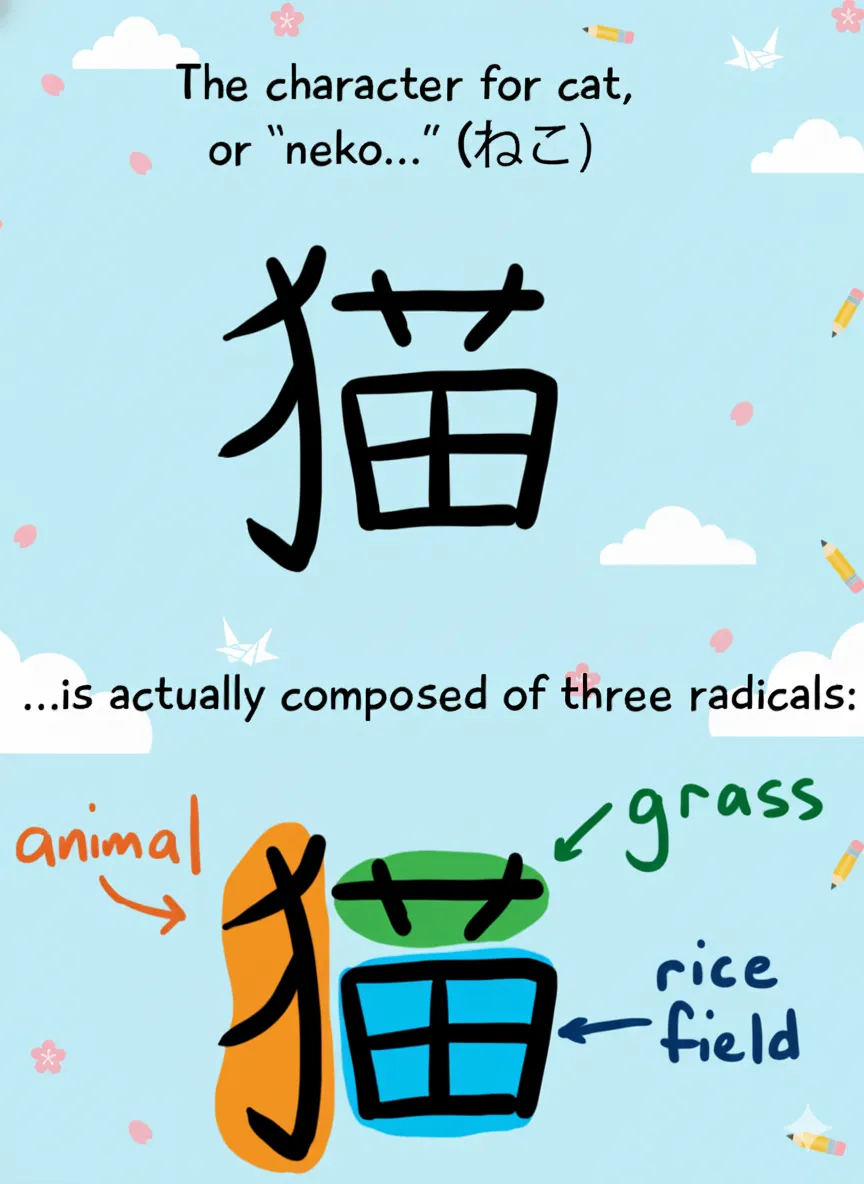
Figure 4. A Neko radical
How to actually study this full list
Start with 10, not 100.
First, focus on the radicals that appear again and again in beginner kanji: 氵, 亻, 扌, 訁, 艹, 木, 日, 月, 口, and 心. If you learn those well, you will feel the payoff almost immediately.
Then start spotting them inside real words.
In other words, do not leave this list trapped inside the article. Use a few radicals here, and then go find them in actual kanji, vocabulary, and quizzes.
Next, attach each radical to one memorable example.
You do not need five examples per entry right away. Instead, one sticky example is enough to start building a pattern.
Finally, turn lookup into retention.
When you notice a radical in the wild, look up the word, save the useful vocabulary, and test yourself later. That is where the learning becomes durable.
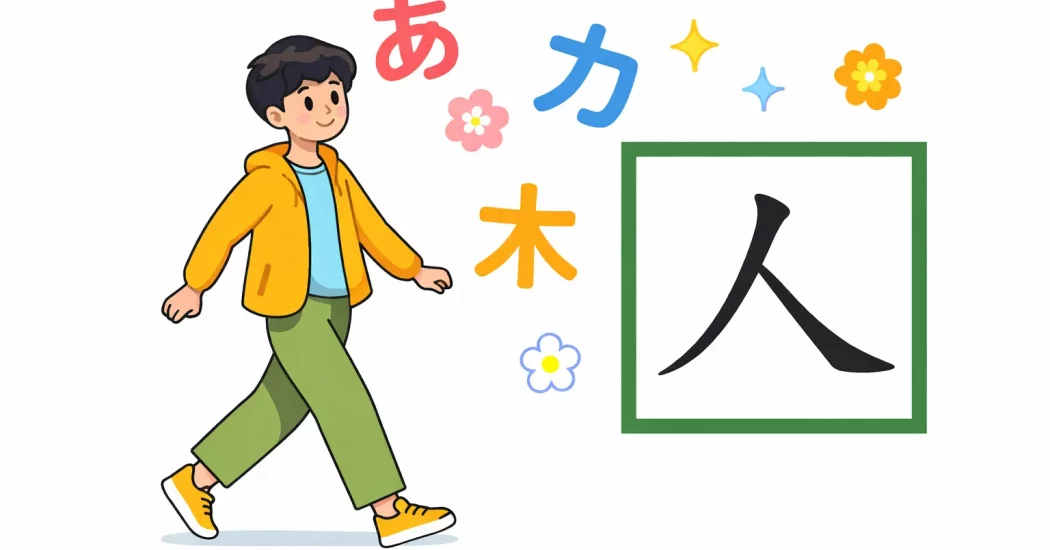
Figure 5. A Human radical
A good low-friction routine is: read this list, then do one Kanji123 N5 test, then spend a few minutes in MochiKanji to see the same pieces inside real kanji and vocabulary. That pairing — recognition plus review — is what makes radicals useful instead of decorative.
What radicals are good for — and what they are not
Radicals are excellent for recognition, comparison, mnemonic hooks, and dictionary lookup. They are not a magical one-rule meaning machine. Sometimes a radical hints at the meaning. Other times, it mainly helps with organization. And in some kanji, a different component is the one carrying the sound clue. That is normal.
The point is not to force every kanji into a perfectly tidy theory. The point is to make the next unknown character feel less impossible than the previous one.
What to read next
If you want the broader method behind radicals, vocabulary, and review, go to Learn Kanji the Smart Way. If you want a wider beginner roadmap, the Mochidemy Learn Japanese guide lays out how kana, kanji, and grammar fit together without making the whole process feel cursed.
And if you want to keep your alphabet layer strong while you build kanji, MochiKana is still one of the easiest places to keep hiragana and katakana automatic.
Final thoughts
You do not need all 214 Kangxi radicals memorized by Friday. You need the common ones that keep appearing in the kanji you actually study.
Learn the shapes that matter. Use them to notice patterns. Let them shorten your mnemonics. It’s make dictionary lookup less annoying. Then get back to real words, real reading, and real review.
Start with ten. Notice them everywhere. Test yourself before your brain forgets.
When you’re ready, jump into the Kanji123 quiz hub and turn all that new pattern-recognition into actual recall.
FAQ
Do I need all 214 radicals to start learning kanji?
No. A small set of common radicals covers a huge amount of beginner and intermediate kanji. Start with the ones you keep seeing, not the entire official list.
Are radicals and components the same thing?
Not exactly. A kanji has one official dictionary radical, but learners also talk about recurring components because those pieces are useful for memory and recognition.
Do radicals tell you the meaning of a kanji?
Sometimes they offer a clue, but not always. They are helpful hints and classification tools, not perfect meaning machines.
What is the fastest way to study radicals?
Learn a small batch, spot them inside real kanji, attach them to one example word, and test yourself in short sessions instead of trying to memorize a giant list in one go.
A quick-start shortlist
If you only want the radicals that give you the fastest beginner payoff, start with these fifteen and ignore the rest for now:
· 氵 water
· 亻 person
· 扌 hand
· 言 / 訁 speech
· 艹 grass
· 木 tree
· 日 sun/day
· 月 moon/month
· 口 mouth
· 心 / 忄 heart
· 糸 / 糹 thread
· 辵 / ⻌ movement
· 食 / 飠 food
· 門 gate
· 雨 rain
Then go test them in the wild on the Kanji123 quiz hub, then widen your overall study path with the Mochidemy Japanese guide.