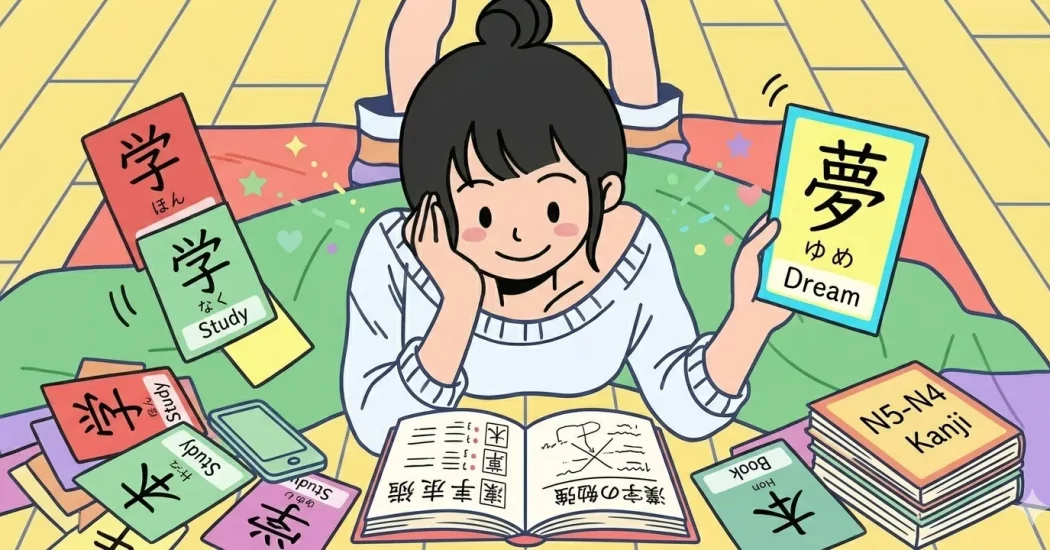
There are a lot of ways to learn kanji, and that is both helpful and deeply annoying. Helpful, because you have options. Annoying, because five minutes of googling can make it sound like every method is either the One True Path or a complete waste of your short human life. One person swears by handwriting. Another says never touch pen and paper again. Somebody else wants you to memorize radicals first, while a different camp tells you to ignore radicals and just learn vocabulary. So… which one is actually right?
The unhelpful answer is: it depends. The useful answer is: different methods work better for different learners, different stages, and different goals. If you are a beginner, the trick is not finding the perfect method. It is finding a method that is effective enough, clear enough, and boring-in-a-good-way enough that you will still be doing it next week.
If your writing-system foundation is still a little shaky, start with MochiKana or the broader Learning Japanese – Guideline for beginner before you go too deep into kanji. Life gets much easier when hiragana and katakana stop looking like decorative weather patterns.
Featured snippet version:
The best ways to learn kanji include repetition, flashcards, vocabulary-first study, radicals and mnemonics, handwriting practice, contextual reading, and JLPT-style testing. For beginners, the most effective approach is usually a mix of vocabulary, radicals, spaced review, and short quizzes rather than relying on only one method.
Why There Are So Many Ways to Learn Kanji
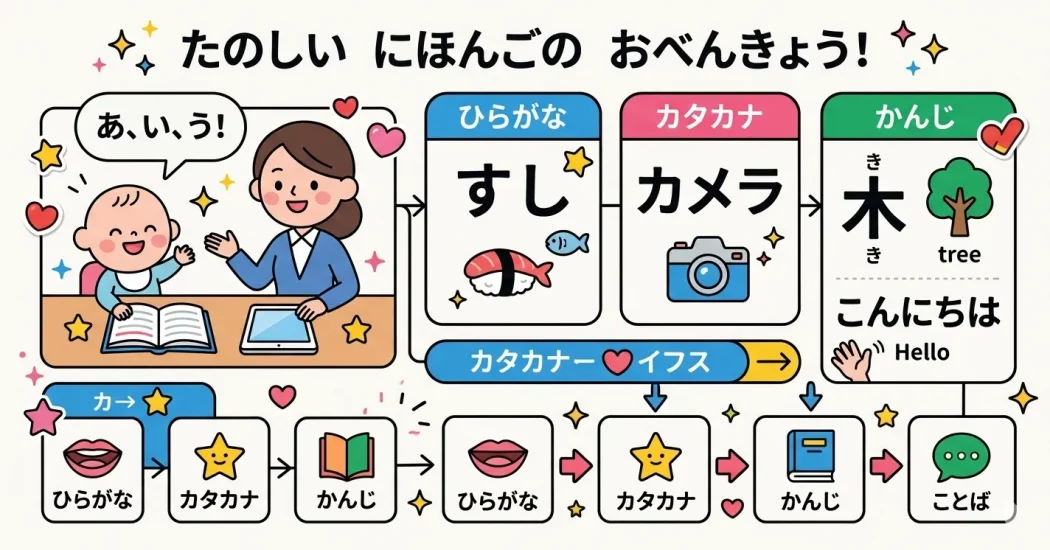
Kanji is not one skill. It is a bundle of skills awkwardly sharing a trench coat. You are learning visual recognition, meaning, readings, writing patterns, vocabulary, and recall. That is why no single method perfectly covers everything. Some approaches are better at helping you remember meanings. Some are better at building reading ability. Some are better at making stroke order feel less rude. And some are mostly good at making you feel productive for three days before you disappear forever.
So when people argue about the “best” way to learn kanji, they are usually talking about different problems. The smarter question is not “Which method wins?” The smarter question is “What does this method help me get good at?”
Method 1: Brute-Force Repetition

This is the classic method. You see a kanji, you write it a bunch of times, you stare at it until your eyes go slightly hollow, and eventually something sticks.
There is a reason this method survives. Repetition does work. The problem is that raw repetition is expensive. It asks for a lot of time, a lot of patience, and a very forgiving relationship with boredom.
When repetition works well, it does two things:
· builds visual familiarity
· helps writing feel more automatic
When it works badly, it turns into mindless copying that feels intense without actually producing much long-term memory.
For beginners, repetition is useful as a support tool, not as your entire religion. A few deliberate repetitions are great. Fifty exhausted repetitions because you feel guilty? Less great.
Method 2: Flashcards and Spaced Repetition
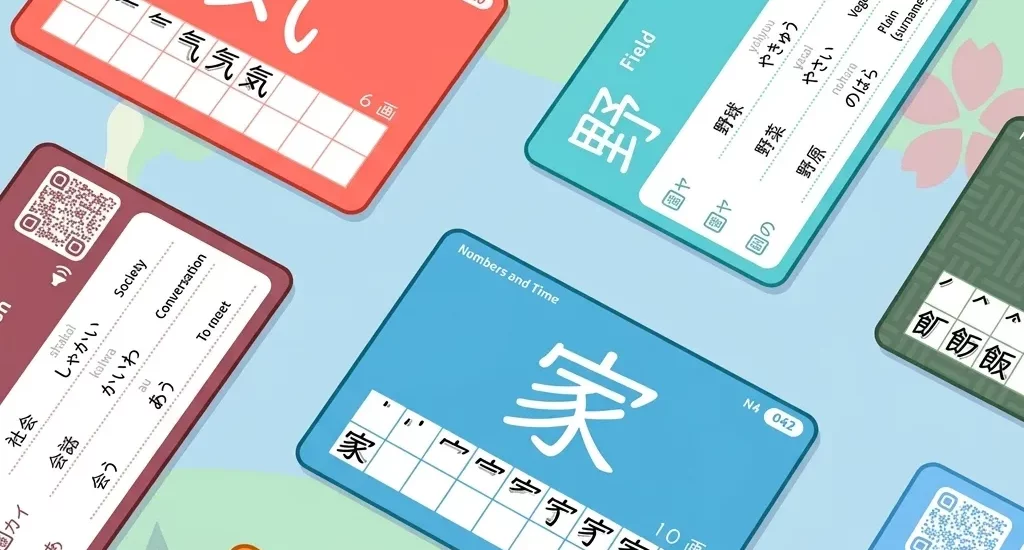
This is the method that shows up whenever someone says the phrase “be consistent” with the energy of a person who definitely owns color-coded folders.
Flashcards — especially digital ones with spaced repetition — are good at solving one specific problem: forgetting. Instead of reviewing everything every day like a panicked raccoon, spaced repetition tries to show you the right thing at roughly the right time, which makes memory a lot more efficient.
This is one reason Learn Kanji & Japanese Vocabulary makes sense as a companion tool. It gives kanji repeated exposure inside a structured review system instead of leaving you alone with a notebook and a false sense of confidence.
The downside? Flashcards can become weirdly abstract. If you only study kanji as isolated cards, you may get good at answering cards and still feel clumsy when you meet the same kanji in real words. So yes, flashcards are powerful. They just work better when they are attached to vocabulary and context, not floating in outer space.
Method 3: Vocabulary-First Kanji Study
This is the method many learners end up liking once they get tired of memorizing naked symbols. Instead of studying a kanji as a lonely character with a keyword attached, you learn it through actual words.
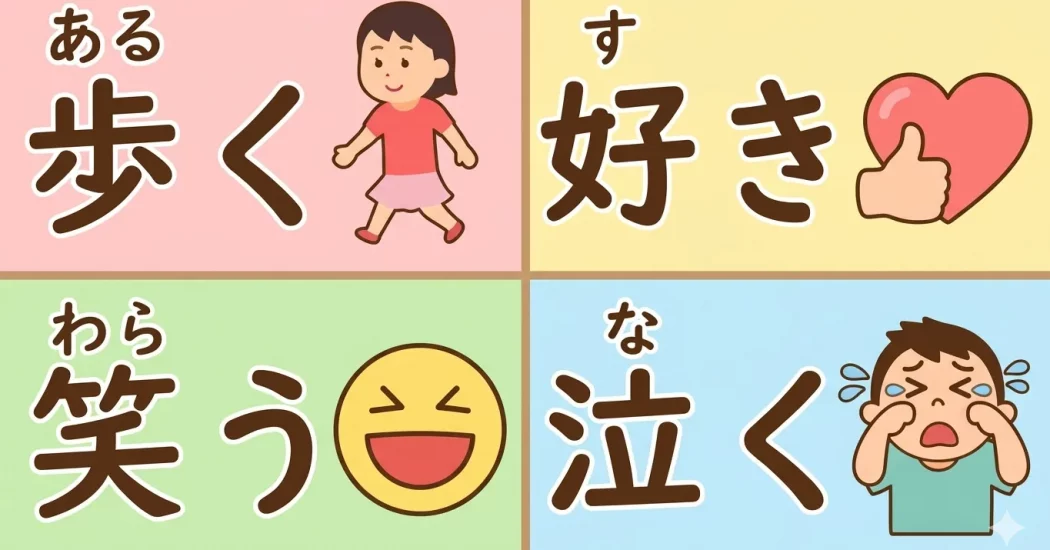
For example, instead of learning 学 as an abstract unit and trying to collect all its readings on day one, you start with words like:
· 学生(がくせい)
· 学校(がっこう)
Now the kanji is doing something. It has a job. It is living inside real Japanese.
This method is especially good for beginners because it feels less theoretical. It also aligns nicely with the logic in Kanji for Beginners, where the goal is not to master every possible reading immediately but to start with common characters that appear in common words.
If your goal is reading ability, this method deserves serious respect. The main weakness is that it can feel slower at first because you are learning characters through words, not racing through a giant list. But slow at first and stronger later is usually a decent trade.
Method 4: Radicals and Mnemonics
This is the method that takes kanji apart and says, “Okay, what pieces are we actually looking at here?” Instead of memorizing each character as one giant mystery blob, you learn the recurring parts — often radicals and other components — and turn them into memory hooks.
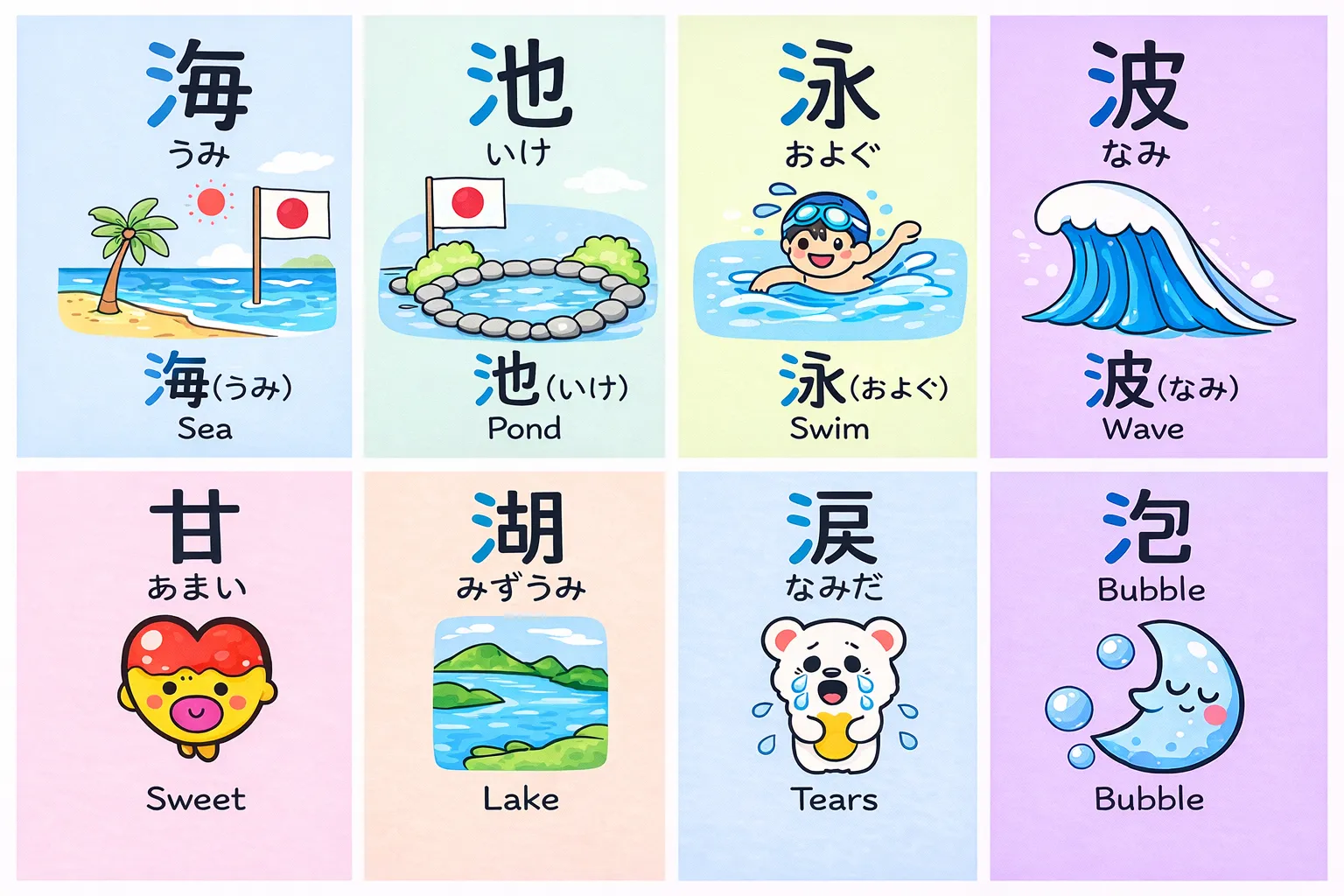
This is exactly why kanji radicals matter. They are not just dictionary trivia. They give your brain handles.
Mnemonics help too. A weird little story about the parts of a kanji is often much easier to remember than a pile of disconnected strokes. The story does not need to be beautiful. It needs to be sticky.
The strength of this method is speed of initial recall. Beginners who use radicals and mnemonics often feel a huge improvement because kanji stops looking random.
The weakness is that mnemonics are a bridge, not a destination. They help you remember, but they do not replace reading, vocabulary, or review. So use them. Just don’t confuse them with the whole learning process.
Method 5: Handwriting and Stroke Order Practice
A lot of learners love writing. A lot of learners avoid writing like it is a tax form. Both reactions are understandable.
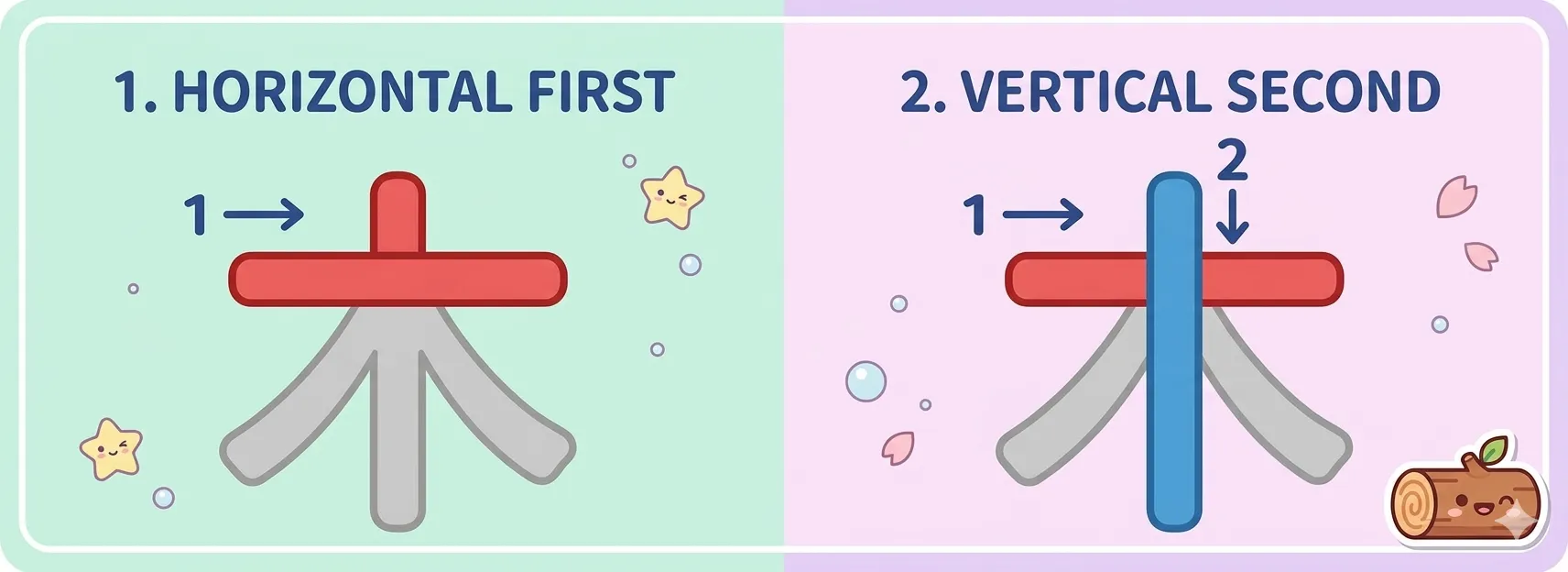
Writing kanji by hand can help because it slows you down just enough to notice structure. Stroke order makes the character feel less like chaos and more like a sequence. If you keep confusing similar-looking kanji, writing can be one of the fastest ways to make the differences feel real.
This method gets even more useful when paired with content like Kanji Stroke Order for the logic, and then your own structured practice after that. On the Mochi side, the writing game is more kana-focused, but the same principle applies: writing turns recognition into recall.
The catch is that writing is time-expensive. If your main goal is reading, you probably do not need to handwrite every kanji a hundred times. But if writing helps you notice parts, stroke flow, and common errors, it can absolutely earn its place in your routine.
Method 6: Reading in Context
This is the method where kanji finally stops being a flashcard problem and becomes a reading problem. You meet kanji in words, phrases, short texts, example sentences, subtitles, or level-appropriate reading materials. Context does a lot of heavy lifting here. It tells your brain why the kanji matters.
Reading in context is how things start feeling less artificial. It is also how you discover that a kanji you thought you “knew” is still a little fragile when it shows up next to friends.
This method works best when it is built on a stable writing foundation. If kana still slows you down, do yourself a favor and review Learn Hiragana Online Free, Learn Katakana Online Free, or even the Japanese alphabet for beginner article before expecting kanji-heavy reading to feel smooth.
The downside is that contextual reading can feel intimidating too early. If you are still at the stage where every line looks like a trust exercise, start smaller. The method is great. The timing matters.
Method 7: JLPT-Style Testing and Recall Practice
This is the method that answers the question, “Okay, but do I actually know this?”
Testing is useful because it forces recall. Recognition is polite. Recall is honest. A kanji quiz makes you find the answer instead of just nodding at something familiar and moving on.
That is exactly where Kanji123 – Free JLPT Kanji Test Online fits in. It is low-friction, practical, and perfect for checking whether your “I think I know this one” feeling survives contact with a real question.
The strength of testing is clarity. It shows you what is sticking and what is just hanging around looking confident.
The weakness is that tests alone do not teach much. They reveal gaps. They do not always fill them. So testing is fantastic as a check and a motivator, but it works best when you feed the results back into a study method that actually teaches and reviews the weak spots.
So Which Way to Learn Kanji Is Best for Beginners?
The frustratingly correct answer is: none of these in total isolation.
For most beginners, the best setup is a mix. Here is the short version:
If you are a total beginner
Start with kana. Seriously. Use MochiKana, [Learn Hiragana lessons](https://mochidemy.com/kana/lesson/hiragana), and [Learn Katakana lessons](https://mochidemy.com/kana/lesson/katakana) until the sound system stops fighting you.
If you want something structured
Use vocabulary-first study plus spaced repetition. That gives you real words, repeated contact, and a system that can survive an ordinary week.
If you like logic and patterns
Bring in radicals and mnemonics. They make kanji feel far less random.
If you want proof that you are improving
Use quizzes. Regular testing keeps your ego humble and your weak spots visible.
In other words: the best way to learn kanji is usually not one way. It is a stack.
A Beginner-Friendly Kanji Stack That Actually Makes Sense
If I had to build a simple, non-chaotic kanji routine for a beginner, it would look like this:
1. Get kana stable first
2. Learn kanji through useful beginner vocabulary
3. Use radicals to make characters easier to remember
4. Review with spaced repetition
5. Test weak spots with short quizzes
6. Read just enough context to keep things real
That stack plays nicely with the tools you already have: MochiKana for the writing-system foundation, Learn Kanji & Japanese Vocabulary for structured study, and Kanji123 for quick recall checks.
Not glamorous. Very effective. Which is, frankly, the best kind of study routine.
Final Thoughts
There are a lot of ways to learn kanji, but the best one is the one that gets you showing up again tomorrow.
If a method looks clever but collapses the moment you get busy, it is not the right method for you right now. If a method looks simple but helps you actually remember, read, and review, that one deserves more respect.
So try the methods. Mix them. Keep the parts that help. Drop the parts that create theater without progress.
And if you want a clean next step, start with Kanji for Beginners, follow it with Kanji Radicals Explained, and then use Kanji123 and MochiKanji to turn all that theory into something your brain can actually keep.
FAQ
What are the best ways to learn kanji?
The best ways to learn kanji usually combine vocabulary study, radicals, spaced repetition, and short recall tests rather than relying on only one method.
Should beginners learn kanji by writing?
Writing can help beginners notice structure and stroke order, but it works best as a support tool rather than the only study method.
Are kanji radicals necessary?
Kanji radicals are not the whole system, but they make kanji easier to recognize, remember, and look up.
Is vocabulary-first better than learning single kanji?
For many beginners, yes. Learning kanji through real words makes the characters easier to remember and much more useful for reading.
How do I know if my kanji study method is working?
A good sign is that you can recognize kanji in real words, remember them later, and perform better on short quizzes without relying on luck.