Kanji Stroke Order is one of those topics that sounds either painfully technical or weirdly old-fashioned until you actually need it. Then you try to write a character from memory, realize your hand has invented a completely new civilization, and suddenly stroke order feels a lot more relevant.
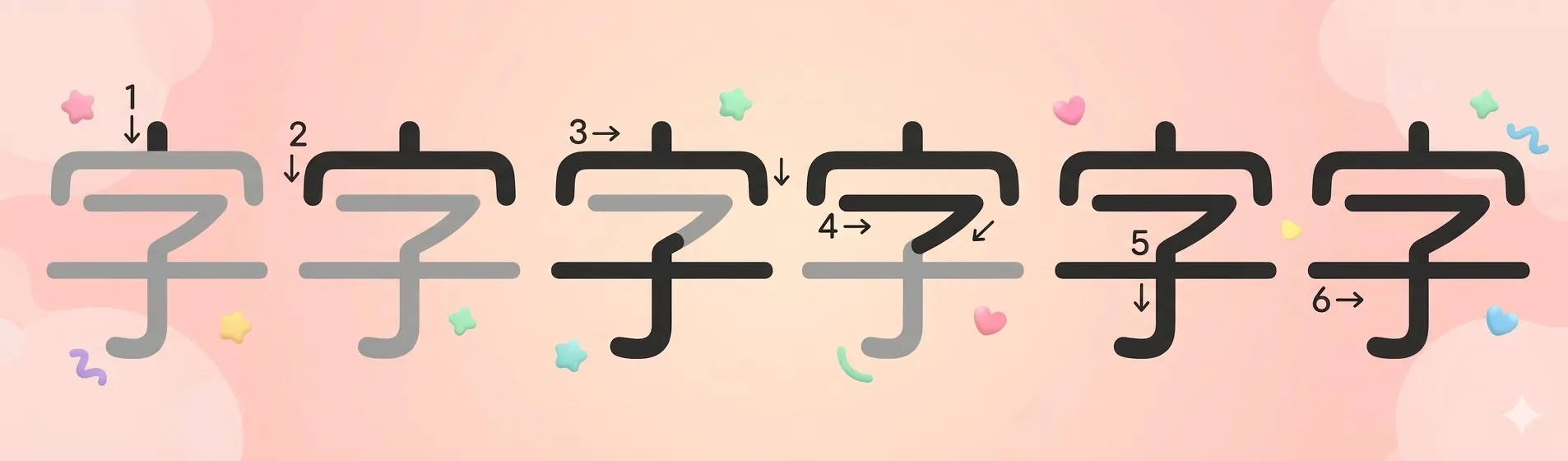
If you are a beginner, here is the calm version: no, you do not need to become a calligraphy monk by Tuesday. But yes, Kanji Stroke Order matters more than people first think — not because the language police are waiting outside, but because the right order makes kanji easier to write, easier to remember, and much easier for handwriting tools to understand.
If your writing system foundation still feels a little shaky, start with Japanese Alphabet for Beginners or spend ten minutes with MochiKana before going deeper into kanji mechanics. Stroke order is much less spooky when hiragana and katakana are already doing their jobs.
Featured snippet answer:
Kanji Stroke Order follows a small set of common writing rules, such as top to bottom, left to right, horizontal before vertical, and outside before inside. Beginners do not need to memorize every exception at once, but learning the basic patterns makes kanji easier to write, recognize, and review.
Why Kanji Stroke Order Even Exists
It is tempting to think stroke order is just a ceremonial extra — a traditional flourish someone forgot to remove. It is not. Stroke order exists because kanji is a system, and systems work better when the writing moves in predictable patterns.
A stable stroke order helps with:
· writing characters legibly
· recognizing their internal structure
· learning them faster through repetition
· using handwriting input tools without confusing the software
· avoiding accidental “what did I even write” moments
In other words, stroke order is not there to make your life harder. It is there to stop kanji from turning into random line soup.
Does Kanji Stroke Order Really Matter?
Yes — but not always for the reason people imagine.
If your only goal is passive recognition while reading, stroke order may feel optional at first. You can absolutely learn to recognize many kanji before you write them cleanly. But if you want to write by hand, use handwriting lookup, remember characters more reliably, or stop second-guessing where each line goes, then Kanji Stroke Order matters a lot.
It also connects directly to other beginner topics. Once you understand kanji radicals, the stroke order rules start feeling less random because you can see the parts you are writing. And once you understand onyomi vs kunyomi, kanji stops being one giant unknown blob and starts looking like structure plus sound plus meaning.
The Core Kanji Stroke Order Rules
The good news is that you do not need to memorize one unique rule for every single character. Kanji Stroke Order mostly follows a handful of recurring patterns. Learn those, and you can guess surprisingly well even when you have never written the kanji before.
Rule 1: Top to Bottom
If one part sits above another part, you usually write the upper part first.
This is probably the least dramatic rule in the system, which is nice because beginners deserve a small win.
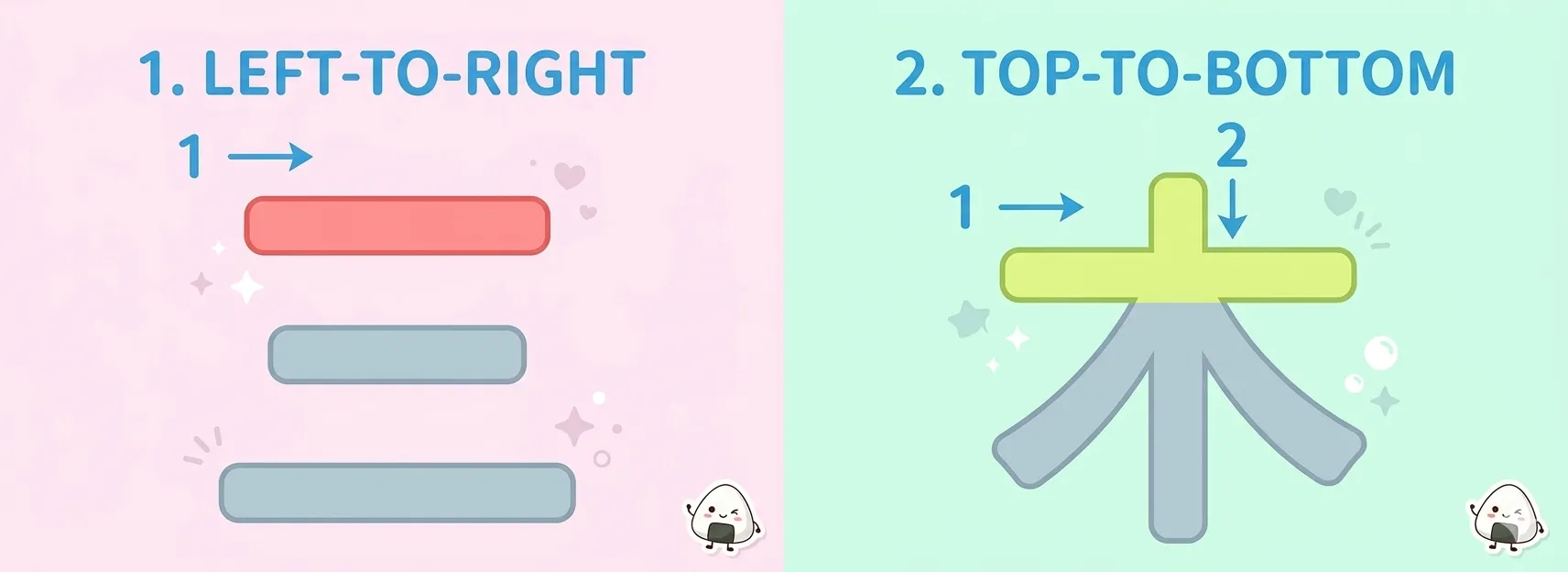
· 三 starts from the top line and moves downward
· 音 begins with the upper structure before the lower parts
· 草 starts with the grass radical on top before the rest of the character
If the kanji looks stacked, your hand should usually move downward through the structure.
Rule 2: Left to Right
When a kanji is built from a left side and a right side, the left usually comes first.
· 休 begins with the person radical on the left before the tree on the right
· 明 starts with 日 on the left before 月 on the right
· 河 begins with the water radical on the left before the right-side component
This rule shows up constantly, which is one reason radicals are so useful. Left-side radicals like 氵, 忄, and 扌 become much easier to write once you realize they are often your opening move.
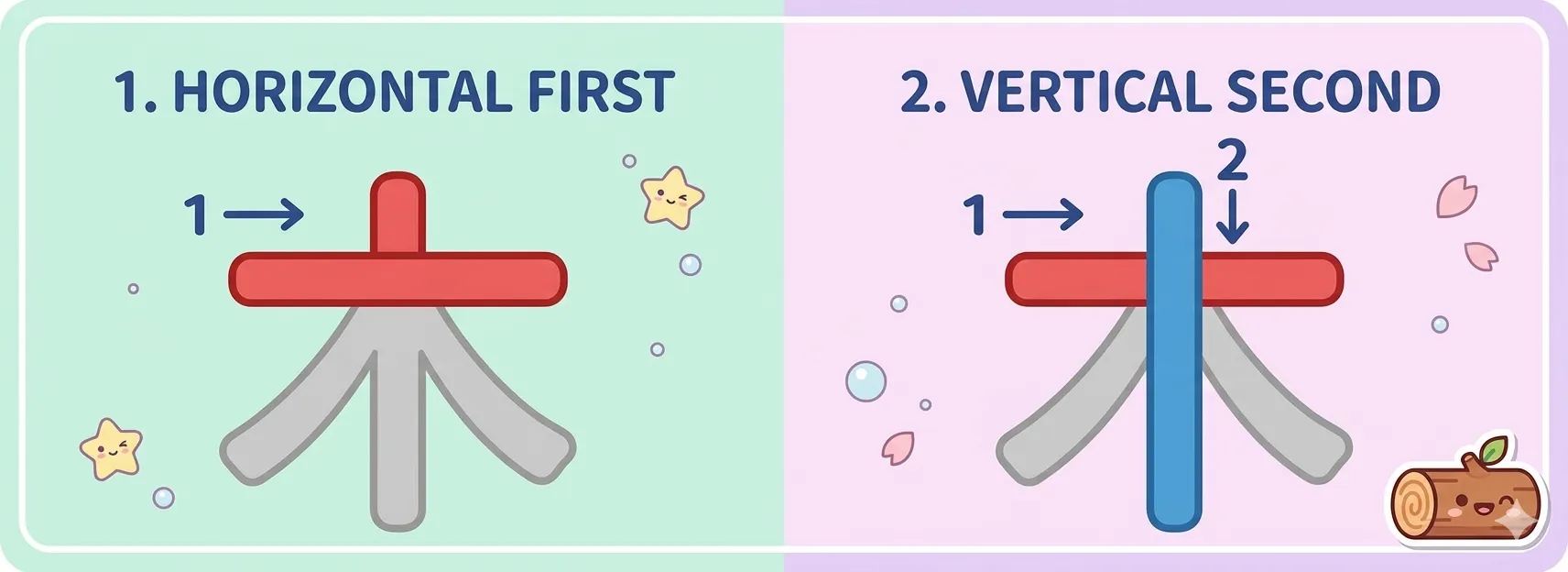
Rule 3: Horizontal Before Vertical
When a horizontal and vertical stroke cross, the horizontal line often comes first. Not always, but often enough that it is a very useful guess.
· 十 starts with the horizontal line, then the vertical line
· 干 follows the same general logic
· Some crossing structures in larger kanji also follow this rhythm
This is one of those rules that feels small until you realize how often you need it.
Rule 4: Outside Before Inside
If a kanji has an enclosing shape, you usually start with the outer frame before writing what sits inside it.
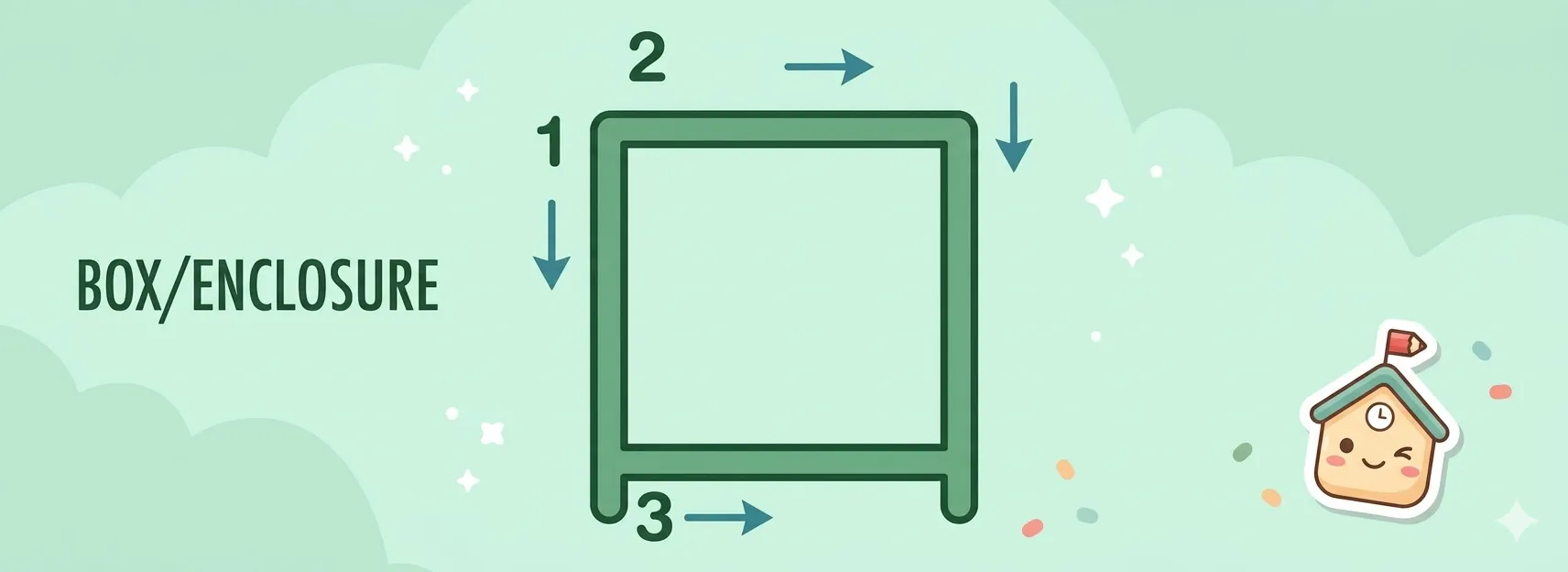
· 同 begins with the outer box shape before the inside
· 月-like or window-like frames often start outside first
· Characters with partial enclosures often follow the same logic
Think of it like assembling a room before placing the furniture.
Rule 5: Close the Box Last (Usually)
This is the part beginners often miss. In enclosed characters, you often write the outer shape first, then the inside, and then close the bottom or final line last.
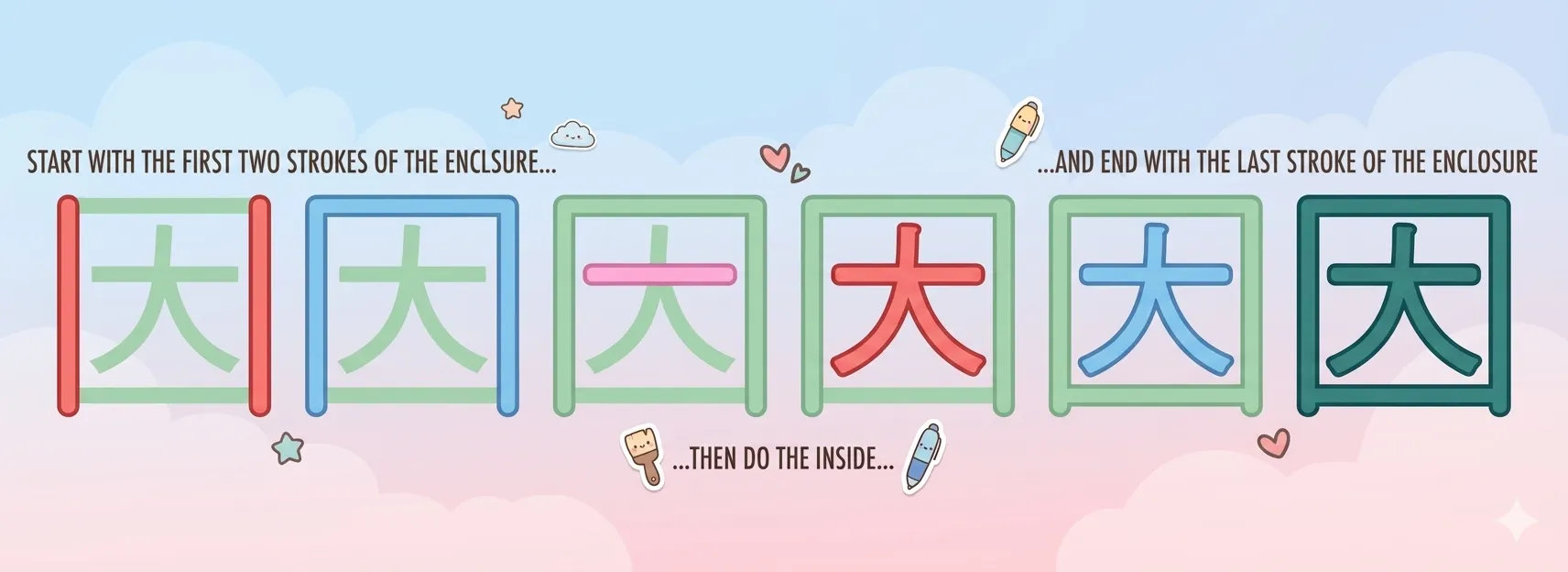
· 国 starts the frame, adds the inside, then closes the outer shape
· 田 and similar characters also follow “outside, inside, close” logic
· Full boxes often behave this way, though not every enclosure is identical
This pattern is extremely useful because it keeps you from trapping your own pen inside the character too early.
Close the Frame at the End
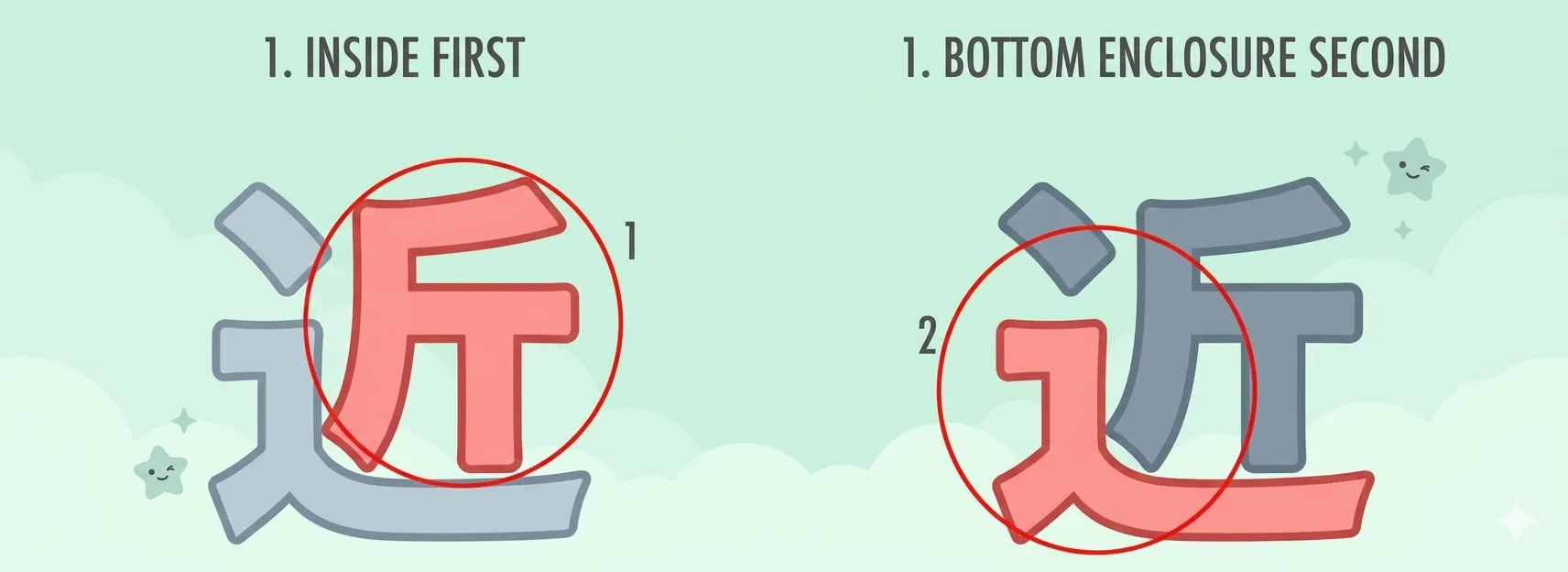
Some kanji have a shape that wraps around the rest of the character, like a box or an open frame. When that happens, the bottom enclosing stroke usually comes last.
Think of it like packing a box. You do not seal the bottom before you put everything inside. You write the inner strokes first, then close the shape at the end.
This pattern shows up in characters where the outside shape surrounds or partially surrounds the middle. Once you start noticing it, stroke order stops feeling random and starts feeling more like assembly instructions.
So if a kanji looks like it is building toward a closing line at the bottom, that final enclosure probably waits until everything inside is already in place.
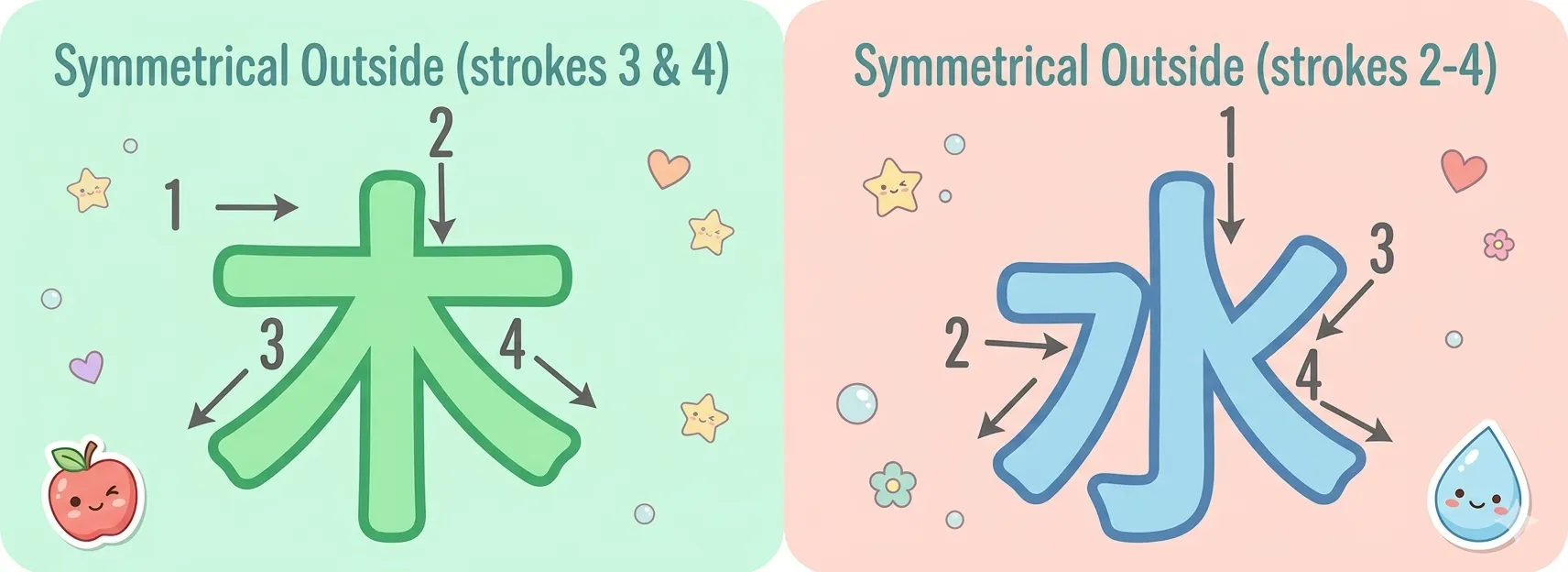
The Backslash Usually Wins the Race
When two diagonal strokes appear together, the one that goes from top-right down to bottom-left usually comes before the one that goes from top-left down to bottom-right.
In other words, the “backslash-looking” diagonal tends to come first, and the “forward-slash-looking” diagonal tends to follow.
This is one of those rules that feels oddly specific until you see it a few times. Then suddenly it starts showing up everywhere.
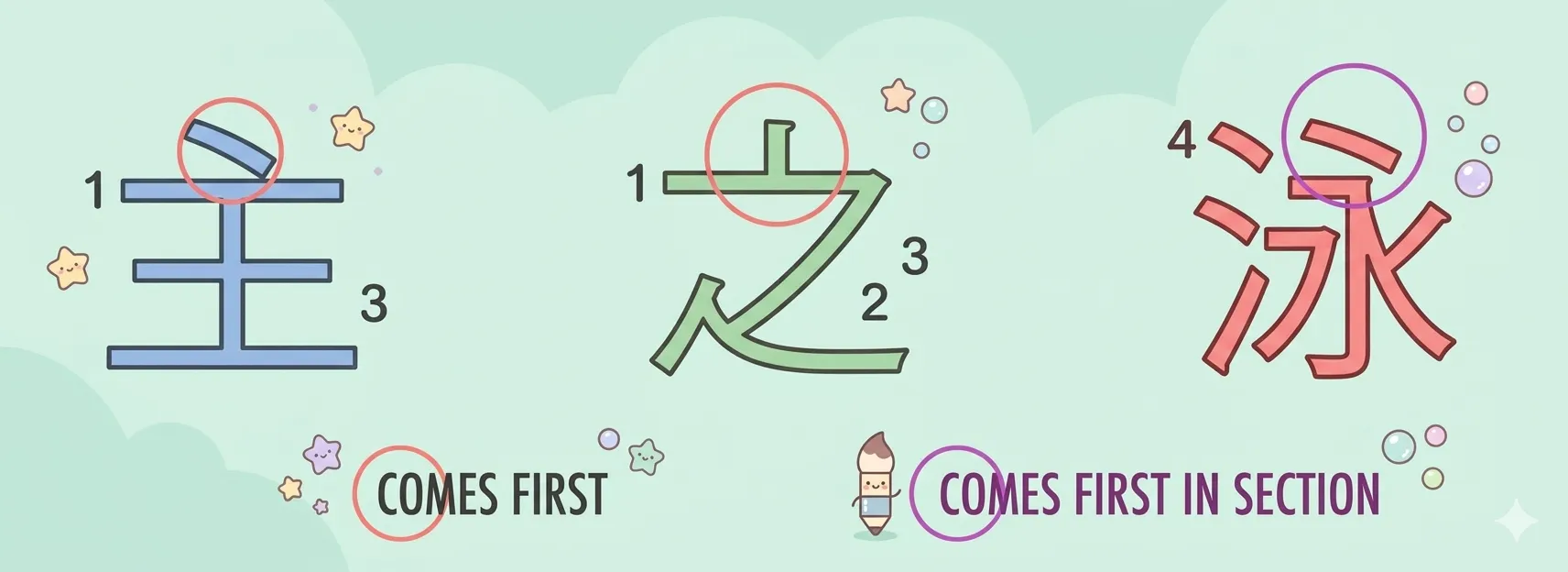
You do not have to memorize it like some sacred calligraphy law carved into a mountain. Just remember: when two diagonals are paired, the right-to-left one usually gets first dibs.
It is a small rule, but it saves a surprising amount of guesswork.
Save the Big Finishing Strokes for Later
Some strokes do a lot of structural work. They cut through multiple other strokes, stretch across the character, or act like the final line that pulls everything together.
Those strokes often come near the end, not the beginning.
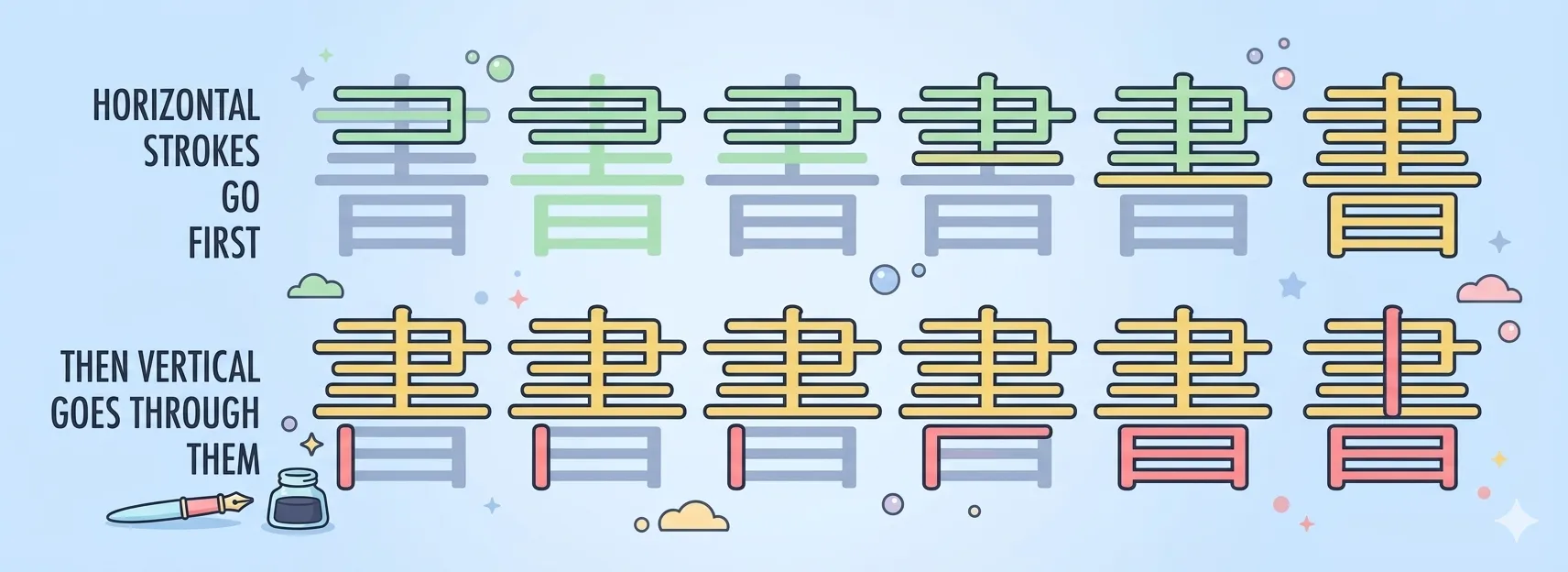
Why? Because they function more like finishing strokes than foundation strokes. You build the smaller internal parts first, then add the long crossing stroke once the rest of the character is already in place.
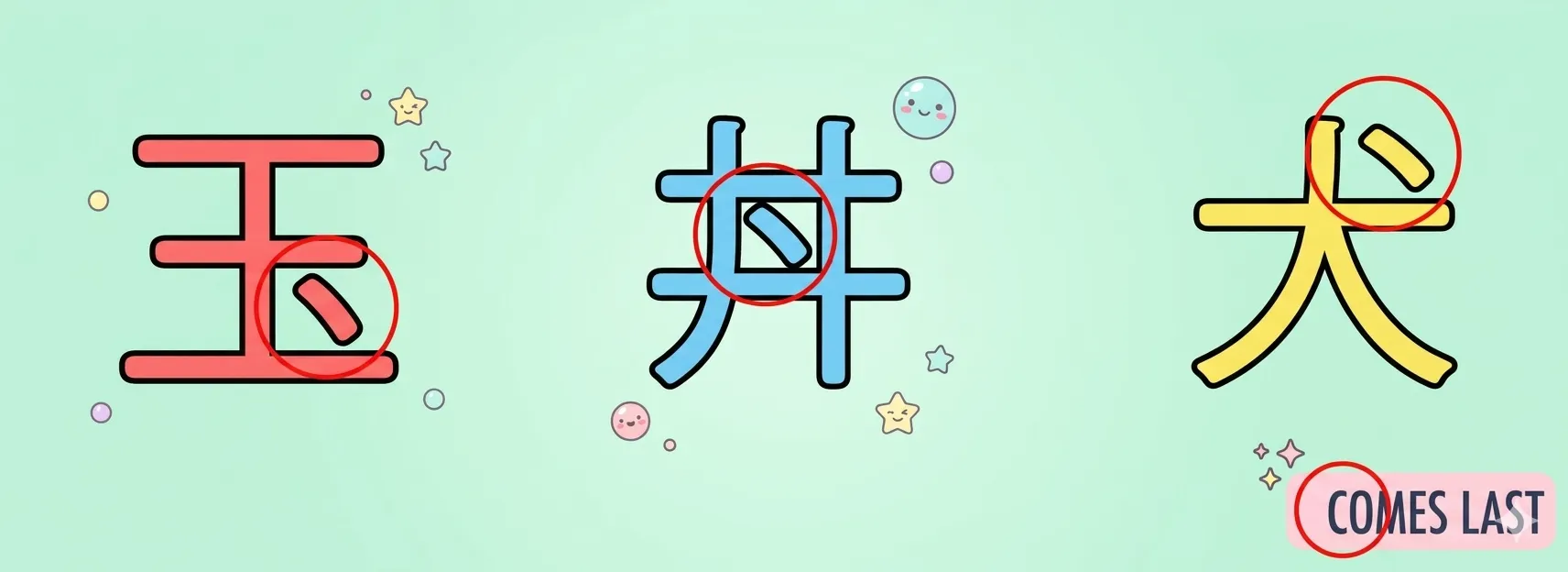
The same logic often applies to small dots and short dash-like marks. They may look simple, but they are often added later, once the main framework of the kanji is already written.
So if you see a long stroke slicing through the middle of a character, or a tiny dot hanging off the side like an afterthought, there is a good chance it belongs near the end of the sequence.
Not always. But often enough that this rule is worth keeping in your mental toolbox.
Break the Kanji Into Smaller Parts First
If a kanji looks overwhelming, do not try to process it as one giant shape. That is how stroke order starts feeling like chaos.
A better approach is to write the kanji section by section, using its visible parts or radicals as a guide.
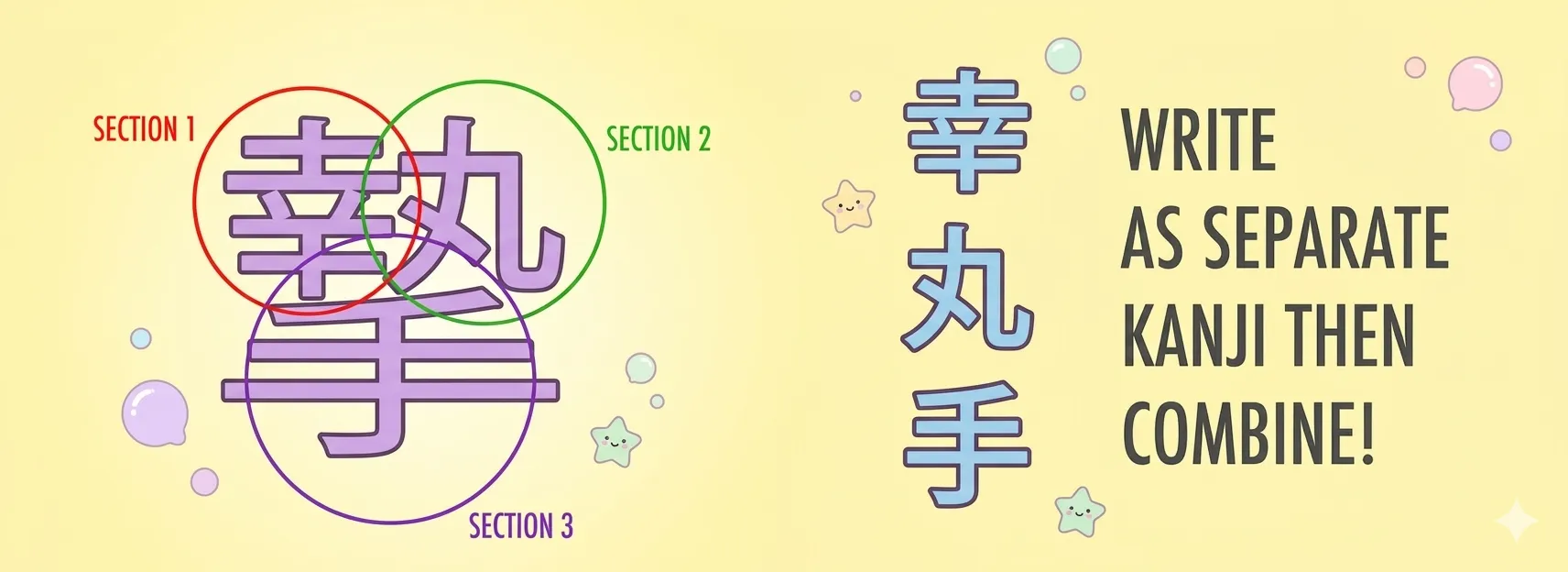
Many kanji are built from smaller components. Once you recognize those pieces, the writing order becomes easier to follow because you are no longer dealing with one giant mystery symbol. You are dealing with smaller units that get written in a more natural sequence.
This is also why radicals matter so much. They are not just useful for memory or dictionary lookup. They also make the writing process easier to understand.
Instead of asking, “How do I write this whole kanji?”
You start asking, “Which part comes first?”
That is a much better question.
And for beginners, it is usually the question that makes stroke order feel manageable for the first time.
And if the character still looks like a geometry exam, open a reference after you guess. That “guess first, check second” pattern is much better for memory than only copying passively. It also pairs well with Kanji for Beginners, because once you know what kanji is doing conceptually, stroke order becomes less about fear and more about pattern recognition.
How to Practice Kanji Stroke Order Without Hating Your Life
The worst possible plan is to write the same kanji twenty times while your brain leaves the room. That may look productive, but it is mostly hand cardio.
A better plan is smaller and smarter:
1) Learn a few common kanji, not a hundred.
Pick characters you actually see in beginner material. Common kanji makes practice feel useful much faster.
2) Say the rule as you write.
Top to bottom. Left to right. Outside before inside. Saying the pattern out loud once or twice helps your brain connect motion to structure.
3) Use tiny review sessions.
Five good minutes every day beats a giant “I guess I’m doing kanji now” weekend session.
4) Mix writing with recognition.
After practicing a few characters, switch to something active like Kanji123 or a short session on MochiKanji. Writing and recall reinforce each other much better than either one alone.
5) Use kana practice as a reset when your brain gets dramatic.
When stroke order starts feeling heavier than it should, taking five minutes with Learn Hiragana lessons, Learn Katakana lessons, or even the writing game can reset your confidence fast.
When Stroke Order Matters Most
You do not need to obsess over Kanji Stroke Order every second. But there are a few situations where it matters a lot more:
· when you are writing by hand
· when you use handwriting input tools to look up unknown kanji
· when you keep forgetting the same character
· when similar-looking kanji keep blending together
· when you want cleaner, more confident recall instead of vague recognition
If your goal is only reading, stroke order still helps because it teaches the structure of the character. If your goal includes writing, then it becomes much harder to ignore.
What to Learn Next
If you want to keep this practical, here is the clean beginner path: review the Japanese Writing System if the big picture still feels fuzzy, build kana confidence on MochiKana, strengthen your kanji base with Kanji for Beginners, then study meaning plus vocabulary in Learn Kanji & Japanese Vocabulary.
From there, use Kanji Stroke Order as one more tool — not an isolated subject you suffer through separately, but part of a bigger system that helps reading, writing, and recall all support each other.
Final Thoughts
Kanji Stroke Order is not some ancient ritual designed to test your worth as a learner. It is just a system that makes characters more consistent to write and easier to learn.
So no, you do not need to panic over every tiny line. But yes, learning the basic rules will make kanji feel less random, less frustrating, and much more guessable when you meet a new character.
Start with the main patterns. Practice a few useful kanji. Check stroke order when you need it. Then keep the loop going with MochiKanji for guided study and Kanji123 for quick recall. That is a much better use of your time than arguing with one stubborn character for half an hour.
FAQ
Does Kanji Stroke Order really matter?
Yes. It matters for writing, memory, handwriting input, and recognizing kanji structure. You do not need to obsess over it, but learning the main patterns is absolutely useful.
What is the first Kanji Stroke Order rule beginners should learn?
Top to bottom and left to right are the two most useful first rules. They show up constantly and make many characters easier to guess.
Do all kanji follow the same stroke order rules?
Most kanji follow a small set of common patterns, but there are exceptions. Learn the patterns first, then check unusual cases when needed.
Should I learn stroke order before meanings and readings?
No. Stroke order should support your kanji learning, not replace it. A good beginner approach combines meaning, vocabulary, and writing patterns together.
How can I practice Kanji Stroke Order effectively?
Practice a small number of common kanji, say the rule while writing, review in short sessions, and combine writing practice with recall tools like quizzes.