How do you feel about your Japanese pronunciation right now?
If you’re honest, there’s probably at least one sound you’re not totally sure about. Maybe it’s the R. Maybe it’s the way です trails off at the end. Maybe you’ve been told your pitch sounds “a little off” by a native speaker, but you have no idea what that actually means.
Here’s the thing: Japanese pronunciation is genuinely one of the most learnable parts of the language. Because Japanese uses a phonetic writing system, what you see is almost always what you get. Once you understand how the sounds work — where they come from, how your mouth makes them — you can apply that knowledge every single time you open your mouth.
This guide covers everything. We start with the foundations: the writing system, the vowels, the consonants. Then we move into the tricky sounds that trip up most learners. After that, we tackle word-level patterns like long vowels, double consonants, and devoicing. Finally, we get into pitch accent and sentence rhythm — the stuff that separates “textbook Japanese” from “sounds like a real person Japanese.”
Spend some real time with this. You’ll come out the other side sounding noticeably better.
Heads up: This guide uses hiragana throughout. If you haven’t learned it yet, go read our hiragana guide for beginners first. It only takes a day or two, and it will make everything in this guide click much faster. Come back when you’re ready.
This video provides you with resources and methods needed to practice basic Japanese step by step:
Why Japanese Pronunciation Is One of the Most Learnable Things About the Language
Let’s get one thing out of the way first: Japanese pronunciation is not as hard as people think.
Yes, there are sounds that don’t exist in English. Yes, pitch accent is a real thing that takes time to develop. However, compared to the sheer chaos of English spelling, Japanese is remarkably consistent.
Consider English for a moment. The letter combination “ough” is pronounced differently in “though,” “through,” “thought,” “rough,” and “cough.” That’s five completely different sounds from the same six letters. English is a language where spelling and pronunciation went to war centuries ago, and neither side won cleanly.
Japanese, by contrast, operates on a simple principle: one symbol, one sound. Because hiragana is a phonetic syllabary, each character represents a fixed syllable sound that never changes. Therefore, once you know how the sounds work, you can read and pronounce almost any Japanese word you encounter — even words you’ve never seen before.
Furthermore, Japanese has far fewer individual sounds than English. English has around 44 distinct phonemes. Japanese has closer to 25. So you’re actually working with a smaller toolbox.
The challenge isn’t quantity — it’s precision. Some Japanese sounds are close to English sounds but not identical. Getting those small differences right is what separates “understandable” from “sounds natural.” That’s exactly what this guide is for.
Japanese Sounds and the Writing System
How Hiragana Unlocks Pronunciation
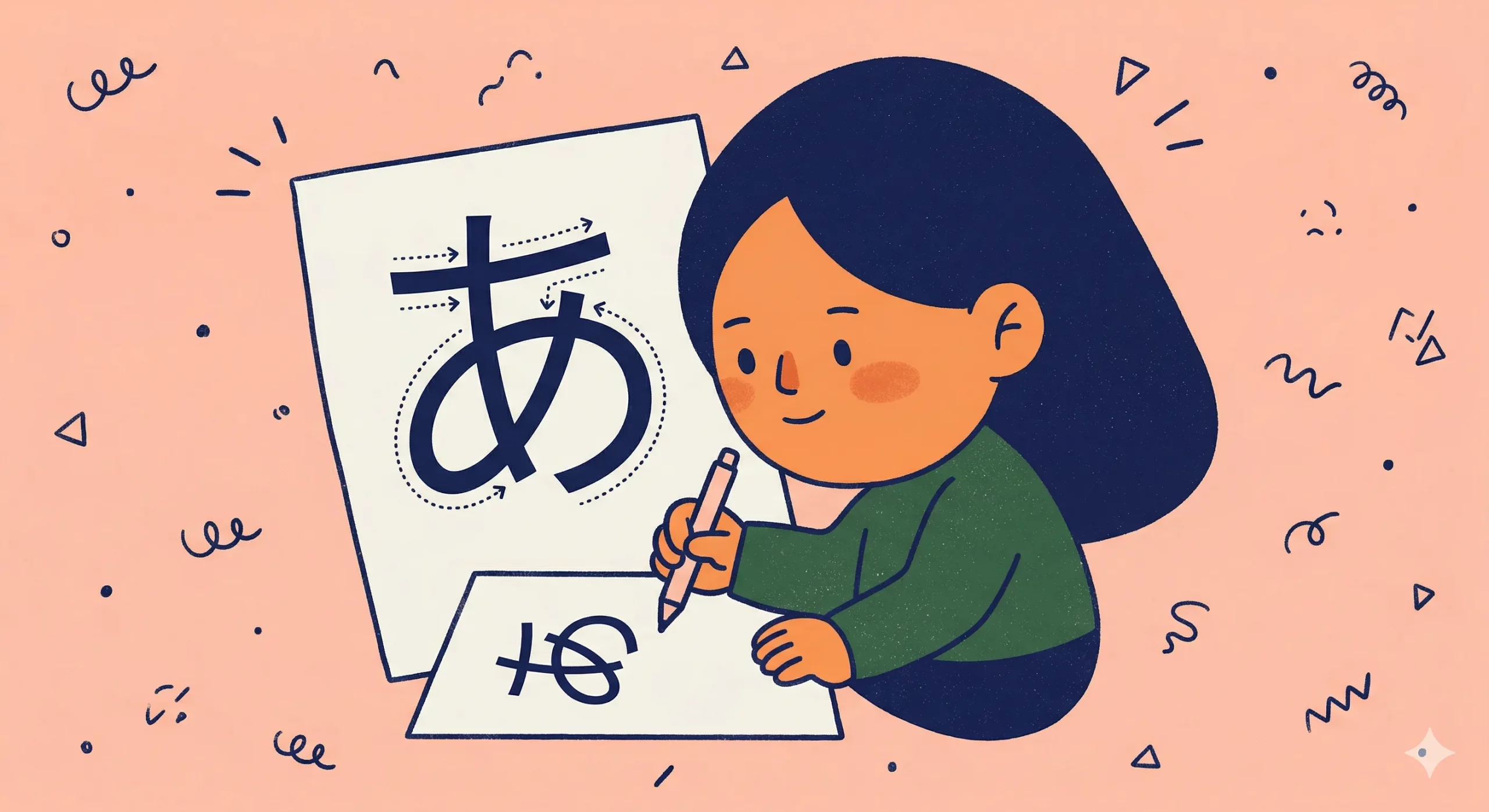
Japanese uses three writing systems: hiragana, katakana, and kanji. For pronunciation purposes, hiragana is the most important one to understand.
Each hiragana character represents a syllable. Not just a single consonant or vowel — a full syllable. So か is not just “k” — it’s the entire syllable “ka.” ち is not just “ch” — it’s the full syllable “chi.”
This matters because it changes how you should think about Japanese sounds. Instead of breaking words into individual letters like English, Japanese chunks sounds into syllable units. The word かわいい (kawaii) has four syllables: か, わ, い, い. Each one is a clean, separate unit of sound.
Understanding this syllabic structure is foundational to good Japanese pronunciation. Because each character is one syllable, timing becomes very regular. Every syllable gets roughly equal time. There’s no stretching some syllables and squishing others the way English does constantly.
One Symbol, One Sound — Almost Always
The “almost” in that heading is doing some work. There are a small number of exceptions we’ll cover later — like the way ん changes depending on what comes after it, or the way す drops its vowel at the end of words.
However, as a general rule, Japanese spelling is honest with you in a way that English simply is not. If you see the word たべもの (tabemono, meaning “food”), you can pronounce it exactly as written: ta-be-mo-no. No surprises.
This means that learning hiragana is not optional — it’s the single best investment you can make in your pronunciation. Romaji (writing Japanese sounds with English letters) hides information and teaches bad habits. So if you haven’t mastered hiragana yet, head to our hiragana guide before going further.
Japanese Vowels
The Five Vowels That Never Change
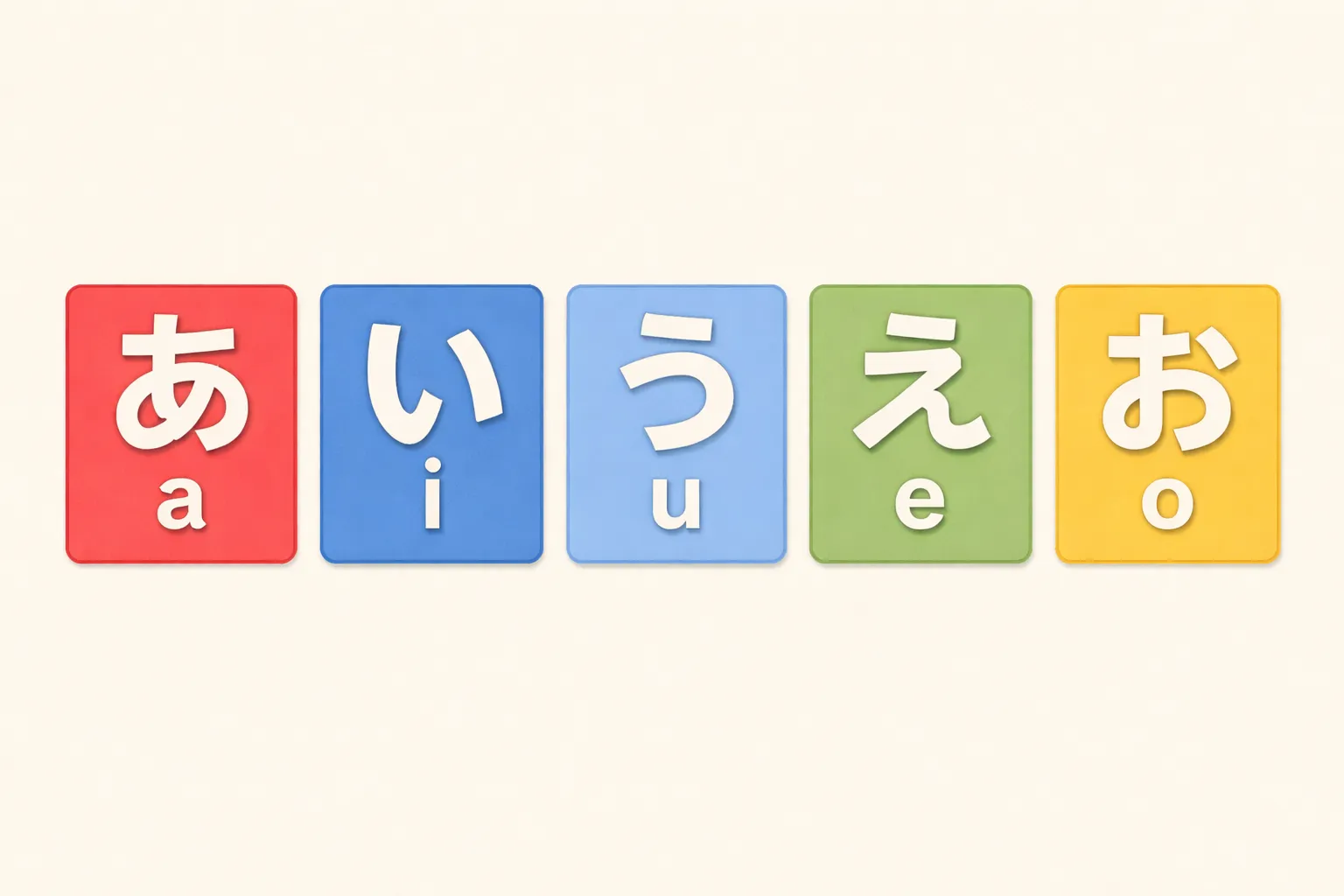
Japanese has exactly five vowel sounds. Moreover, unlike English, they never change. A Japanese あ always sounds like あ. An English “a” can sound like “cat,” “cake,” “car,” or “caw” — four totally different sounds from the same letter.
Here are the five Japanese vowels:
| Hiragana | Romanization | How to pronounce it |
| あ | a | Like “ah” — mouth open, tongue low and central |
| い | i | Like “ee” — tongue high and forward, lips relaxed |
| う | u | Like “oo” but with relaxed, unrounded lips — tighter than English “oo” |
| え | e | Like “e” in “bed” — tongue mid-height, forward |
| お | o | Like “o” in “go” — tongue mid-height, back |
Say these aloud: あ、い、う、え、お. Feel your tongue moving as you go through them. It rises and falls. It moves forward and back. Those tongue movements are what creates the different vowel sounds — not anything you do with your lips or teeth.
う Is Different From What You Think
The う sound trips up a lot of English speakers because we automatically want to round our lips when making an “oo” sound. However, Japanese う is unrounded. Your lips should stay relaxed and relatively flat, and the sound comes from the back of your tongue position, not from your lip shape.
Try this: say “oo” like in “moon.” Now relax your lips completely — don’t push them forward at all — while keeping your tongue in roughly the same position. That’s closer to Japanese う.
This matters particularly for words like すき (suki, “like/love”) and つ (tsu). Getting the vowel wrong here makes you sound distinctly non-native.
Vowels in Combination
Japanese vowels sometimes appear back-to-back. When they do, you pronounce each one distinctly as a separate syllable. There’s no blending like in English diphthongs.
For example:
- うえ (ue) = “u-e,” not “way”
- あおい (aoi) = “a-o-i,” three clean syllables, not “ow-ee”
Take your time with each syllable. Because Japanese has very even timing, rushing through back-to-back vowels sounds unnatural.
Japanese Consonants
What Makes a Consonant
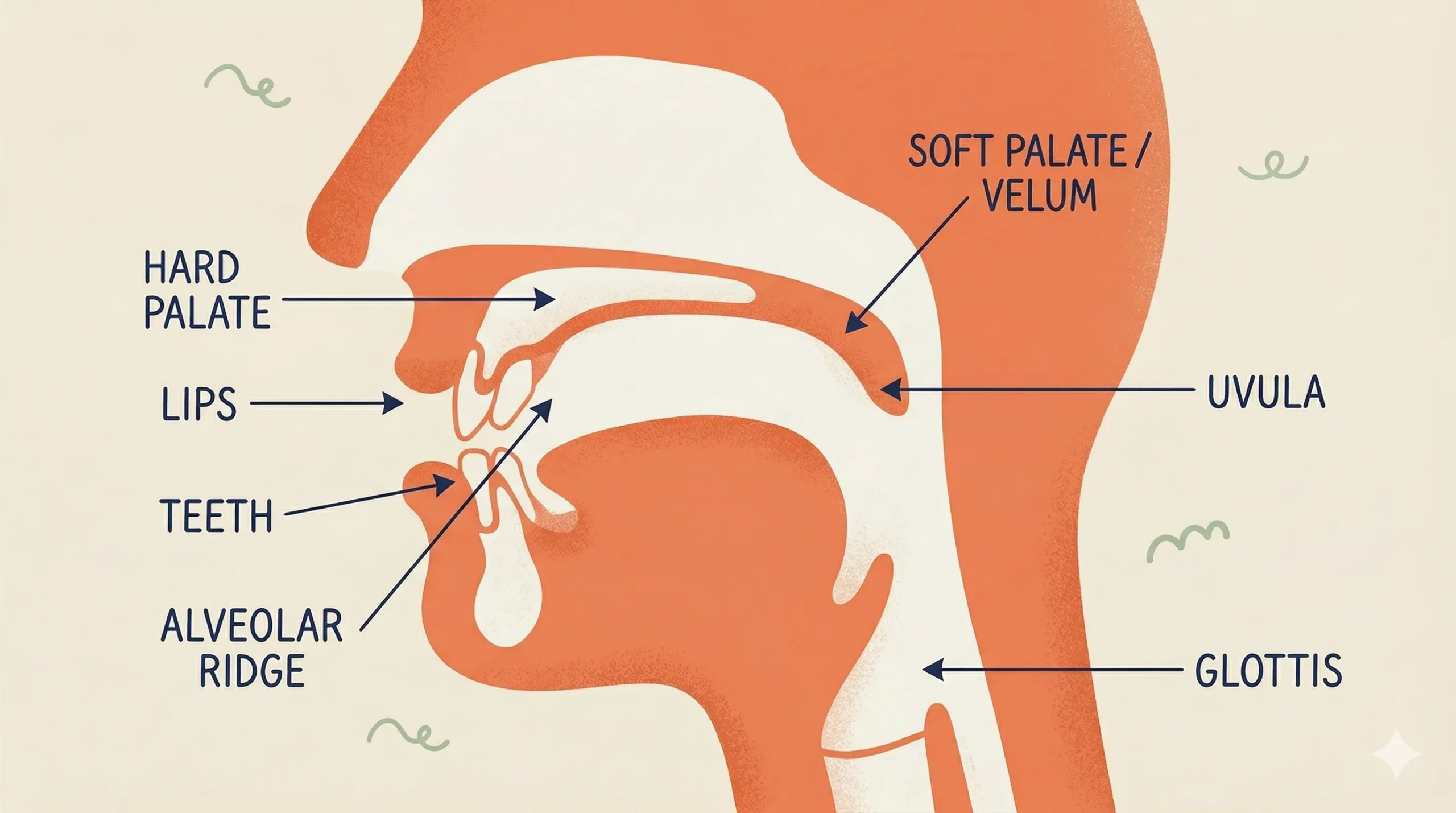
If vowels are created when air flows freely out of your mouth, consonants are the opposite. Consonants happen when something blocks or interrupts that flow of air. The place where the blockage happens, and the way it happens, determines the sound.
Every consonant has four key properties:
- Where the air is blocked (lips? teeth? back of the mouth?)
- How it’s blocked (completely stopped? squeezed through a gap? tapped quickly?)
- Whether your vocal cords vibrate (voiced vs. unvoiced)
- Whether the air goes through your mouth or nose (oral vs. nasal)
This might sound like a lot of terminology. However, once you internalize these four questions, you can understand and recreate any sound in Japanese — or any language, for that matter.
A Tour Through the Japanese Consonant System
Let’s move through Japanese consonants from the front of your mouth to the back. As you read, try each sound out loud.
Bilabial Sounds — Both Lips
These sounds are made by bringing both lips together.
ば び ぶ べ ぼ (ba bi bu be bo) — Voiced bilabial stop Your lips close completely, stop the air, then release. Your vocal cords vibrate.
ぱ ぴ ぷ ぺ ぽ (pa pi pu pe po) — Unvoiced bilabial stop Same lip movement, but your vocal cords are silent. You can feel a small puff of air on your hand.
ま み む め も (ma mi mu me mo) — Voiced bilabial nasal stop Your lips close like a stop, but air escapes through your nose instead of your mouth. This is why “m” sounds nasal.
Alveolar Sounds — The Ridge Behind Your Teeth
Place your tongue tip just behind your upper front teeth. That bumpy ridge is the alveolar ridge, and it’s one of the busiest spots in Japanese.
だ で ど (da de do) — Voiced alveolar stop Your tongue tip touches the ridge and releases.
た て と (ta te to) — Unvoiced alveolar stop Same action, no vocal cord vibration.
な に ぬ ね の (na ni nu ne no) — Voiced alveolar nasal Tongue touches the ridge, but air goes through the nose.
さ す せ そ (sa su se so) — Unvoiced alveolar fricative Your tongue doesn’t touch the ridge — instead it creates a narrow gap that forces air through, creating a “hissing” friction sound.
ざ ず ぜ ぞ (za zu ze zo) — Voiced alveolar fricative Same as above, but with vocal cord vibration added.
Palato-Alveolar Sounds — A Little Further Back
し (shi) — Unvoiced palato-alveolar fricative The tongue tip moves slightly further back than for さ, creating the “sh” friction sound. Notably, Japanese し sounds slightly different from the English “sh” — it’s produced a touch further back. The difference is subtle, but it’s there.
じ ぢ (ji) — Voiced palato-alveolar affricate An affricate combines a stop and a fricative. Your tongue stops the air, then releases it through a narrow gap. じ and ぢ are now pronounced identically in standard Japanese.
ち (chi) — Unvoiced palato-alveolar affricate The unvoiced version of the above. Notice that the romanization “chi” undersells how far back the tongue is compared to English “ch.”
Velar Sounds — The Soft Palate
The velum is the soft, fleshy part of the roof of your mouth, far back behind the hard palate.
か き く け こ (ka ki ku ke ko) — Unvoiced velar stop The back of your tongue touches the velum.
が ぎ ぐ げ ご (ga gi gu ge go) — Voiced velar stop Same position, vocal cords vibrate. Additionally, some Japanese speakers — particularly older speakers or those in certain regions — use a nasal version of this sound called the nasal が. More on that in the next section.
Special Cases
ふ (fu) — Unvoiced bilabial fricative This one doesn’t exist in English. ふ is made by blowing air through a narrow gap between both lips — not by touching the bottom lip to the teeth like English “f.” It sits somewhere between “f” and “h.”
ひ (hi) — Unvoiced palatal fricative The body of your tongue creates friction near your hard palate. In some speakers, this sounds closer to the “h” in “huge” said with a strong exhale. Others produce it closer to the “ch” in the German “ich.” Neither one is the English “h.”
は へ ほ (ha he ho) — Unvoiced glottal fricative These are true “h” sounds — friction at the glottis, which is the space between your vocal cords.
ん — Nasal (context-dependent) ん appeared four times in the consonant tour above, because it changes depending on context. It’s the only Japanese consonant that exists without a vowel after it, making it unique.
The Sounds That Actually Trip Learners Up
ふ: The Sound That Doesn’t Exist in English
Most learners use English “f” for ふ. That’s wrong. English “f” is labio-dental — bottom lip to upper teeth. Japanese ふ uses neither tooth. Both lips form a small opening and air blows through — a bilabial fricative.
Practice tip: Blow on your hands to warm them up. That soft, lips-only exhale is the ふ position. Now shape it into a syllable.
Practice words: ふるい (old), おふろ (bath), ふくろう (owl)
ひ: The H That Isn’t Really an H
ひ is a palatal fricative — your tongue body creates friction near your hard palate. It sounds softer and more breathy than English “h,” closer to the “h” in an exaggerated “huge” or the German “ich.”
The difference is subtle, but training your ear to notice it helps you produce it more naturally over time.
ん: The Most Inconsistent Sound in Japanese
ん is unique — it’s the only Japanese consonant without a following vowel, and it changes depending on what comes after it. This process is called coarticulation.
| What follows ん | ん sounds like | Example |
| Bilabial (ぱ, ぼ, ま) | “m” | しんぶん → “shimbun” |
| Velar (か, が) | “ng” in “sing” | ほんが → “hong-ga” |
| Alveolar (な, た, さ) | standard “n” | てんのう → “ten-nou” |
| End of word / before vowel | uvular nasal | ほん → held nasally |
Why does this matter? Confusing ん with な/に/ぬ/ね/の changes meaning entirely. The famous example: しんいたみえき (Shin-Itami Station) vs しにたみえき (“I-want-to-die Station”). Native speakers will notice.
らりるれろ: The Sound Everyone Gets Wrong
The Japanese R is neither English “r” nor English “l.” Here’s the actual difference:
| Sound | Tongue position |
| English R | Curled back, touching nothing — floating in the mouth |
| English L | Tip pressed firmly on alveolar ridge, held there |
| Japanese R | Tip briefly taps the alveolar ridge, then immediately releases |
The closest English equivalent is the quick “d” in American “ladder” or “butter” — that fast tongue tap is almost exactly the Japanese R.
Practice: Instead of practicing “r” or “l,” practice the sound in “ladder,” then apply it to ら、り、る、れ、ろ.
じ/ぢ and ず/づ
In modern standard Japanese, じ = ぢ and ず = づ in pronunciation. You’ll still see ぢ and づ in writing (usually from rendaku or repeated sounds), but just pronounce them as じ and ず.
を
を is technically “wo,” but in contemporary spoken Japanese it sounds exactly like お. The “w” disappeared. For everyday speech, just say お.
Pronouncing Japanese Words
Long and Short Vowels
A long vowel is held for twice as long as a short one — and in Japanese, that length changes meaning.
| Short | Meaning | Long | Meaning |
| おじさん | uncle | おじいさん | grandfather |
| おばさん | aunt | おばあさん | grandmother |
| こわい | scary | かわいい | cute |
That last pair is the most common beginner trap. One extra い turns “scary” into “cute.” Learn vowel length when you learn the word — not as an afterthought.
Think of it this way: short vowel = one beat, long vowel = two beats.
Double Consonants (っ)
A small っ before a consonant signals gemination — a brief held pause before the consonant releases. Your mouth gets into position, holds silently for a beat, then fires.
- きっぷ (kippu, ticket) — pause before ぷ
- ちょっと (chotto, a little) — pause before と
- がっこう (gakkou, school) — pause before こ
Skipping this pause, or adding a full “tsu” sound, both produce the wrong word.
Devoicing: When Vowels Disappear
This is the correction most new learners receive first. Native speakers drop the final う in です and ます almost entirely:
- です → sounds like “des” (not “deh-su”)
- ます → sounds like “mas” (not “mah-su”)
- すき → sounds like “ski”
This dropping of vowel sound is called devoicing. It affects い and う especially — at the end of words and before voiceless consonants. し and ち are also commonly devoiced:
- わかりました → the し is nearly silent
- すずきさん (Suzuki-san) → multiple vowels devoiced
Devoicing is everywhere in natural Japanese speech. Replicating it makes a bigger difference to your accent than almost anything else.
Pitch Accent in Japanese Pronunciation
Japanese Is Not a Flat Language
A common misconception: Japanese is “flat,” with equal weight on every syllable. This is wrong. Japanese uses pitch accent — syllables switch between high (H) and low (L) tones.
This is different from English stress (which adds loudness) and from Chinese tones (which mark individual syllable meaning). Japanese pitch is about musical note, not volume — and it applies to words and phrases as a whole.
Three core rules cover most Japanese words:
- If a word starts LOW, the next syllable goes HIGH
- If a word starts HIGH, the next syllable drops LOW
- Once a word drops from HIGH to LOW, it doesn’t go back up
When Pitch Changes Meaning
Some Japanese words share the same spelling but differ only in pitch:
| Word | Pitch | Meaning |
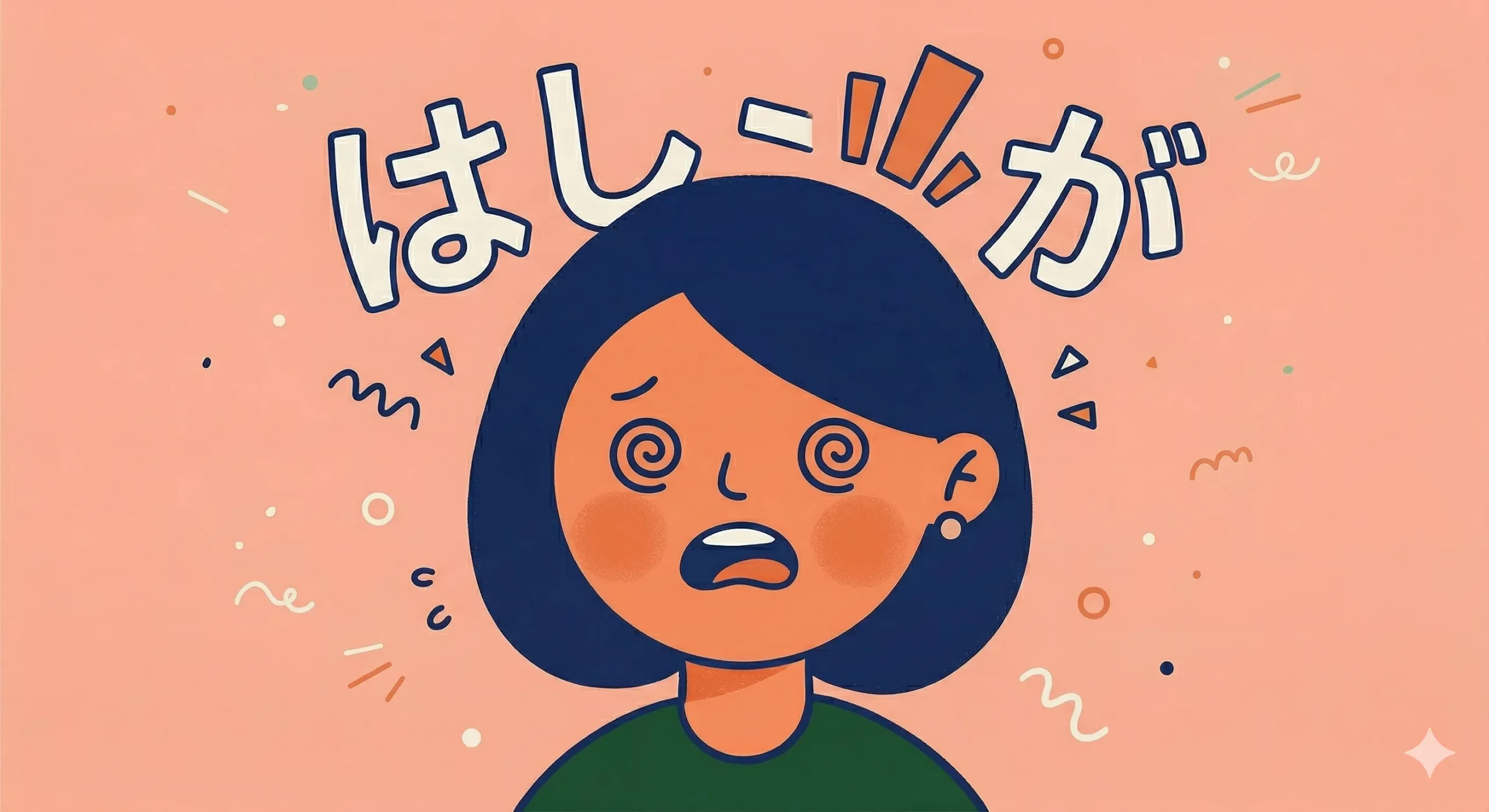
| はし | HL | Chopsticks |
| はし | LH | Bridge |
| かみ | HL | God |
| かみ | LH | Paper / Hair |
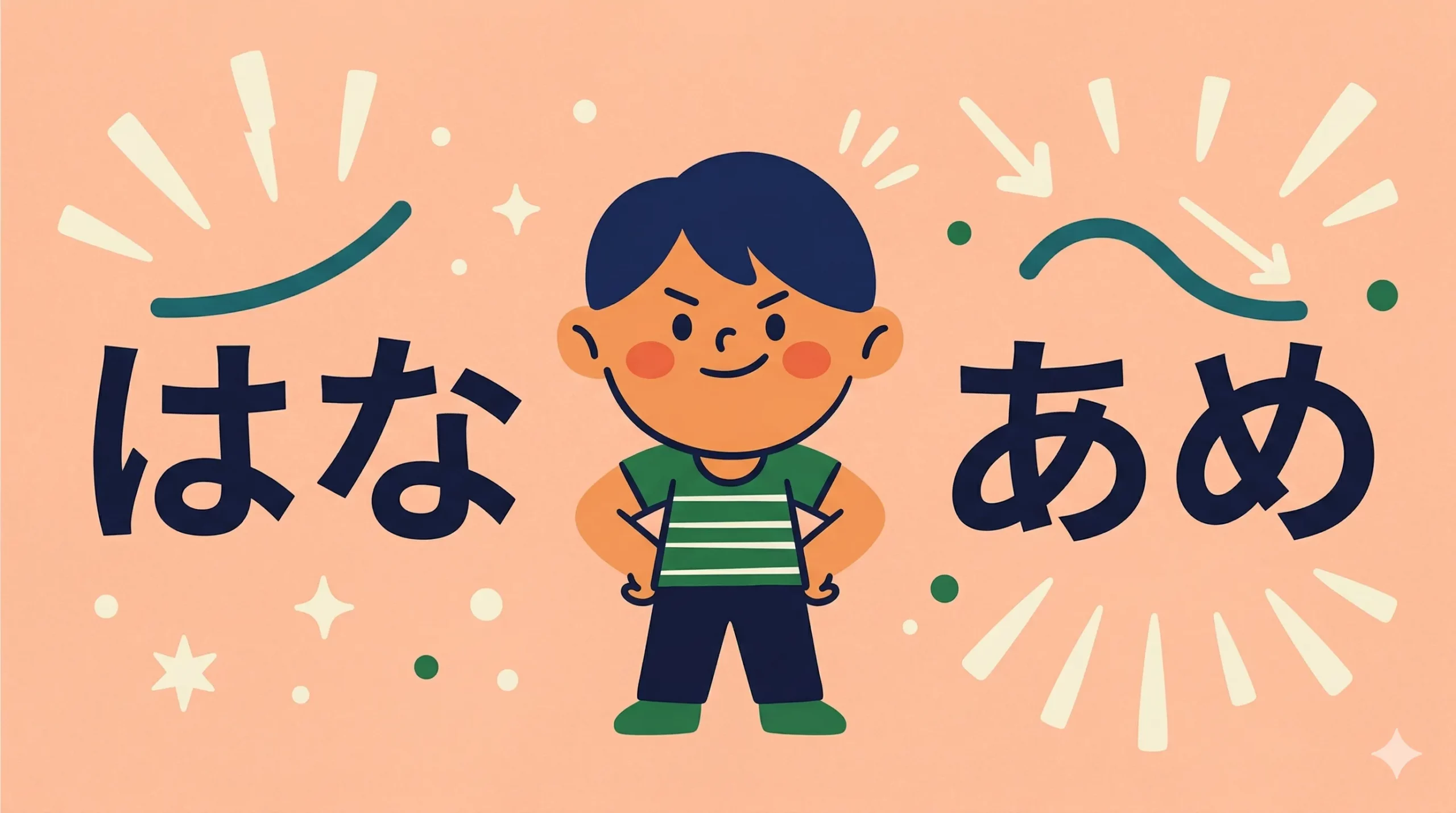
| あめ | HL | Rain |
| あめ | LH | Candy |
Getting these wrong doesn’t usually cause disaster — context helps. However, consistently wrong pitch is what makes speech sound foreign even when vocabulary and grammar are correct.
Pitch in Sentences
Phrases tend to start higher and fall as they continue. Pauses at particles and punctuation let pitch reset for the next phrase.
Take this sentence: コウイチは毎朝、カレーを食べながら日本語を勉強します。
It has three natural phrase chunks, each with its own pitch arc:
- コウイチは毎朝 — rises, then falls
- カレーを食べながら — resets, arcs again
- 日本語を勉強します — final arc, ends low
Speaking in phrase chunks — not one long rush — is the single most impactful thing you can do for sentence-level pronunciation.
Common Mistakes and How to Fix Them
Mistake 1: Mapping Japanese Sounds to English Ones
The brain defaults to familiar patterns. This causes: English “f” for ふ, English “r” for らりるれろ, English vowels applied inconsistently.
Fix: For each tricky sound, go back to the physical description in this guide — where in the mouth, how the air moves. Practice from that articulation point, not from the English approximation.
Mistake 2: Ignoring Vowel Length
Long vowels change meaning. Getting them wrong marks you as a beginner immediately.
Fix: Learn vowel length as part of the word, not separately. When you add a word to your vocabulary, note whether its vowels are short or long and practice it that way from day one.
Mistake 3: Fully Pronouncing です and ます
Because these words end almost every sentence, mispronouncing them stands out constantly.
Fix: Drop the final う. Record yourself saying です, then say it again with the う barely there. The difference is immediately audible.
Mistake 4: Treating っ as Either Silent or “Tsu”
Skipping the pause makes words sound wrong. Adding a “tsu” sound adds a syllable that isn’t there.
Fix: Think of っ as a “silent hold” — position your mouth for the next consonant, wait one beat, release. No sound during the hold, just a pause with intention.
Mistake 5: Skipping Pitch Accent Entirely
You’ll be understood without perfect pitch. However, ignoring pitch completely limits how natural you’ll ever sound — and bad habits built early are hard to undo later.
Fix: You don’t need to master pitch now. However, start noticing it immediately. Look up pitch patterns when you look up vocabulary. Pay attention to where native speakers’ voices rise and fall.
How to Keep Improving
Listen Before You Speak
Your brain needs a model before it can produce a sound. Passive listening — podcasts, shows, music — primes your ear faster than you’d expect. Listen to Japanese as much as possible, even without active study goals.
Practice Minimal Pairs
Words that differ by one sound train precision fast:
- かわいい vs こわい (cute vs scary — vowel length)
- ようか vs よっか (8th vs 4th — double consonant)
- おじさん vs おじいさん (uncle vs grandfather — vowel length)
Record Yourself
Uncomfortable, but essential. You will hear things you cannot feel while speaking. Compare to native speakers. That gap is your specific practice target. Looking back at recordings from a month ago is genuinely motivating.
Get Corrective Feedback Early
Pronunciation errors become habitual fast. A native speaker or qualified teacher can catch problems in one session that would take months to self-diagnose.
Chase Consistency, Not Perfection
Five minutes of focused practice daily beats one marathon session weekly. Pronunciation is a physical skill — it builds through repetition over time. Build it into your daily routine rather than treating it as a project to complete.