The true starting line of Japanese is to learn hiragana and katakana. Before grammar, before kanji, before conversation—you need kana. They are the phonetic foundation of the language, and without them, progress becomes unnecessarily slow and frustrating.
The good news? Kana is one of the most achievable milestones in Japanese learning. Once you can read hiragana and katakana, Japanese immediately becomes more accessible. Street signs, product labels, menus—even your local Asian supermarket—begin to look less like symbols and more like language.
There are 46 characters in hiragana and 46 in katakana. Ninety-two unfamiliar shapes may sound overwhelming at first, but this is a finite, highly learnable system. With the right strategy, many learners master them within weeks—some even faster.
You do not need exceptional memory. You need structure, repetition, and the right tools.
This article will outline practical methods for learning kana efficiently, followed by carefully selected resources that can help you memorize and retain them with confidence.
- Top 3 Ways to Learn Hiragana and Katakana
- 1. Prioritize Reading Over Writing
- 2. Practice Active Recall
- 3. Use Memory Hints (Mnemonics)
- The Best Resources for Learning Hiragana/Katakana
- Master All Hiragana & Katakana in 1 Hour (JapanesePod101 Video Series)
- Study Hiragana & Katakana Online With MochiKana
- Boost Your Japanese Further with MochiKanji
- Final Thoughts
This video provides beginners with specific information and methods to acquire Hiragana:
Top 3 Ways to Learn Hiragana and Katakana
1. Prioritize Reading Over Writing
At the beginner stage, focus on recognition before production. Being able to quickly read kana is far more practical than being able to handwrite every character from memory.
In modern usage, most written Japanese input happens through typing. If you can read kana, you can type them. Handwriting is valuable, but it requires more time to refine and offers fewer immediate benefits.
That said, tracing or lightly writing characters can still help reinforce visual familiarity. Just ensure your primary goal remains rapid recognition rather than perfect penmanship—for now.
2. Practice Active Recall
Exposure alone is not enough. Once you recognize the characters, shift your focus to retrieval practice. Test yourself frequently and deliberately.
When reviewing, do not simply look at a kana chart. Cover the answers and force yourself to recall the sound from memory. The effort involved in retrieval strengthens long-term retention far more effectively than passive review.
Consistent, focused recall is what transforms short-term familiarity into lasting mastery.
Now that you understand the core principles of efficient kana learning—mnemonics, reading-first focus, and active recall—the next step is choosing the right tools.
The resources below are selected based on one criterion: effectiveness. Each supports visual memory techniques and structured reading practice, helping you move from recognition to automatic recall as quickly as possible. While their formats differ, they all align with the strategies outlined above.
3. Use Memory Hints (Mnemonics)
Mnemonics are one of the most effective tools for memorizing unfamiliar scripts like hiragana and katakana. Instead of trying to brute-force shapes into memory, you connect each character to a visual story or familiar image.
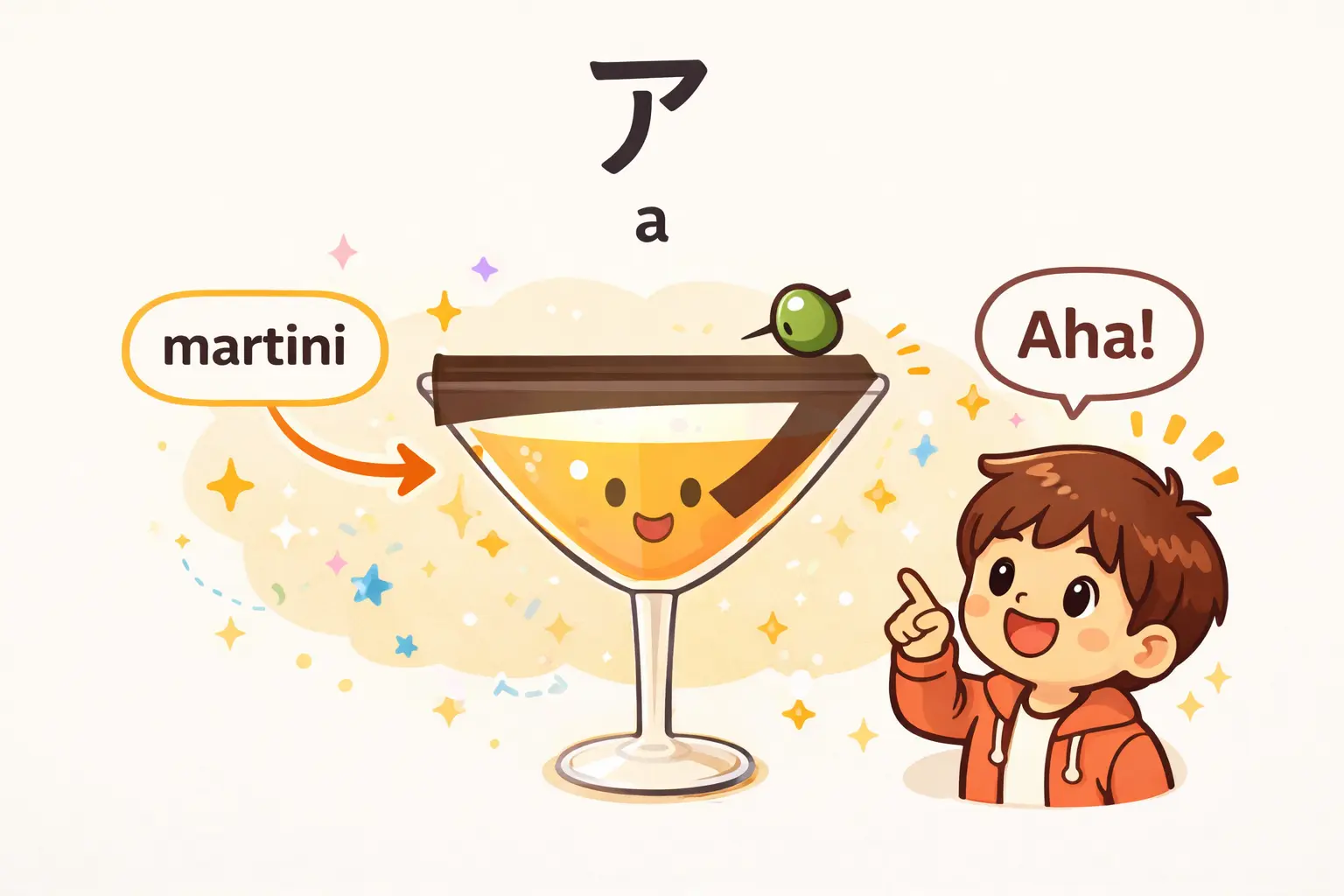
For example, take the hiragana う (u). You might picture a cute little animal blowing air and saying “uuu…”. The curved shape of う can resemble the rounded body of the animal, and the blowing sound helps you remember the pronunciation “u.” Once you connect the shape with that sound effect, recalling the character becomes much easier.
Mnemonics reduce cognitive load. What initially looks like abstract symbols becomes meaningful and memorable. For kana learning, this approach is highly efficient.
The Best Resources for Learning Hiragana and Katakana
Now that you understand the core principles of efficient kana learning—mnemonics, reading-first focus, and active recall—the next step is choosing the right tools.
Also, there is our recommendation of Japanese learning resources in case you are looking for full combo.
The resources below are selected based on one criterion: effectiveness. Each supports visual memory techniques and structured reading practice, helping you move from recognition to automatic recall as quickly as possible. While their formats differ, they all align with the strategies outlined above.
Below are two highly practical options to get started.
Learn ALL Hiragana/Katakana in 1 Hour – How to Write and Read Japanese
| Resource | Format | Pros & Cons |
| Hiragana/Katakana in 1 Hour – How to Write and Read Japanese | YouTube Video Lesson | Pros: – Free – Clear explanations of reading & writing – Good for fast overview of all kana Cons: – Hard to navigate specific characters – Not ideal for systematic long-term review |
| MochiKana | Desktop App | Pros: – Structured learning path – Strong mnemonic integration – Spaced repetition & active recall focus – Easy daily review sessions Cons: – Requires consistent usage for best results |
Structured Full-Script Overview
This series is made by JapanesePod101.com, who are known for offering a huge amount of Japanese learning content. However, at the same time, their content organization tends to be difficult to navigate. For example, these YouTube videos don’t have timestamps, so you may find it hard to keep coming back to where you left off.
This channel includes two free YouTube lessons, each around one hour long—one covering hiragana and the other katakana. The videos begin with a visual overview using charts and graphics, then systematically introduce every character in sequence.
Stroke Order, Fonts, and Mnemonics
Each kana is presented with stroke order guidance, font variations, and an illustrated mnemonic to support memorization. The lesson also briefly explains where the character commonly appears in Japanese usage. When similar-looking kana appear, the instructor pauses to compare them directly, helping learners spot distinctions early.
Built-In Recall Practice
After completing each row of characters, the lesson includes short quizzes. Viewers are shown kana and given time to recall the pronunciation, sometimes within real-word examples. This retrieval-based reinforcement strengthens long-term retention.
Native Pronunciation Model
The host, Risa, is a native Japanese speaker, ensuring accurate pronunciation throughout. However, some English-based mnemonic keywords may not perfectly match the actual Japanese sounds. For example, associating あ with “apple” may distort pronunciation, since the sound is closer to “ah” (ɑ). Learners should prioritize the spoken model over the mnemonic label.
Intensive but Comprehensive
The lessons are clear and thorough, but covering an entire script in one sitting can feel dense. Breaking the content into smaller study sessions is generally more effective than completing it all at once.
Alternative Shorter Format
For learners who prefer shorter lessons, JapanesePod101 offers the 10-Day Hiragana Challenge and 10-Day Katakana Challenge. These divide the same material into bite-sized videos. The trade-off is more frequent promotional content.
Although JapanesePod101 provides extensive learning content, organization can be inconsistent. Notably, the one-hour videos lack timestamps, making it difficult to revisit specific characters efficiently.
Summary
| Format | YouTube Video Lessons (Free) |
| Pros | Clear visual explanations and animations Stroke order and font variation included Comparison of similar kana Built-in mini quizzes Native pronunciation model Free access |
| Cons | Some mnemonic keywords may distort pronunciation No timestamps for quick reference One-hour format may feel intensive |
| Links | Learn ALL Hiragana in 1 Hour Learn ALL Katakana in 1 Hour |
Learn Hiragana & Katakana Online
Source: MochiKana
MochiKana is a web-based learning platform designed to help beginners master the two foundational Japanese scripts: Hiragana and Katakana.
Structured, Step-by-Step Learning
MochiKana organizes lessons in a clear and manageable sequence. Learners typically start with Hiragana, since Katakana shares structural similarities and becomes easier to learn afterward.
Lessons are arranged in alternating blocks: after every two learning units, you complete a review exercise. This built-in reinforcement system strengthens memory immediately after exposure. If you do not remember a character on the first attempt, you can revisit lessons as many times as needed before moving forward.
Learn Reading and Writing Together
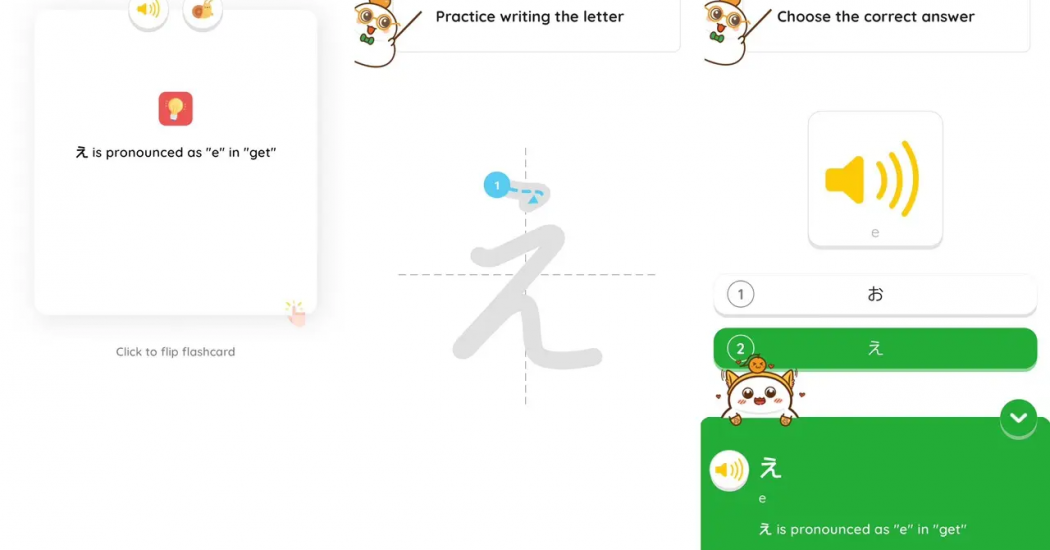
Each lesson introduces a character through:
- Visual observation of the character
- Audio pronunciation (with a slow-play option for careful listening)
- Stroke order guidance
- Immediate writing practice
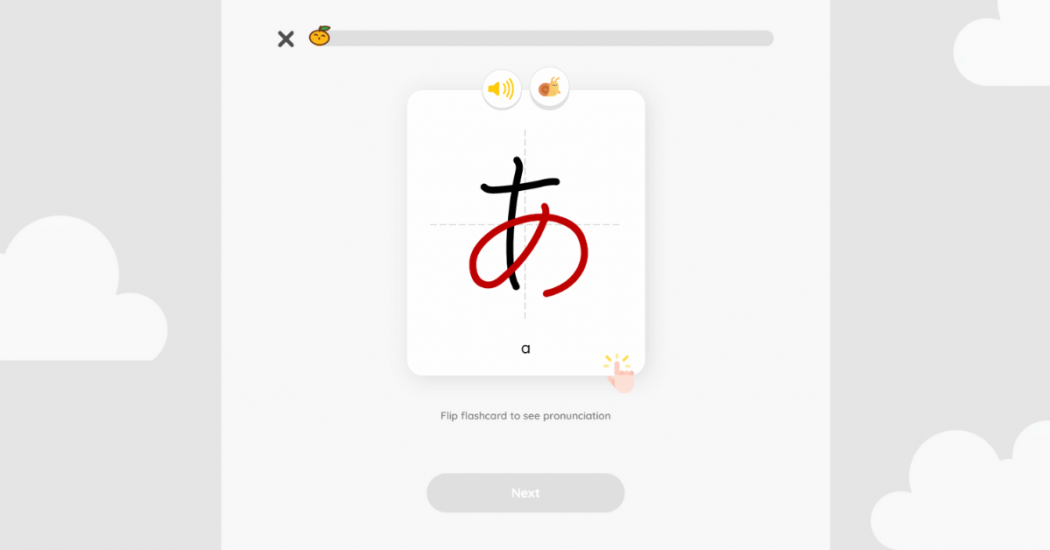
The lesson involves observing how letters are written.
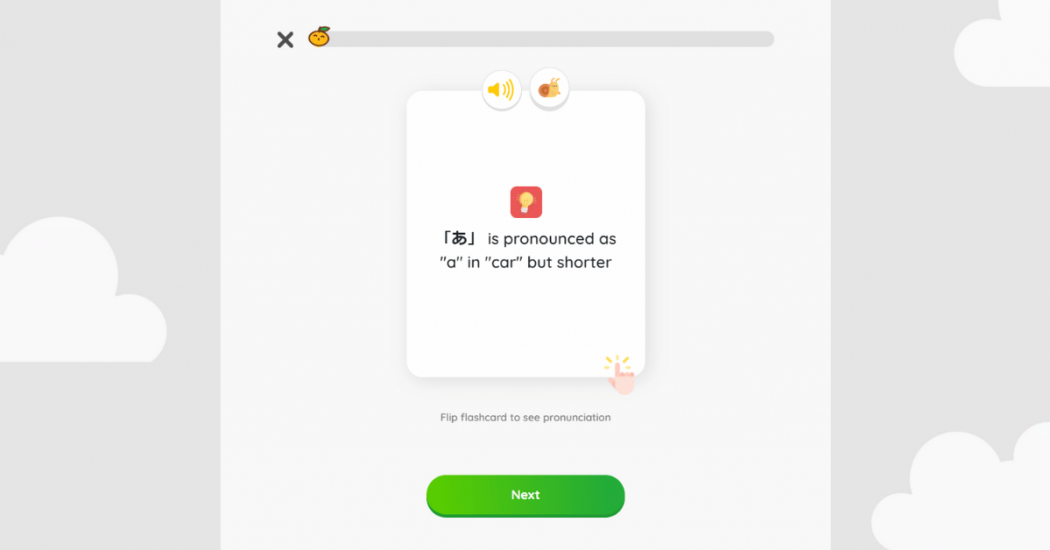
The pronunciation of each letter goes along with listening and slow-motion features.
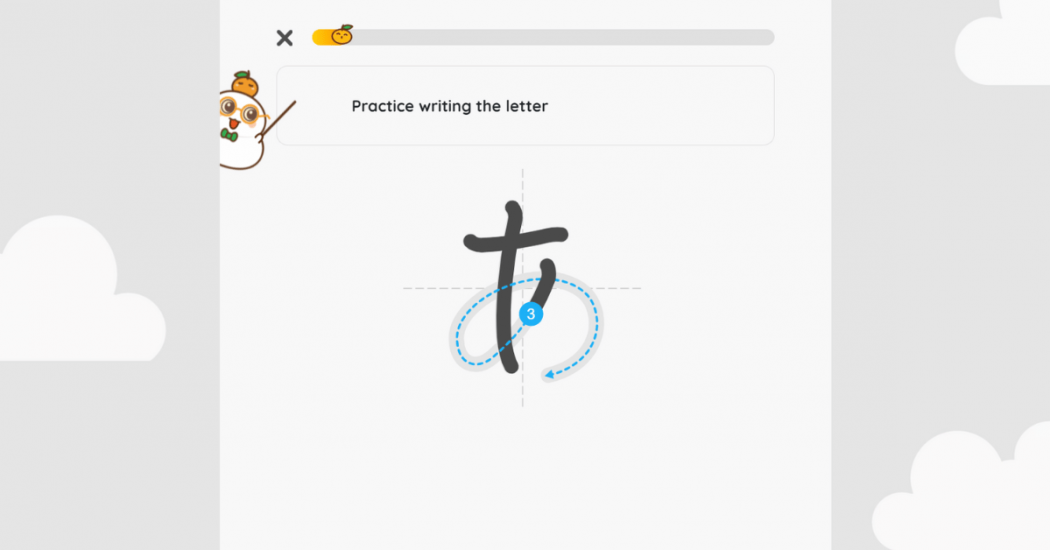
MochiKana also allows you to practice writing the letters in the correct order right from the first lesson.
The integrated audio feature allows you to compare your understanding with native pronunciation. The slow playback option is particularly useful for beginners who want to focus on subtle sound distinctions.
From the very first lesson, MochiKana encourages active writing practice, helping you internalize stroke order and character structure rather than relying on passive recognition alone.
Dedicated Writing Practice Tab
After completing the lessons, learners can use the Writing Tab to practice specific characters individually. You can select any kana and repeat guided tracing exercises until you feel confident.
This repeated, feedback-driven writing practice builds muscle memory and reinforces correct stroke order and proportions.
Why MochiKana Works
By combining structured lessons, spaced reinforcement, pronunciation support, and writing practice in one platform, MochiKana creates an efficient learning loop. The balance between input (learning) and output (practice) helps learners master kana more quickly and with stronger retention.
A Few Practical Notes
Most learners spend 1–2 weeks mastering kana, but progress depends on consistency rather than speed. MochiKana allows flexible pacing, so you can spend extra time on characters that feel more challenging.
In addition to using the platform, applying your knowledge through basic Japanese reading materials will accelerate recognition skills. You do not need to memorize 100% immediately—once you reach roughly 70–80% recognition, continued exposure will naturally solidify the remaining characters.
For beginners looking for a structured and interactive way to learn Japanese alphabets online, MochiKana offers a focused and accessible starting point.
| Criteria | MochiKana |
| Format | Mobile App (iOS / Android) & Web-based learning platform |
| Pros | Structured Hiragana & Katakana lessons Integrated reading & writing practice Audio with slow playback Built-in review after lessons Flexible pacing |
| Cons | Requires consistent self-studyFocused only on kana |
| Download / Access | Website trial learning MochiKana Learn Hiragana – App StoreMochiKana Learn Hiragana – Google Play |
Final Thoughts
Mastering hiragana and katakana is the first decisive milestone in your Japanese journey. With the right methods—mnemonics, reading-first focus, and active recall—and the right tools like MochiKana, this stage can be completed efficiently and confidently. Once your foundation is solid, transitioning to vocabulary and kanji study becomes significantly smoother.
Start with the basics, build consistency, and let structured practice compound over time. Japanese becomes far less intimidating once you can read it.
© Kanji123 — Free JLPT Kanji Test Online