How to learn Japanese is one of the most searched questions on the internet. Therefore, let’s be honest about something: most answers make it sound either terrifying or suspiciously easy. This guide goes somewhere in the middle — because that’s where the truth lives.
Japanese is different from English. However, different does not mean impossible. In fact, millions of people around the world have learned it. So, if you are starting from zero right now, you are in exactly the right place. This guide walks you through the writing system, listening, reading, grammar, and the mindset that actually gets results.
This video provides you with resources and methods needed to practice basic Japanese step by step:
How to Learn Japanese: Start with the Writing System (It’s Not as Bad as It Looks)
Most beginners see Japanese text and immediately panic. Three writing systems running side by side — that sounds like a lot. However, the reality is much friendlier than the first impression.
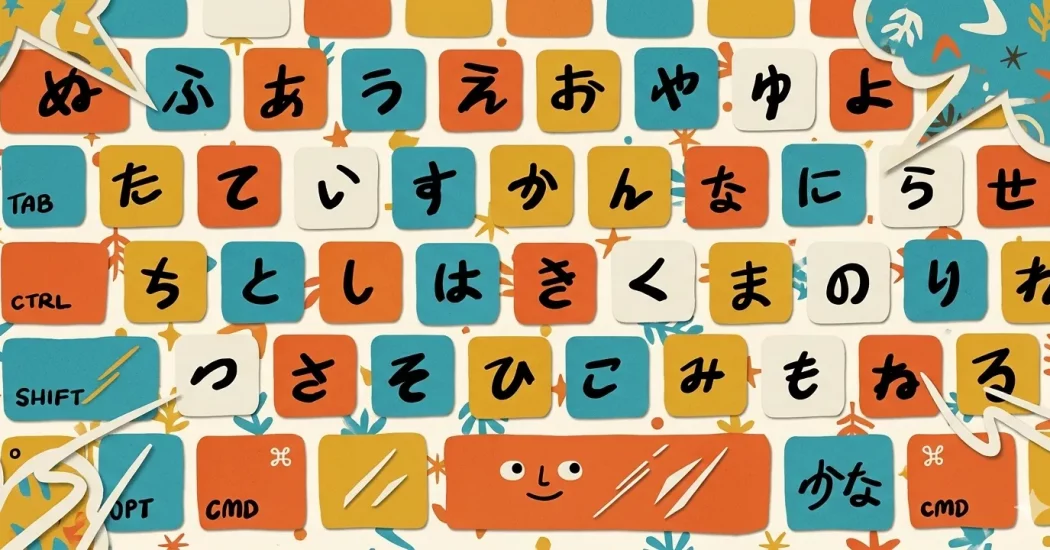
Japanese uses hiragana, katakana, and kanji together. In addition, some materials also include romaji — Japanese sounds written with the Latin alphabet. Your job as a beginner is to understand each one, then move toward reading real Japanese as quickly as possible.
Hiragana: Your First Real Step
Hiragana is the core alphabet of Japanese. It contains 46 characters, and each one represents a syllable sound. Therefore, it is completely phonetic — once you learn the characters, you can read any hiragana text out loud.
Start here. Spend one to two weeks learning hiragana before you touch anything else. Because hiragana appears in every sentence you will ever read, mastering it early unlocks everything that follows. Our hiragana learning guide covers each character with clear examples and proven memory techniques. In addition, MochiKana builds hiragana into a short daily quiz habit that most learners complete in under a week.
This video provides beginners with specific information and methods to acquire Hiragana:
Katakana: The Second Alphabet
Katakana represents the same sounds as hiragana. However, it handles a different job — foreign loan words, brand names, and words you need to emphasize. For example, コーヒー (koohii) is coffee, and テレビ (terebi) is television.
Because katakana is already familiar territory by the time you reach it, most learners pick it up faster than hiragana. Our dedicated katakana guide walks you through all 46 characters with practical examples from everyday Japanese. After katakana, you can read menus, signs, and product labels — small victories that feel enormous when you’re starting out.
Kanji: The Long Game
Kanji are Chinese characters adapted into Japanese. There are about 2,136 in common daily use, and yes — that does sound like a lot. However, you do not need all 2,136 on day one. You do not even need them on day 100.
Start with the 80 to 100 kanji covered at JLPT N5. These characters appear everywhere: numbers, days of the week, basic verbs, common nouns. Our kanji for beginners guide shows you exactly which ones to prioritize. Furthermore, Learn Kanji and Japanese Vocabulary combines characters with vocabulary in the same learning session — so you never study kanji in a vacuum. For deeper strategy, our guide on learning kanji the smart way explains the mnemonic and pattern-based approaches that make retention stick.
A Word on Romaji
Romaji feels safe because it uses letters you already know. However, leaning on it too long actually slows you down. It creates a crutch between you and real Japanese. Therefore, use romaji for the first week or two if it helps you get started — then put it away. Your brain needs to see hiragana and make the connection directly, without a detour through the Latin alphabet.
The Secret Weapon: Listen Before You Speak
Here is something most Japanese textbooks get backwards. They teach you grammar rules and vocabulary lists first. Then, months later, they introduce listening. However, the most effective learners do the opposite.
Japanese has far fewer distinct sounds than English. Because of this, the phonetic range is narrower and therefore more learnable early. In addition, exposure to natural speech patterns builds an intuition for the language that no grammar chart can replicate.
How to Build Listening Habits from Day One
You do not need to understand everything you hear. In fact, in the early stages, you will understand very little — and that is completely normal. Furthermore, that early confusion is not a sign of failure; it is the sound of your brain reorganizing itself.
Start with slow, learner-friendly audio. NHK’s beginner Japanese content and comprehensible input YouTube channels speak clearly and support what they say with visual context. After a few weeks, you can start mixing in native-speed content — podcasts, drama clips, YouTube vlogs. The goal is consistent daily exposure, not perfection. Even 15 minutes of Japanese audio while you commute or cook adds up fast.
Read Early — Even When It Feels Too Hard
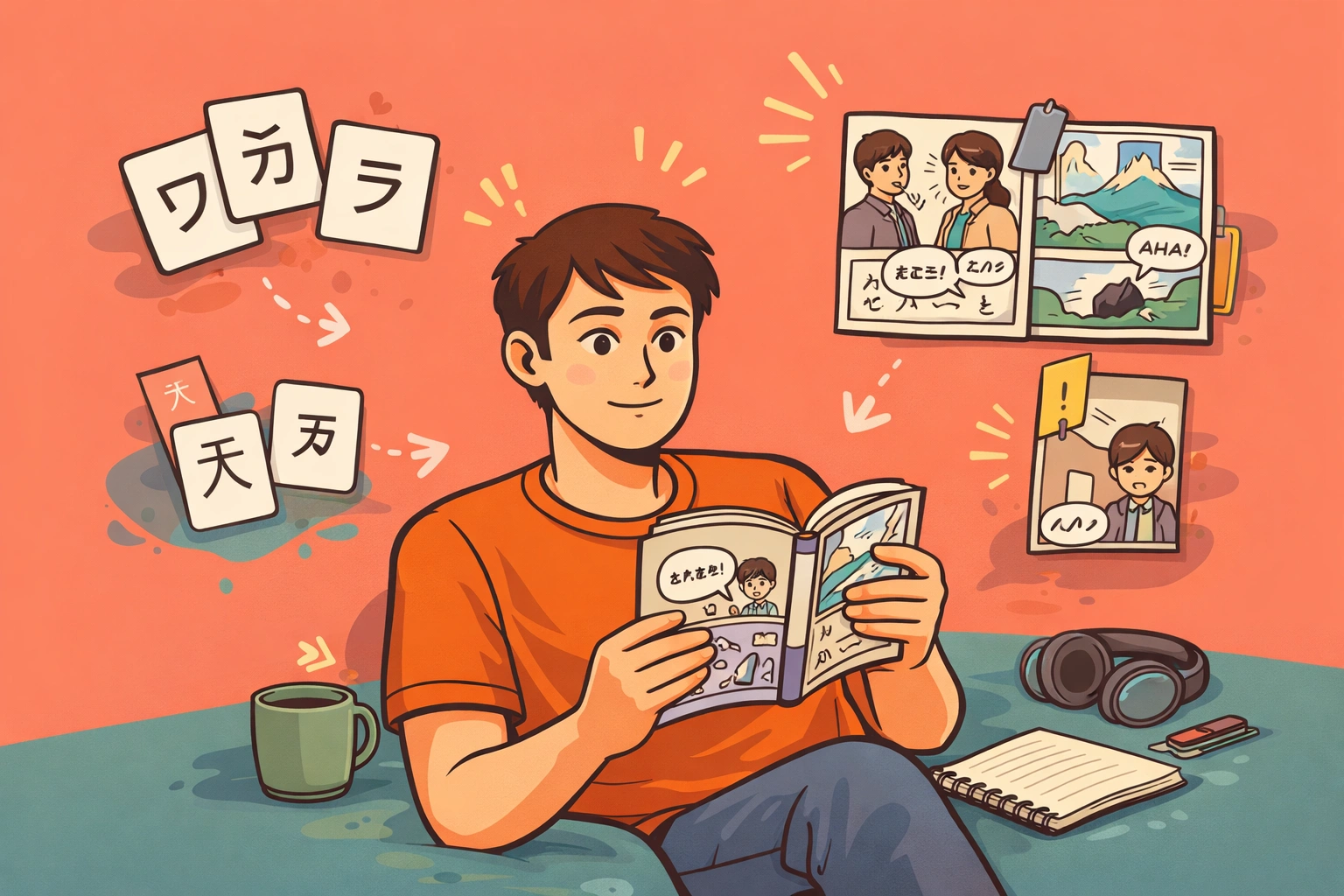
Many beginners put off reading until they feel “ready.” This is one of the most common mistakes in how to learn Japanese. Waiting for readiness is a trap. Therefore, start reading as soon as you know hiragana — even if you only recognize one word in ten.
Reading and listening together accelerate each other. Because you see the written form while you absorb the sound, your vocabulary and comprehension improve on two tracks at once. In addition, reading exposes you to kanji in real context — which is the most effective way to build long-term kanji recognition.
What to Read as a Beginner
Start with hiragana-only texts. Children’s books and beginner graded readers work well. Many Japanese learning apps, including Kanji123, offer reading-level tests so you can see exactly which kanji you already know and what to focus on next.
From there, move to manga with furigana — small hiragana printed above kanji to show pronunciation. Manga is excellent practice because the dialogue is short, punchy, and full of natural spoken Japanese. Our overview of Japanese learning resources lists the best places to find beginner-friendly reading material at every level.
Grammar: Stop Memorizing Rules, Start Absorbing Patterns
Japanese grammar is genuinely different from English grammar. The verb goes at the end of the sentence. Subjects are often dropped entirely. Politeness levels change the form of almost every word. Trying to memorize all of these rules upfront is a reliable way to burn yourself out before you start enjoying the language.
Here is a more effective approach. Read and listen enough, and the patterns settle in naturally. Your brain picks them up the same way a child absorbs grammar — through repeated exposure, not through flashcard drills.
The Most Important Grammar Facts for Beginners
Japanese follows a Subject-Object-Verb structure. In contrast, English uses Subject-Verb-Object. For example, “I eat sushi” in Japanese is closer to “I sushi eat” — 私は寿司を食べます (watashi wa sushi wo tabemasu). This feels strange at first. However, after enough reading and listening, your brain stops translating and starts processing it directly.
For a friendly, beginner-focused breakdown of the core grammar structures, our Japanese grammar guide covers the essentials without burying you in technical terminology. Furthermore, it shows each grammar point through natural example sentences rather than abstract rules.
Speaking: Phrases First, Fluency Later
Waiting until your Japanese is “good enough” to speak is also a trap. In contrast, starting with practical phrases gives you small wins that build confidence early. Therefore, learn the basics — greetings, simple questions, polite requests — before you worry about full sentence construction.
Some useful phrases to start with:
- すみません (sumimasen) — Excuse me / I’m sorry
- ありがとうございます (arigatou gozaimasu) — Thank you very much
- これは何ですか?(kore wa nan desu ka?) — What is this?
- もう一度お願いします (mou ichido onegaishimasu) — Please say that again
Practice these phrases out loud, every day. Because output builds a different kind of memory than reading alone, speaking practice is worth adding early — even if it is just you talking to yourself in the kitchen.
When to Start Real Conversation Practice
Most learners are ready for their first conversation after two to three months of consistent listening and reading. At that point, your ear recognizes sounds and your brain holds a working vocabulary. In addition, you know enough grammar patterns to piece sentences together even if they are not perfect.
Language exchange apps connect you with Japanese speakers who want to learn your language. Tutoring platforms offer short sessions with patient native speakers. The goal at this stage is not perfection — it is momentum.
Is Japanese Harder than Chinese? (The Question Everyone Asks)
This question comes up constantly. Therefore, let’s address it directly. Japanese and Chinese share kanji characters, but the similarities stop there. The grammar structures are completely different. The phonetics are completely different. The verb placement, politeness system, and sentence logic — all different.
In short: knowing Chinese gives you a small head start on kanji recognition. However, treat them as separate journeys. Comparing them to decide which one to learn is a bit like choosing between surfing and snowboarding because they both involve boards. They share a family resemblance, but the day-to-day experience is entirely its own thing.
The Mindset That Actually Makes You Fluent

Here is the honest version of how to learn Japanese over time: you will have stretches where you feel unstoppable. You will also have stretches where you cannot remember a word you studied yesterday. Both are normal. Both are part of the process.
The most important shift is accepting that understanding comes gradually — not in a sudden flash. Furthermore, ambiguity is not your enemy. When you encounter a sentence you only half-understand, that is not failure. That is your brain doing exactly what it is supposed to do at that stage.
Consistency beats intensity every time. Thirty minutes of Japanese every day outperforms a six-hour weekend session. Therefore, build a daily habit that fits your real life — not an ideal version of it. Our complete overview of the Japanese learning journey is a good place to see how all of these pieces fit together.
FAQ: How to Learn Japanese
How long does it take to learn Japanese?
It depends on your goals and your starting language. For English speakers, the US Foreign Service Institute classifies Japanese as a Category IV language — meaning approximately 2,200 hours of study to reach professional working proficiency. However, conversational ability comes much earlier. Most consistent learners reach basic conversational level within 12 to 18 months of daily practice.
Do I need to learn all three writing systems?
Yes — eventually. However, you do not need all three before you can start enjoying Japanese. Start with hiragana, add katakana, then introduce kanji gradually over months and years. Our Japanese alphabet for beginners guide explains the timeline clearly.
What is the best app to learn Japanese?
The best tool depends on your current priority. For kana, MochiKana is fast and effective. For kanji and vocabulary, Kanji and Japanese Vocabulary by Mochidemy handles both together. For JLPT kanji practice, Kanji123’s free online tests cover N5 through N2 with no signup required.
Should I study grammar or vocabulary first?
Neither — study both in parallel from the start. However, prioritize exposure over memorization. Read real sentences. Listen to real speech. Grammar and vocabulary grow naturally when they appear in context rather than in isolated lists.
Start Learning Japanese Today
How to learn Japanese is a big question. However, the answer does not have to be complicated. Start with hiragana. Add katakana. Begin listening on day one. Read as soon as you can — even if it is slow and painful. Let grammar patterns absorb through exposure rather than through memorization. And above all, build a daily habit that you can actually sustain.
The first few weeks feel like guesswork. After three months, patterns start clicking. After a year, you will surprise yourself. In addition, somewhere along the way, the language stops feeling foreign and starts feeling like yours.
That moment is closer than you think. Now go open a hiragana chart and begin.
© Kanji123 — Free JLPT Kanji Test Online