Why is Speaking Japanese so Difficult?
Many Japanese learners can understand grammar and vocabulary, but still struggle to speak in real Japanese conversation. This is very common. The problem is not how much Japanese you know. The problem is that most learners don’t have simple, ready-to-use Japanese phrases for real situations.
In real conversation, you don’t have time to think about grammar rules. You need short and natural expressions that you can use immediately.
That is exactly what this guide is for. Instead of focusing on complicated grammar, you will learn practical Japanese phrases used in everyday life, such as:
- How to start a conversation
- How to introduce yourself
- How to ask simple questions
- How to keep a conversation going
- What to say when you don’t understand
These are the phrases Japanese people actually use in real situations.
You don’t need perfect Japanese to start speaking.
You just need a few useful expressions and the confidence to use them.
Let’s start with the basics.
Part 1: Basic Japanese phrases for Starting a Conversation
5 Basic Greetings for every starters
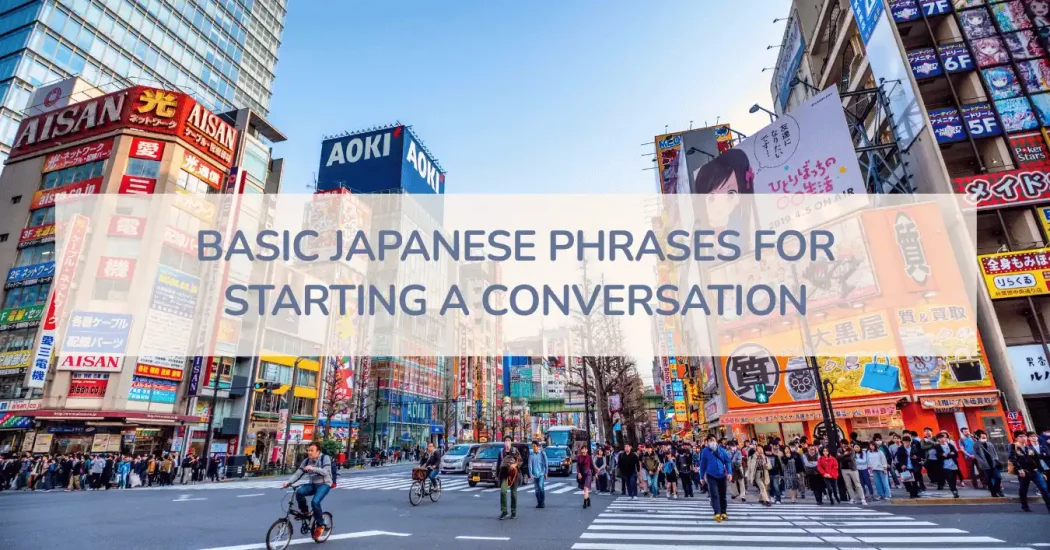
Greetings are one of the easiest ways to start a conversation in Japanese. After all, almost every conversation begins with a simple greeting. Whether you’re meeting someone for the first time, talking to coworkers, or chatting with friends, knowing the right greeting can make communication feel much easier.
Japanese greetings are simple and used all the time in daily life. Once you get comfortable with these basic phrases, starting conversations in Japanese will feel much less intimidating.
| Japanese | Romaji | Meaning | When to use | Example |
|---|---|---|---|---|
| 1. こんにちは | Konnichiwa | Hello / Good afternoon | Daily conversations, school, work, meeting someone for the first time. | A: こんにちは。 B: こんにちは。 |
| 2. おはようございます | Ohayou gozaimasu | Good morning (polite) | In the morning with teachers, coworkers, bosses, or anyone in formal situations. | 先生、おはようございます。 Good morning, teacher. |
| 3. おはよう | Ohayou | Good morning (casual) | With friends, family members, and people you’re close to. | おはよう! Good morning! |
| 4. こんばんは | Konbanwa | Good evening | When greeting someone in the evening. | こんばんは。今日は寒いですね Good evening. It’s cold today, isn’t it? |
| 5. 元気ですか | Genki desu ka | How are you? | When asking how someone is doing, especially in conversations with classmates, friends… | A: 元気ですか。 B: はい、元気です A: How are you? B: I’m fine. |
Though in real life, Japanese people don’t use “元気ですか” as often as English speakers use “How are you?”, but it’s still useful for learners.
One challenge many Japanese learners face isn’t learning these greetings – it’s finding opportunities to practice them. Without regular speaking practice or feedback on pronunciation, it’s easy to lose confidence. That’s why we built MochiKaiwa: a beginner-friendly speaking app that helps learners practice essential & basic Japanese phrases, improve pronunciation, and strengthen long-term memory through shadowing and active recall.
7 Formal vs Casual Greetings
Understanding when to be formal or casual is important in Japanese conversation.
Use polite expressions with:
- Teachers
- Bosses
- Coworkers
- Strangers
Use casual expressions with:
- Friends
- Family
- People close to your age
For example:
| Formal | Casual | Romaji | Meaning |
|---|---|---|---|
| 6. おはようございます | おはよう | Ohayou gozaimasu / Ohayou | Good morning |
| 7. ありがとうございます | ありがとう | Arigatou gozaimasu / Arigatou | Thank you |
| 8. すみません | ごめん / ごめんね | Sumimasen / Gomen / Gomen ne | Excuse me / Sorry |
| 9. よろしくお願いします | よろしく | Yoroshiku onegaishimasu / Yoroshiku | Nice to meet you / Please treat me well |
| 10. 失礼します | じゃあね / またね | Shitsurei shimasu / Jaa ne / Mata ne | Goodbye / See you |
| 11. お疲れ様です | お疲れ | Otsukaresama desu / Otsukare | Good work |
| 12. お帰りなさい | おかえり | Okaerinasai / Okaeri | Welcome home |
Choosing the right level of politeness makes your conversation sound more natural.
Basic Japanese phrases for Self-Introduction in Japanese
After greeting someone, the next natural step is introducing yourself. This is often one of the first things you’ll do when meeting new people in Japan, whether at school, work, or in everyday situations. A simple self-introduction usually includes your name, where you’re from, and what you do. The good news is that you don’t need long or complicated sentences. Even a short introduction can help you make a good first impression and start a conversation more naturally. Let’s look at some basic Japanese phrases you can start using right away.
| Japanese | Romaji | Meaning |
|---|---|---|
| 13. 私はキムです。/キムです。 | Watashi wa Kimu desu. / Kimu desu. | I’m Kim. (Watashi wa is often omitted in casual conversations.) |
| 14. 中国から来ました。 | Chuugoku kara kimashita. | I’m from China. |
| 15. 学生です。 | Gakusei desu. | I’m a student. |
| 16. 会社員です。 | Kaishain desu. | I’m an office worker. |
| 17. 教師です。 | Kyoushi desu. | I’m a teacher. |
| 18. IT会社で働いています。 | IT kaisha de hataraite imasu. | I work at an IT company. |
| 19. よろしくお願いします。 | Yoroshiku onegaishimasu. | Nice to meet you / Please treat me well. |
A basic self-introduction in Japanese is simple and easy to remember.
1. Saying Your Name
私はキムです。(Watashi wa Kimu desu)
I’m Kim.
You can also say:
キムです。(Kimu desu)
I’m Kim.
In casual conversation, Japanese often omit 私は (Watashi wa).
2. Saying Where You’re From
中国から来ました。(Chuugoku kara kimashita)
I’m from China.
Pattern:
[Country] + から来ました (kara kimashita)
Examples:
- アメリカから来ました (Amerika kara kimashita)
I’m from America
- 韓国から来ました (Kankoku kara kimashita)
I’m from Korea
- フランスから来ました (Furansu kara kimashita)
I’m from France
3. Talking About Your Job or Status
会社員です。(Kaishain desu)
I’m an office worker.
学生です。(Gakusei desu)
I’m a student.
教師です。(Kyoushi desu)
I’m a teacher.
Examples:
- 日本語の学生です (Nihongo no gakusei desu)
I’m Japanese student
- IT会社で働いています (IT kaisha de hataraite imasu)
I’m working at IT company
4. Example Self-Introduction
こんにちは。
キムです。
中国から来ました。
学生です。
よろしくお願いします。
Hello.
I’m Kim.
I’m from China.
I’m a student.
Nice to meet you.
This short introduction is enough for most beginner situations.
よろしくお願いします (Yoroshiku onegaishimasu)
This is one of the most common expressions used in Japanese self-introductions.
There is no direct English translation for よろしくお願いします, which makes it a little difficult to explain. Depending on the situation, it can mean:
- Nice to meet you
- Please treat me well
- I look forward to working with you
In self-introductions, it is often used at the end to show politeness and friendliness.
Even though the English translation is usually “Nice to meet you,” よろしくお願いします carries a deeper meaning. It shows respect and expresses your hope for a good relationship with the other person.
That’s why it is an essential phrase when introducing yourself in Japanese.
This simple introduction is enough for most beginner situations. The challenge isn’t remembering the sentences – it’s saying them confidently when someone asks, “Tell me about yourself.” Many learners don’t have a teacher to correct their pronunciation, a speaking partner to practice with, or even know what they should practice next. As a result, they often memorize phrases but rarely turn them into real speaking skills.
That’s one of the reasons we created MochiKaiwa. Instead of asking beginners to figure everything out on their own, we designed a structured speaking curriculum that starts with essential phrases and gradually progresses to more advanced conversations across a wide range of everyday topics. You simply follow the lessons step by step without worrying about what to study next.
Along the way, MochiKaiwa acts like a friendly Japanese speaking partner. It encourages you to speak out loud, highlights pronunciation mistakes, and helps you build confidence before using Japanese in real-life conversations. Each lesson also incorporates proven learning techniques such as shadowing and active recall, so you’re not just repeating phrases – you’re training yourself to remember and use them naturally over time.
Of course, you don’t need MochiKaiwa to practice introducing yourself. You can use the phrases in this guide with a friend, a tutor, or even by recording yourself. Our goal is simply to make consistent speaking practice easier for beginners who want a clear path from knowing Japanese to actually speaking it.
Part 2: Keeping a Conversation Going
10 Simple Questions to Ask in Japanese
One common reason conversations end quickly is that learners often don’t know what to say next. After answering a question, many people feel stuck and the conversation suddenly becomes awkward. But keeping a conversation going doesn’t have to be difficult. In fact, the easiest way to continue talking is by asking simple questions. Simple questions show interest, help the other person talk more, and make the conversation feel more natural. Even with basic Japanese, asking the right questions can help you keep a conversation flowing smoothly.
1.お名前は何ですか (Onamae wa nan desu ka)
What is your name?
Example:
お名前は何ですか。(Onamae wa nan desu ka)
What is your name?
2. 趣味は何ですか (Shumi wa nan desu ka)
What is your hobby?
This is a great conversation starter.
Example:
趣味は何ですか。(Shumi wa nan desu ka?)
What are your hobbies?
Possible answers:
- 映画を見ることです (Eiga wo miru koto desu)
My hobby is watching movies. - 音楽を聞くことです (Ongaku wo kiku koto desu)
My hobby is listening to music. - 読書です (Dokusho desu)
I enjoy reading.
Why Simple Questions Matter
Beginner learners often think they need advanced vocabulary for conversation.
Actually, simple questions are powerful because they:
- Keep conversations moving
- Show interest
- Help you learn naturally
Even with only 10–20 questions, you can handle many conversations.
Here are 10 simple questions you can ask Japanese people in everyday conversations:
| Japanese | Romaji | Meaning |
|---|---|---|
| 20. 日本のどこに住んでいますか。 | Nihon no doko ni sunde imasu ka? | Where in Japan do you live? |
| 21. おすすめの観光地はどこですか。 | Osusume no kankōchi wa doko desu ka? | What places do you recommend visiting? |
| 22. おすすめの食べ物は何ですか。 | Osusume no tabemono wa nan desu ka? | What food do you recommend? |
| 23. 休みの日は何をしますか。 | Yasumi no hi wa nani o shimasu ka? | What do you do on your days off? |
| 24. 最近忙しいですか。 | Saikin isogashii desu ka? | Have you been busy recently? |
| 25. どんな映画が好きですか。 | Donna eiga ga suki desu ka? | What kind of movies do you like? |
| 26. どんな音楽を聞きますか。 | Donna ongaku o kikimasu ka? | What kind of music do you listen to? |
| 27. アニメは見ますか。 | Anime wa mimasu ka? | Do you watch anime? |
| 28. 日本で好きな場所はどこですか。 | Nihon de suki na basho wa doko desu ka? | What is your favorite place in Japan? |
| 29. 最近何か面白いことがありましたか。 | Saikin nani ka omoshiroi koto ga arimashita ka? | Has anything interesting happened recently? |
10 Useful Japanese Reaction Phrases
Asking questions is important, but that alone isn’t enough for a good conversation. You also need to react to what the other person says. Simple reactions can make conversations feel much more natural and enjoyable. They show that you’re listening and genuinely interested. In Japanese, people use reaction phrases all the time, sometimes even more than full sentences. Learning a few of these expressions can instantly make your Japanese sound more natural and help conversations flow more smoothly.
1. そうですか (Sou desu ka)
I see
Useful when someone explains something.
A: 日本で働いています。(Nihon de hataraite imasu.)
I work in Japan.
B: そうですか。(Sou desu ka.)
I see. / Oh, really?
2. 本当ですか (Hontou desu ka)
Really?
Shows surprise or interest.
Example:
本当ですか?すごいですね。(Hontou desu ka? Sugoi desu ne)
Really? That’s amazing.
3. なるほど (Naruhodo)
I see / That makes sense
Useful when understanding something new.
Example:
なるほど、分かりました。(Naruhodo, wakarimashita)
I see, I understand.
4. すごいですね (Sugoi desu ne.)
That’s amazing
Very common in Japanese conversation.
Example
A: 日本語が上手ですね。(Nihongo ga jouzu desu ne.)
Your Japanese is very good.
B: すごいですね。(Sugoi desu ne.)
That’s amazing. / Wow, that’s impressive.
| Japanese | Romaji | Meaning |
|---|---|---|
| 30. そうですか | Sou desu ka | I see. / Oh, really? |
| 31. 本当ですか | Hontou desu ka | Really? |
| 32. なるほど | Naruhodo | I see. / That makes sense. |
| 33. すごいですね | Sugoi desu ne | That’s amazing! / Wow! |
| 34. へえ | Hee | Really? / Wow! (shows interest or surprise) |
| 35. そうなんですね | Sou nan desu ne | I see. / Is that so? |
| 36. いいですね | Ii desu ne | That sounds nice. / That’s great. |
| 37. わかりました | Wakarimashita | I understand. |
| 38. もちろんです | Mochiron desu | Of course. |
| 39. たしかに | Tashika ni | That’s true. / You’re right. |
Native speakers use reaction phrases all the time in everyday conversations – often more than learners expect. These small expressions are a simple way to show you’re listening and actually interested in what the other person is saying. Without them, your answers can feel a bit flat or unnatural, and the conversation may even feel one-sided or awkward.
The good news is you don’t need anything complicated. Even short reactions like そうですか, へえ, or なるほど can already make a big difference and help your Japanese sound much more natural.
The reaction phrases in this guide are enough to help you sound more natural in everyday conversations. Simply reading them isn’t enough, though – you need to hear them, repeat them, and use them regularly until they become automatic.
If you’d like a more structured way to build that habit, MochiKaiwa combines shadowing, active recall, pronunciation feedback, and beginner speaking lessons in one place. We’ll reference it throughout this guide, but you can practice these same reaction phrases on your own as long as you keep using them consistently.
Part 3: 7 Essential Everyday Phrases for Japanese conversation
4 Polite Expressions You Need Every Day
Polite expressions are used everywhere in Japan, and you’ll hear them in almost every daily situation. Whether you’re talking to someone, shopping, or asking for help, these phrases come up all the time. They are simple, easy to remember, and very practical. Once you get used to them, you’ll start noticing them in real conversations—and you’ll also find yourself using them naturally without thinking too much.
| Japanese | Romaji | Meaning |
|---|---|---|
| 40. ありがとうございます | Arigatou gozaimasu | Thank you. (polite) |
| 41. ありがとう | Arigatou | Thank you. (casual) |
| 42. すみません | Sumimasen | Excuse me. / Sorry. |
| 43. お願いします | Onegaishimasu | Please. |
1. ありがとうございます (Arigatou gozaimasu)
Thank you
Polite and very useful.
Casual version:
ありがとう (Arigatou)
Example:
A: 病院はそちらです。(Byouin wa sochira desu)
The hospital is that way.
B: ありがとうございます。(Arigatou gozaimasu)
Thank you very much.
2. すみません (Sumimasen)
Excuse me / Sorry
One of the most important phrases in Japanese.
Use it to:
- Get attention
- Apologize lightly
- Ask for help
Examples:
すみません、駅はどこですか。(Sumimasen, eki wa doko desu ka)
Excuse me, where is the station?
3. お願いします (Onegaishimasu)
Please
Used when making requests.
Example:
これをお願いします。(Kore wo onegashimasu)
This one, please.
Very useful in shops and restaurants.
3 Questions You’ll Use Often
These questions help in daily situations.
| Japanese | Romaji | Meaning |
|---|---|---|
| 44. これは何ですか。 | Kore wa nan desu ka? | What is this? |
| 45. いくらですか。 | Ikura desu ka? | How much is it? |
| 46. どこですか。 | Doko desu ka? | Where is it? |
1. これは何ですか (Kore wa nan desu ka)
What is this?
Useful for learning vocabulary.
Example:
これは何ですか。(Kore wa nan desu ka)
What is this?
2. いくらですか (Ikura desu ka)
How much is it?
Very useful when shopping.
Example:
これはいくらですか。(Kore wa ikura desu ka)
How much is this?
3. どこですか (Doko desu ka)
Where is it?
Great for directions.
Example:
トイレはどこですか。(Toire wa doku desu ka)
Where is the restroom?
Part 4: When Communication Gets Difficult
What to Say When You Don’t Understand
Every learner has moments when they don’t understand what’s being said. This is completely normal and something everyone goes through when learning a new language. Instead of worrying about it, the important thing is knowing how to respond in those situations. Having a few simple Japanese phrases ready can help you stay calm and keep the conversation going, even when you don’t fully understand.
| Japanese | Romaji | Meaning |
|---|---|---|
| 47. もう一度お願いします。 | Mou ichido onegaishimasu. | Please say that again. |
| 48. ゆっくりお願いします。 | Yukkuri onegaishimasu. | Please speak slowly. |
| 49. 分かりません。 | Wakarimasen. | I don’t understand. |
1. もう一度お願いします (Mou ichido onegaishimasu)
Please say that again
Very useful in conversation.
Example:
すみません、もう一度お願いします。(Sumimasen, mou ichido onegaishimasu)
Excuse me, please say that again
2. ゆっくりお願いします (Yukkuri onegaishimasu)
Please speak slowly
Helpful when someone talks too fast.
Example:
すみません、ゆっくりお願いします。(Sumimasen, yukkuri onegaishimasu)
Excuse me, please speak slowly
3. 分かりません (Wakarimasen)
I don’t understand
Simple and direct.
Example:
すみません、分かりません。(Sumimasen, wakarimasen)
I’m sorry, I don’t understand
Knowing these phrases reduces stress during conversations.
Part 5: Real-Life Japanese Conversation Phrases
| Japanese | Romaji | Meaning |
| 50. どうしましたか? | Doushimashita ka? | What’s wrong? / What happened? |
| 51. どう致しまして | Dou itashimashite | You’re welcome |
| 52. どうぞ | Douzo | Please / Go ahead |
| 53. そうしましょう | Soushimashou | Let’s do that |
| 54. いくらですか | Ikura desu ka | How much is it? |
| 55. どのくらいかかりますか | Dono kurai kakarimasu ka | How long does it take? |
| 56. いくつありますか | Ikutsu arimasu ka | How many are there? |
| 57. 道に迷ってしまった | Michi ni mayotte shimatta | I’m lost |
| 58. どなたに聞けばいいでしょうか | Donata ni kikeba ii deshou ka | Who should I ask? |
| 59. お先にどうぞ | Osaki ni douzo | Please go ahead |
| 60. どなたですか | Donata desu ka | Who is it? |
| 61. なぜですか | Naze desu ka | Why? |
| 62. 何ですか | Nan desu ka | What is it? |
| 63. 何時ですか | Nanji desu ka | What time is it? |
| 64. 待って | Matte | Wait |
| 65. 見て | Mite | Look |
| 66. 助けて | Tasukete | Help! |
| 67. お疲れ様です | Otsukaresama desu | Good work |
| 68. お先に失礼します | Osaki ni shitsurei shimasu | I’ll leave first |
| 69. お大事に | Odaiji ni | Get well soon |
| 70. 正しいです | Tadashii desu | That’s correct |
| 71. 違います | Chigaimasu | That’s wrong |
| 72. 私はそう思いません | Watashi wa sou omoimasen | I don’t think so |
| 73. 仕方がない | Shikata ga nai | It can’t be helped |
| 74. 信じられない | Shinjirarenai | I can’t believe it |
| 75. 大丈夫です | Daijoubu desu | I’m okay |
| 76. 落ち着けよ | Ochitsuke yo | Calm down |
| 77. びっくりした | Bikkuri shita | I was surprised |
| 78. 残念です | Zannen desu | That’s unfortunate |
| 79. 冗談でしょう | Joudan deshou | You must be joking |
| 80. 行ってきます | Ittekimasu | I’m leaving now |
| 81. 行っていらっしゃい | Itteirasshai | Take care (someone leaving) |
| 82. ただいま | Tadaima | I’m home |
| 83. お帰りなさい | Okaerinasai | Welcome back |
Part 6: Sample Japanese Conversation
It is nice weather today
| Japanese | Romaji | Meaning |
| きょうは いい てんき ですね。 | kyou wa ii tenki desu ne | It is nice weather today, isn’t it? |
| ほんとうですね。さんぽしたくなります。 | hontou desu ne. sanpo shitaku narimasu | That’s true. It makes me want to go for a walk. |
| いいですね。いつも こうえんに いきますか。 | ii desu ne. itsumo kouen ni ikimasu ka | That sounds nice. Do you often go to the park? |
| はい、ときどき いきます。ともだちと はなしたり します。 | hai, tokidoki ikimasu. tomodachi to hanashitari shimasu | Yes, sometimes. I chat with my friends there. |
| そうですか。たのしそうですね。 | sou desu ka. tanoshisou desu ne | I see. That sounds fun. |
| はい。きょうも すこし あるきませんか。 | hai. kyou mo sukoshi arukimasen ka | Yes. Shall we walk a little today too? |
Would you like to have some tea?
| Japanese | Romaji | Meaning |
| おちゃを のみませんか。 | ocha o nomimasen ka | Would you like to have some tea? |
| いいですね。ちょうど すこし 休みたかったです。 | ii desu ne. choudo sukoshi yasumitakatta desu | That sounds nice. I actually wanted to take a short break. |
| じゃあ、あの カフェに いきませんか。 | jaa, ano kafe ni ikimasen ka | Then, shall we go to that cafe? |
| はい、いきましょう。あそこは しずかで いいですね。 | hai, ikimashou. asoko wa shizuka de ii desu ne | Yes, let’s go. It is nice and quiet there. |
| ケーキも おいしいですよ。 | kēki mo oishii desu yo | The cake there is good too. |
| ほんとうですか。じゃあ、たのしみです。 | hontou desu ka. jaa, tanoshimi desu | Really? Then I’m looking forward to it. |
Have you ever been to a hot spring?
| Japanese | Romaji | Meaning |
| おんせんに いったことが ありますか。 | onsen ni itta koto ga arimasu ka | Have you ever been to a hot spring? |
| はい、いちど あります。とても きもちよかったです。 | hai, ichido arimasu. totemo kimochi yokatta desu | Yes, I have been once. It felt very nice. |
| いいですね。だれと いきましたか。 | ii desu ne. dare to ikimashita ka | That sounds nice. Who did you go with? |
| かぞくと いきました。ゆっくり できて、たのしかったです。 | kazoku to ikimashita. yukkuri dekite, tanoshikatta desu | I went with my family. I could relax, and it was fun. |
| そうですか。わたしも こんど いってみたいです。 | sou desu ka. watashi mo kondo itte mitai desu | I see. I would like to try going sometime too. |
| ぜひ いってみてください。すごく リラックス できますよ。 | zehi itte mite kudasai. sugoku rirakkusu dekimasu yo | You should definitely try it. You can relax a lot. |
Making a Phone call
| Japanese | Romaji | Meaning |
| もしもし、たなかさんですか。 | moshimoshi, tanaka-san desu ka | Hello, is this Tanaka? |
| はい、たなかです。 | hai, tanaka desu | Yes, this is Tanaka. |
| あしたの よていを かくにんしたいです。 | ashita no yotei o kakunin shitai desu | I’d like to confirm tomorrow’s plan. |
| はい、いつですか。 | hai, itsu desu ka | Sure, when is it? |
| 5じに あいましょう。 | goji ni aimashou | Let’s meet at 5. |
| わかりました。じゃあ、あした。 | wakarimashita. jaa, ashita | Got it. See you tomorrow. |
Final Tips for Better Japanese Conversation
Improving your Japanese conversation does not require perfection. What really matters is consistent practice and getting comfortable using what you already know. If you keep speaking regularly, you will naturally improve over time.
First, try memorizing basic Japanese phrases by situation instead of learning random vocabulary. For example, focus on useful expressions for greeting people, shopping, ordering food, or asking for directions. When phrases are connected to real-life situations, they are much easier to remember and use in conversation.
Second, practice speaking every day, even if it’s only for 10–15 minutes. You can talk with language partners, practice with tutors, or simply speak to yourself. The key is consistency – short daily practice is more effective than long study sessions once in a while.
Finally, don’t worry too much about perfect grammar. Many learners hesitate because they are afraid of making mistakes, but conversation is mainly about communication. Even if your grammar is not perfect, people can usually understand you. The most important thing is to keep speaking and improve step by step.
In addition, you can also learn from sample conversations in textbooks. We highly recommend *Minna no Nihongo* and other Japanese listening practice books, as they help you get used to natural sentence patterns and real-life dialogue.
Final Thoughts
Japanese conversation may feel difficult at first, but it becomes much easier with practice. You don’t need advanced grammar to start speaking. What you really need are practical phrases that you can use in real situations.
Start small and focus on essential expressions. Practice a little every day, even if it’s just a few minutes. Over time, these small steps will build your confidence and help you speak more naturally.
Most importantly, don’t be afraid to speak. The more you use Japanese, the more natural it will become. Your first conversation doesn’t need to be perfect – it just needs to begin.