Learning hiragana is the first big step in your Japanese journey. However, finding the right chart can feel overwhelming. That’s why we gathered free hiragana charts for every learning style so you can download exactly what you need and start learning today.
Each chart below fits a different learning style. Furthermore, all files are free to download as PDF. So grab the ones that work best for you, print them out, and keep reading.
What Is Hiragana?
Hiragana is one of the three Japanese writing systems. It contains 46 basic characters, and every Japanese word can be written in it. Because of this, hiragana is always the first alphabet beginners learn.
In addition, hiragana originally came from simplified forms of Chinese characters (kanji). Therefore, each character has deep historical roots. Once you master hiragana, you can move on to katakana and then kanji.
Basic Hiragana Charts
These charts focus on the core 46 characters — from row あ to row ん. Because they are simple and clean, they are ideal for total beginners.
Hiragana Chart with 46 Characters
This is the most straightforward hiragana chart. It shows all 46 characters in the standard grid layout. If you just need something quick to put on your wall or desk, this is it.
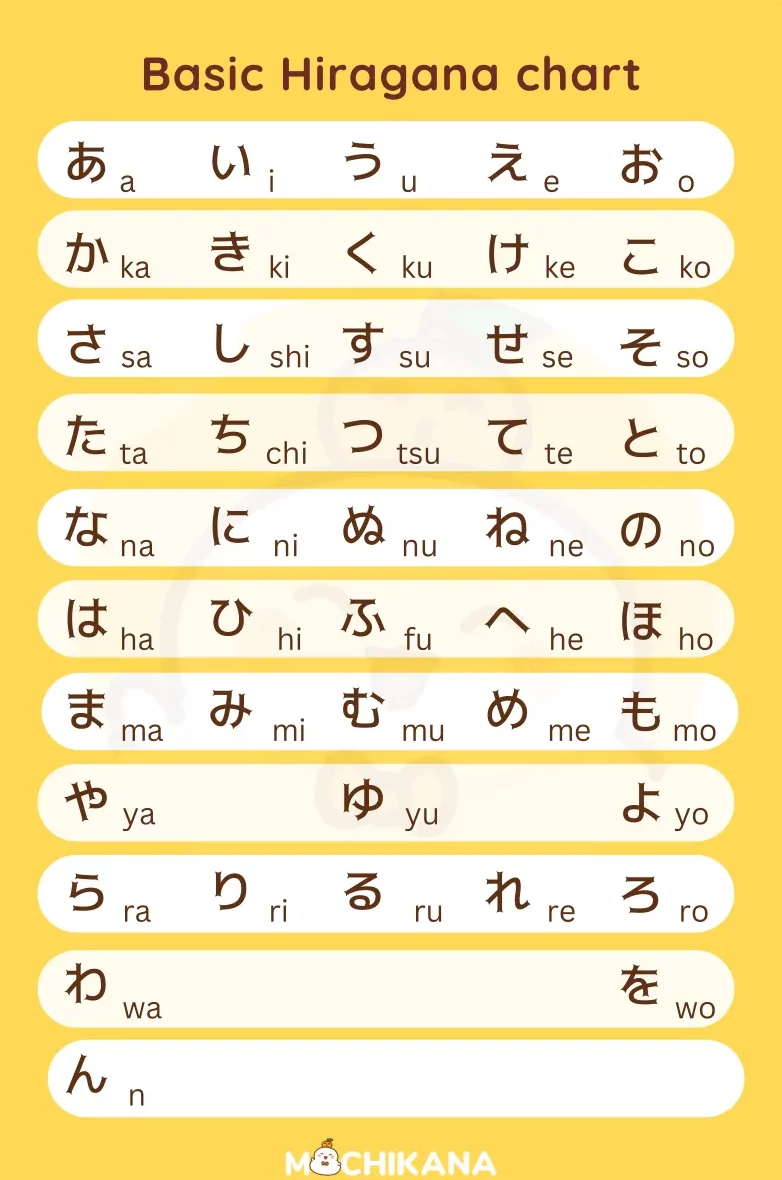
👉 Download the basic hiragana chart (PDF)
Hiragana Chart with Origins
Did you know each hiragana character evolved from a kanji? This chart shows the original kanji next to each hiragana. As a result, you get extra context that helps with memorization. It’s especially useful if you plan to study kanji later.
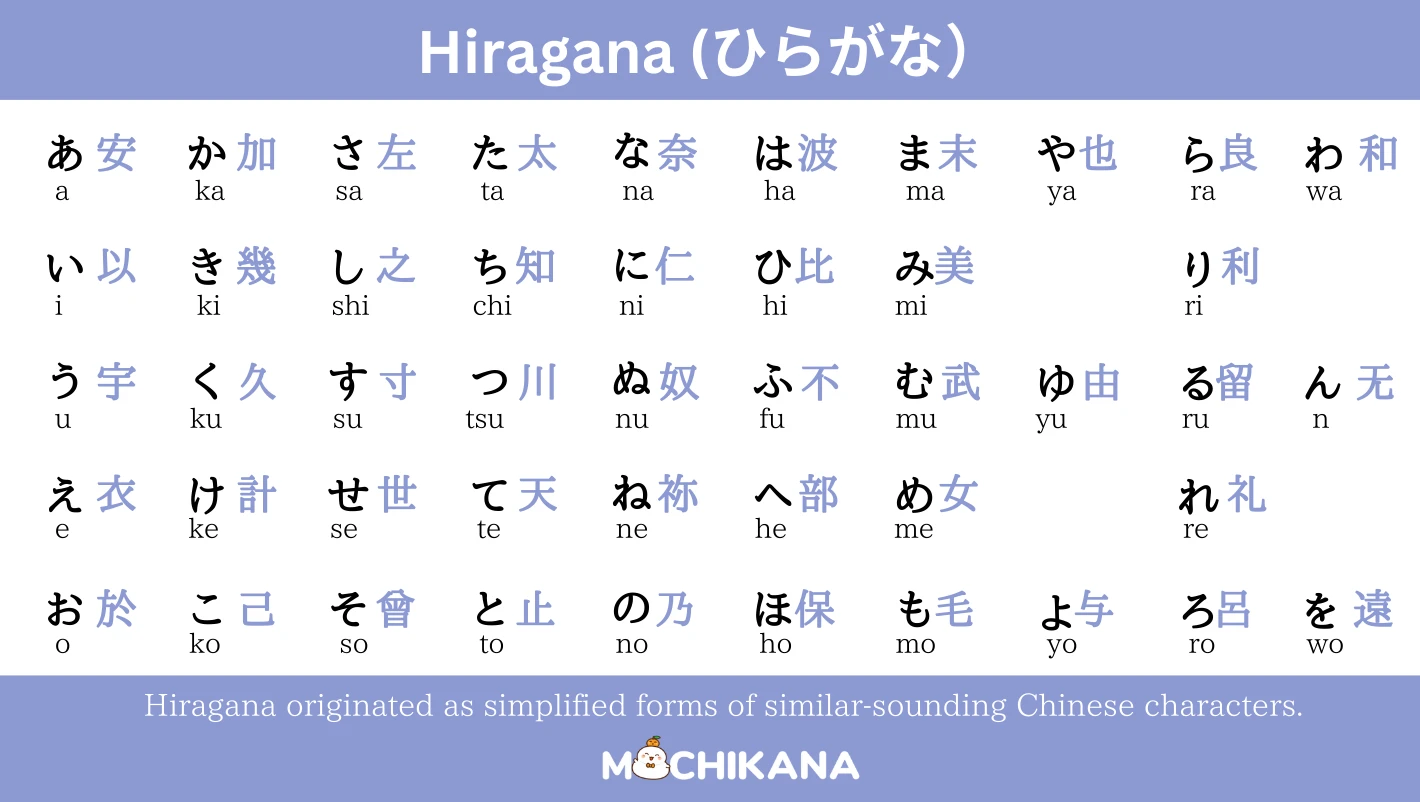
👉 Download the hiragana origins chart (PDF)
Hiragana Practice Sheets
A chart alone won’t teach you hiragana. You need to write it too. Therefore, practice sheets are essential for building muscle memory.
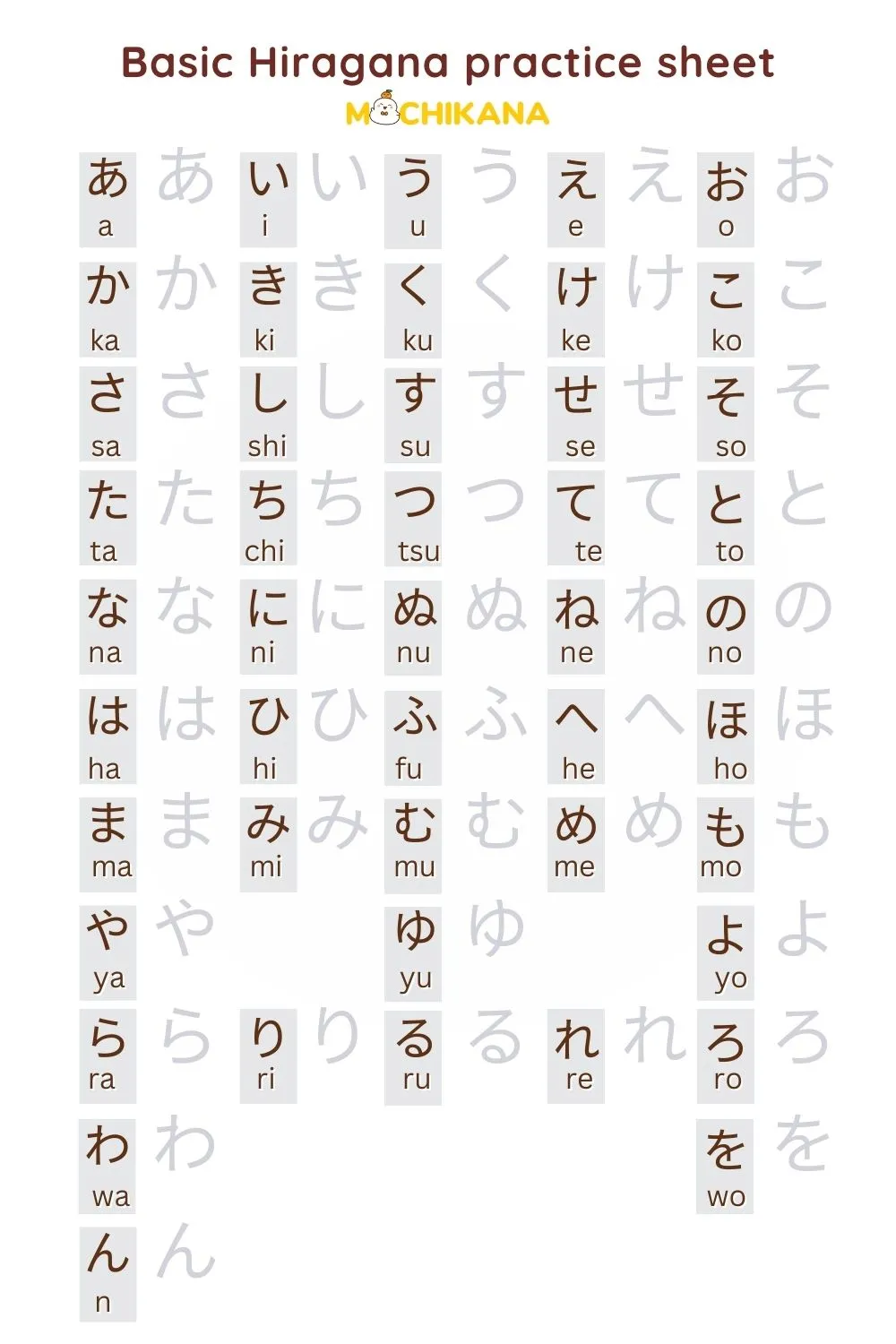
Basic Hiragana Practice Sheet
This sheet shows each character and gives you space to trace and copy it. First, follow the model. Then, practice on your own. Repetition is the key to remembering hiragana quickly.
👉 Download the hiragana practice worksheet (PDF)
Hiragana Stroke Order Charts
Stroke order matters more than most beginners realize. When you write characters in the wrong order, something looks subtly off. Moreover, correct stroke order builds better handwriting speed as you improve.
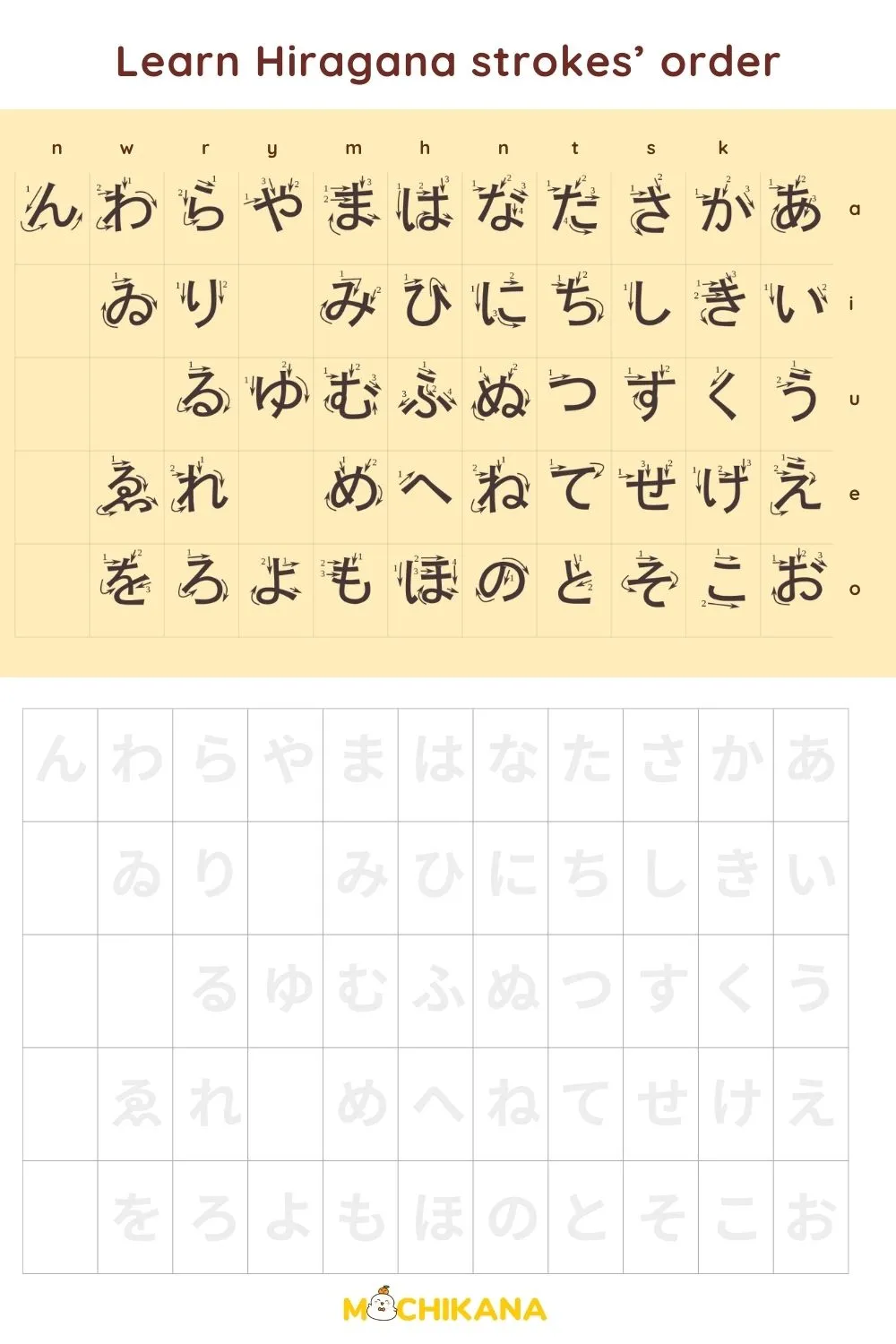
Hiragana Chart with Detailed Stroke Order
This chart shows each hiragana with numbered strokes so you always know where to start. Because it includes every basic character in one place, it doubles as a reference chart and a writing guide.
👉 Download hiragana chart with stroke order (PDF)
Hiragana Mnemonic Charts
Mnemonics link new information to things you already know. In other words, they turn abstract shapes into memorable pictures. This strategy works especially well for hiragana because the characters can feel random at first.
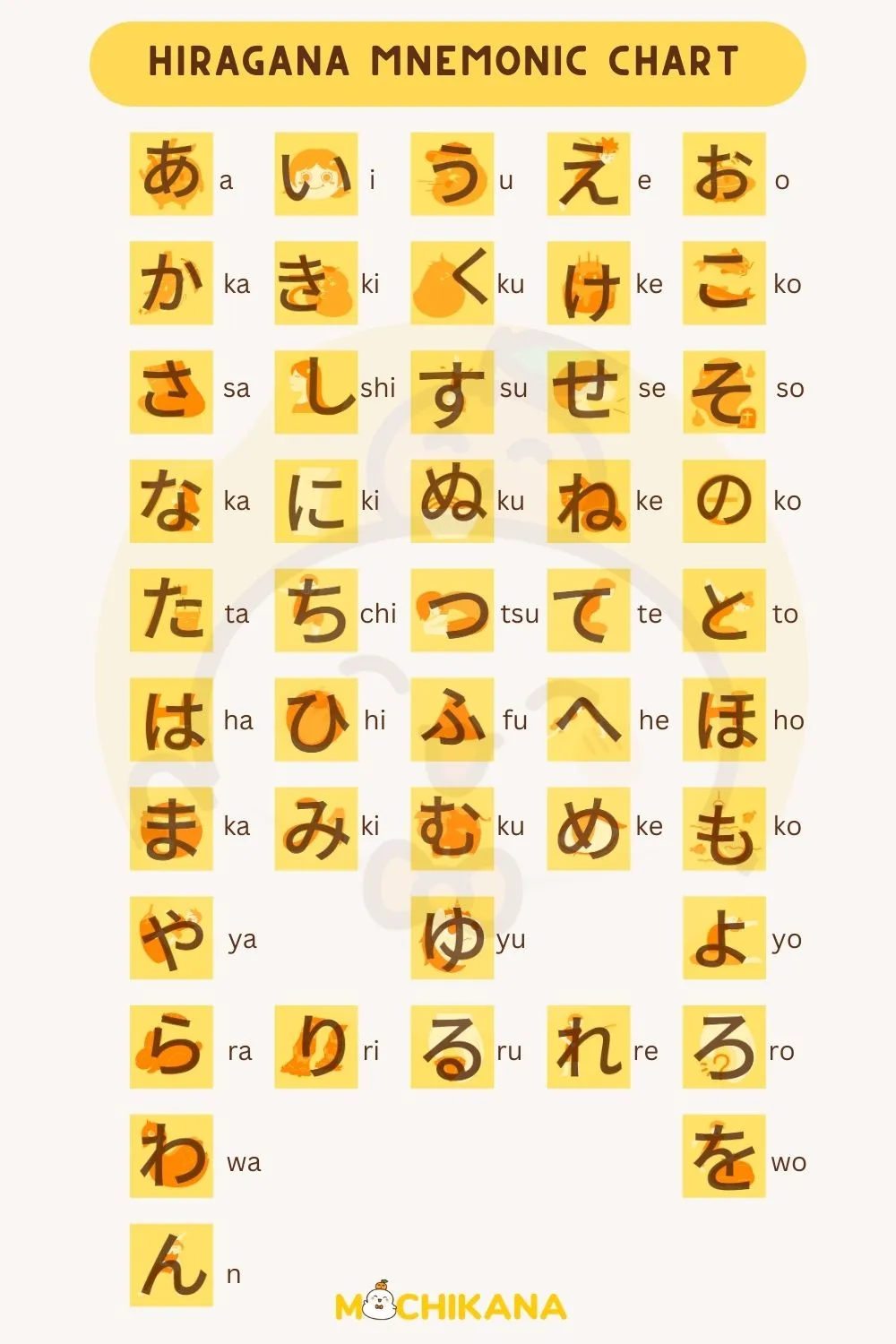
Hiragana Mnemonic Chart
This chart pairs each character with a visual cue. For example, some characters resemble everyday objects. As a result, your brain forms stronger connections and recalls the characters faster.
👉 Download the hiragana mnemonic chart (PDF)
Not every mnemonic works for everyone, though. So feel free to mix and match from different charts. What matters most is that the association clicks for you.
Additional Hiragana: Dakuon, Handakuon & Combinations
Once you learn the 46 basics, there are extra characters to explore. These include dakuon (voiced sounds), handakuon (semi-voiced sounds), and yoon (combinations).
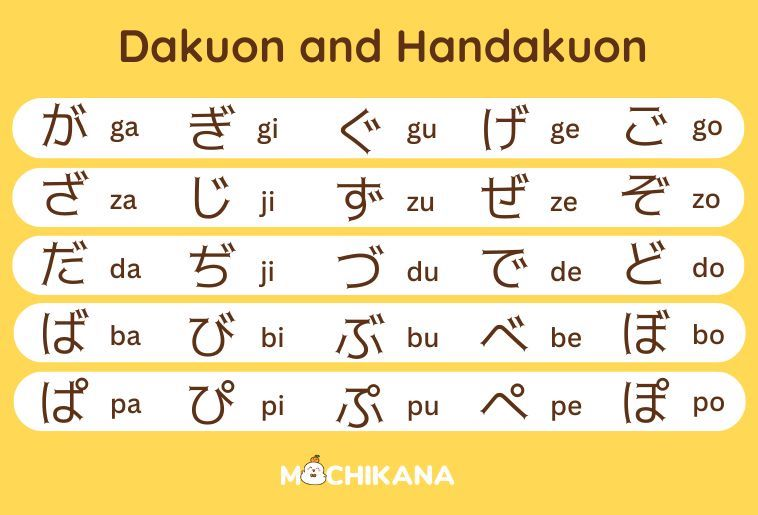
Dakuon and Handakuon Chart
Dakuon adds two small dots (゛) to certain characters. Handakuon adds a small circle (゜). For instance, か (ka) becomes が (ga) with dakuten. Because these sounds appear constantly in everyday Japanese, you need to learn them early.
👉 Download the dakuon and handakuon chart (PDF)
Hiragana Combination Chart (Yoon)
Yoon forms by combining a character ending in the vowel i with a small や, ゆ, or よ. As a result, you get new sounds like きゃ (kya) or しょ (sho). These combinations appear frequently in Japanese words, so mastering them is important.
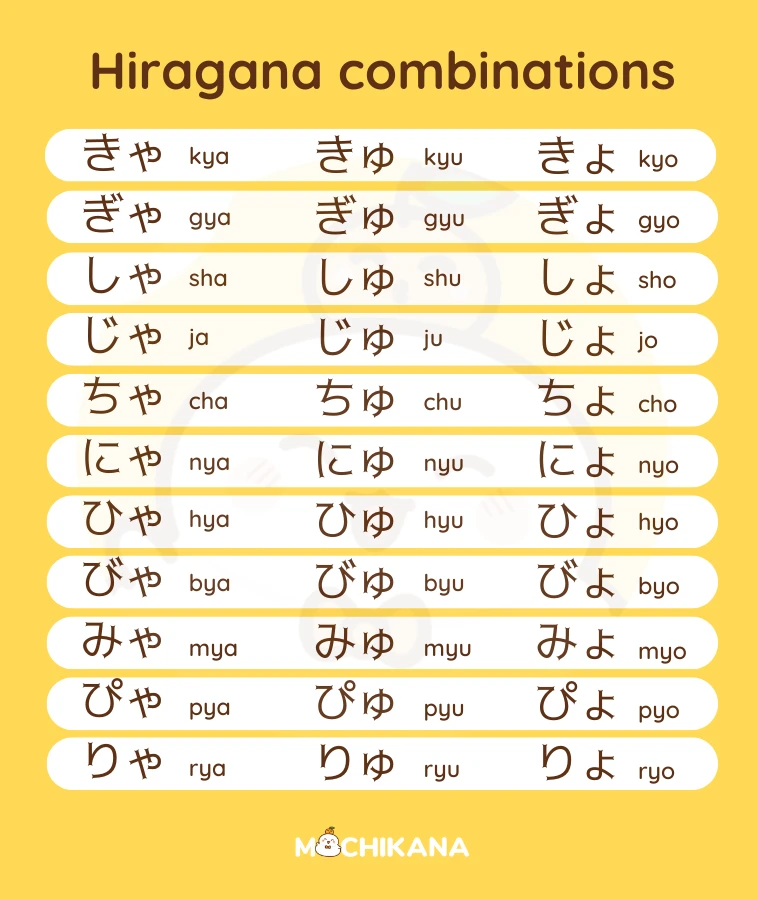
👉 Download the hiragana combination chart (PDF)
Full Hiragana Charts (Basic + Advanced Together)
These charts combine everything — the 46 base characters, dakuon, handakuon, and yoon combinations — in one place. They work best for learners who have already started the basics and want a complete reference.
Full Hiragana Chart PDF
This clean, all-in-one chart covers every hiragana sound in the Japanese language. Print it out and keep it nearby while you study.
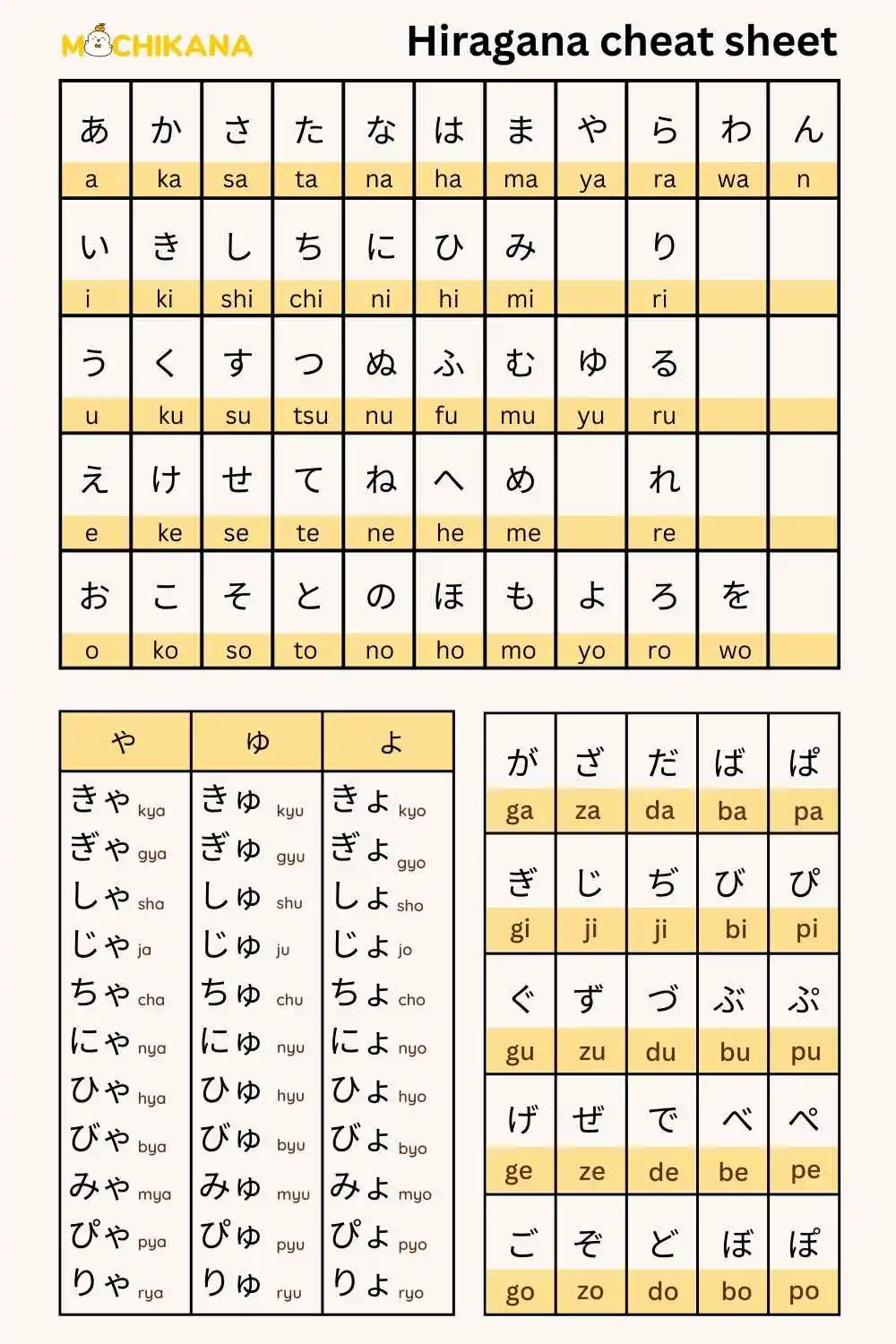
👉 Download the full hiragana chart (PDF)
Full Hiragana Chart with Practice Worksheets
This version includes writing practice alongside the full chart. Because it combines reference and practice in one sheet, it saves you time. Simply print, study, and write.
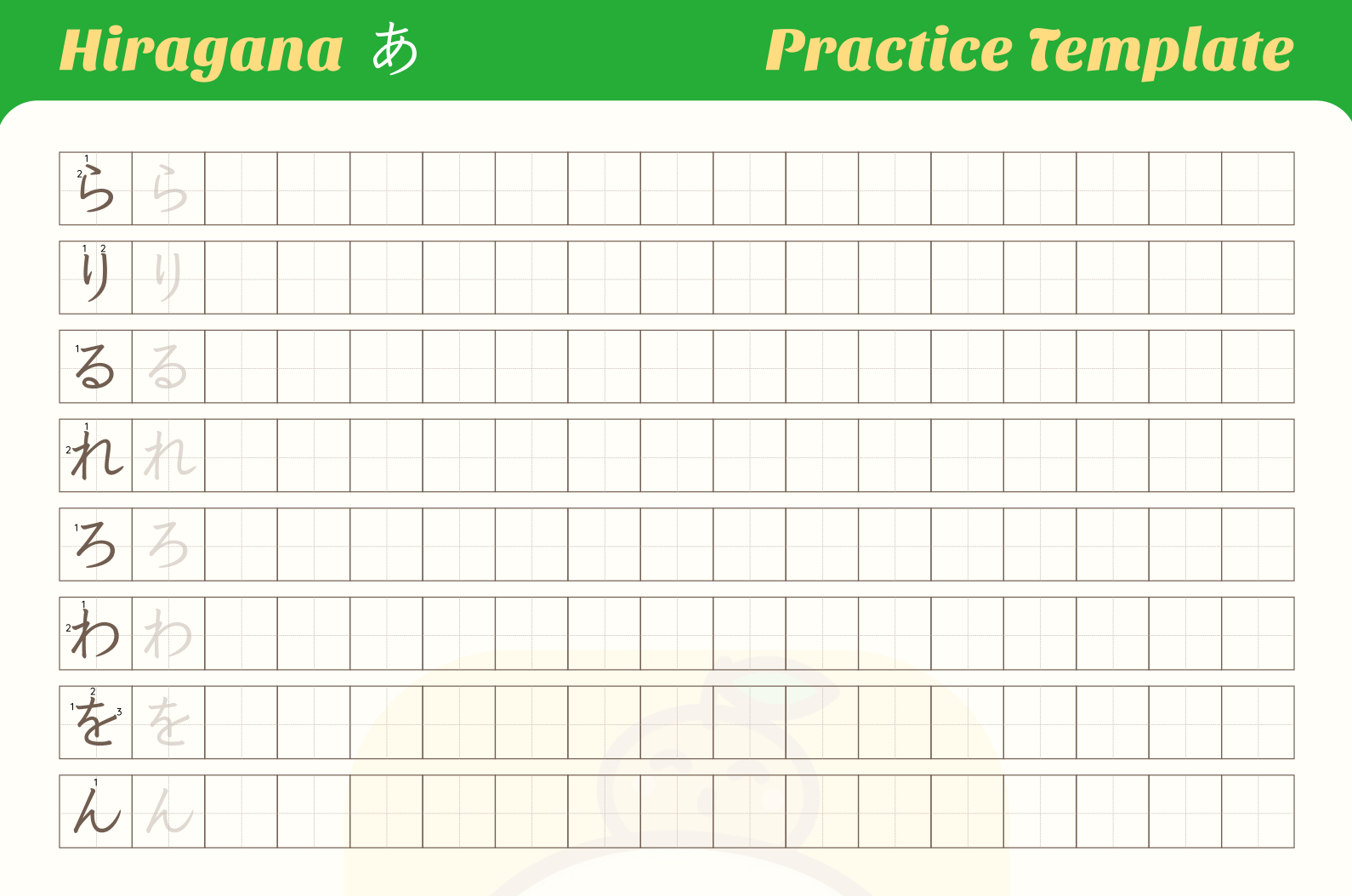
👉 Download full hiragana chart with practice worksheets (PDF)
How to Actually Learn Hiragana (Not Just Reference It)
Charts are useful references, but they won’t teach you hiragana on their own. You also need active practice and review. That’s where MochiKana comes in.
MochiKana is a free app designed for Japanese beginners. It uses spaced repetition and reviews you at the perfect moment — what it calls “Golden Time.” Because of this approach, most learners memorize all hiragana in just one week.
In addition, MochiKana includes:
- Step-by-step learning paths for total beginners
- Flashcard games to make practice fun
- Practice tests to track your progress
After you finish hiragana, you can continue with Katakana and then move on to kanji and vocabulary.