A beginner-friendly guide to radical search, stroke count, reading lookup, and drawing input.
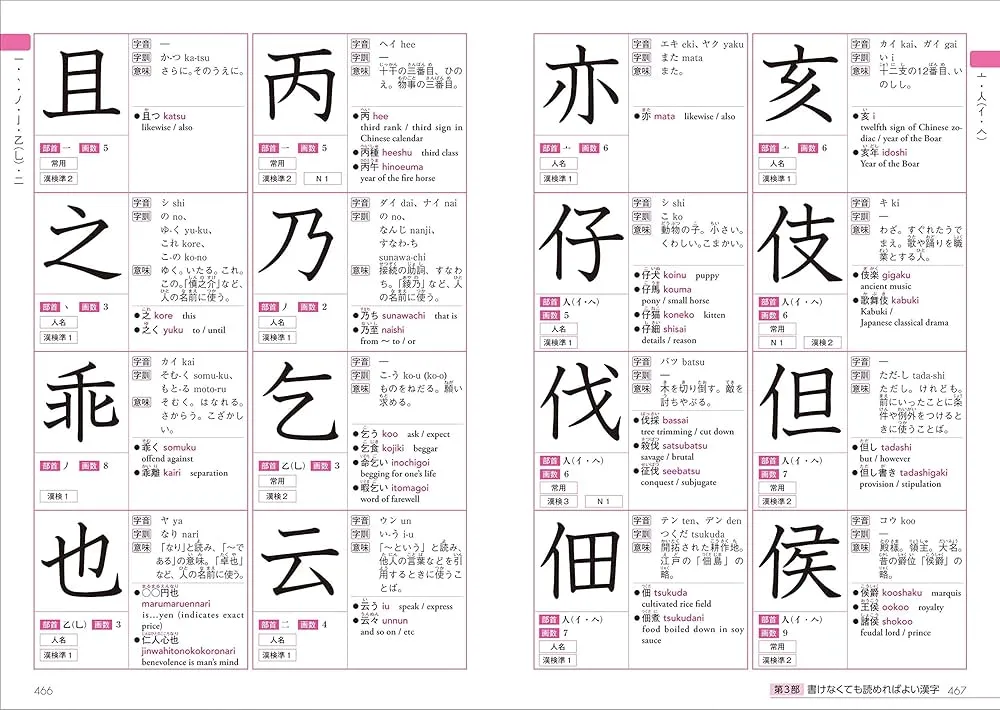
Figure 1. Four ways to rescue yourself when a kanji refuses to introduce itself.
You are reading Japanese, everything is going fine, and then an unknown kanji shows up like it pays rent in your textbook. You do not know the reading. You do not know the meaning. You cannot type it because, wonderfully, you do not know how to read it yet.
This is one of the classic beginner problems in Japanese — and it is exactly why kanji dictionaries exist. Once you know how to use one, unknown characters stop feeling like roadblocks and start feeling like small, solvable puzzles.
The goal of this guide is simple: help you look up unfamiliar kanji quickly, understand what a dictionary entry is telling you, and pick the fastest lookup method for the situation in front of you.
If your kanji foundation still feels wobbly, read Learn Kanji the Smart Way first. If your kana still slows you down, a quick reset on MochiKana helps more than people think.
What you will learn in this guide:
· what information a kanji dictionary gives you
· when to search by radical, stroke count, reading, or handwriting
· which online dictionary tools are worth bookmarking
· how to turn a lookup into actual study instead of a one-off search
The Basics
A kanji dictionary is not just a place to find a meaning. A good entry usually gives you the radical, total stroke count, on’yomi and kun’yomi readings, example compounds, and often the little clues you need to find the same kanji again later.
That matters because looking up kanji is rarely about solving one problem. It is about building independence. The more quickly you can identify a character, the faster you can keep reading, checking vocabulary, and learning from real Japanese instead of waiting for a teacher or translation app to save you.
| Dictionary field | What it helps you do |
| Meaning | Get the core idea of the kanji or word. |
| On’yomi / Kun’yomi | Understand how the character is read in different contexts. |
| Radical | Use component-based lookup when you cannot type the kanji. |
| Stroke count | Fallback search route when you can count the shape. |
| Example words | See how the kanji actually behaves in real vocabulary. |
Online Japanese Dictionaries Worth Bookmarking
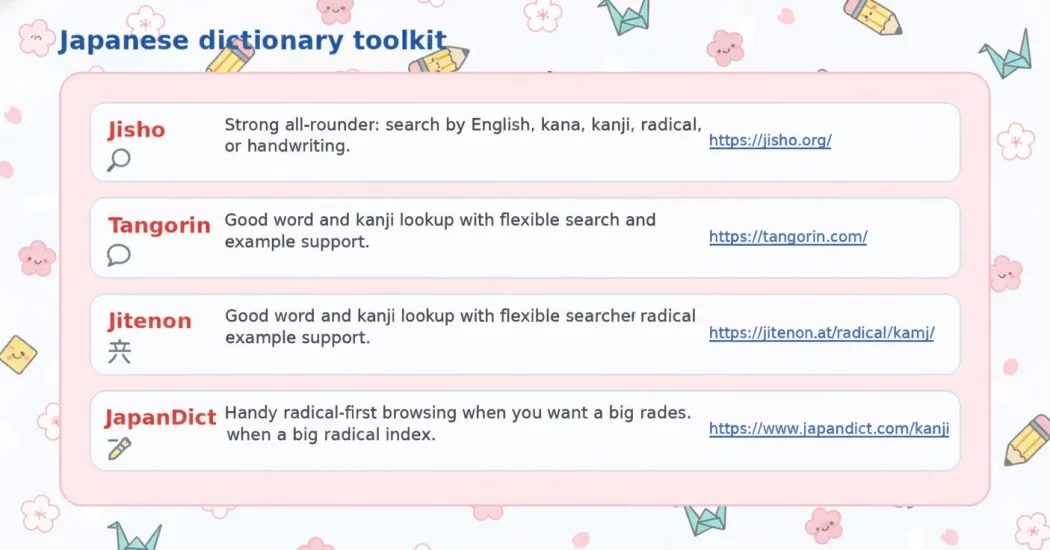
Figure 2. A practical starter pack: one general dictionary, one flexible search tool, and a couple of lookup specialists.
You do not need ten dictionary tabs open at all times. You do need one or two tools you actually know how to use. Good places to start are Jisho for all-round lookup, Tangorin for flexible search and example support, Jitenon radical search when you want a large radical index, and JapanDict kanji search for dedicated radical and drawing pages.
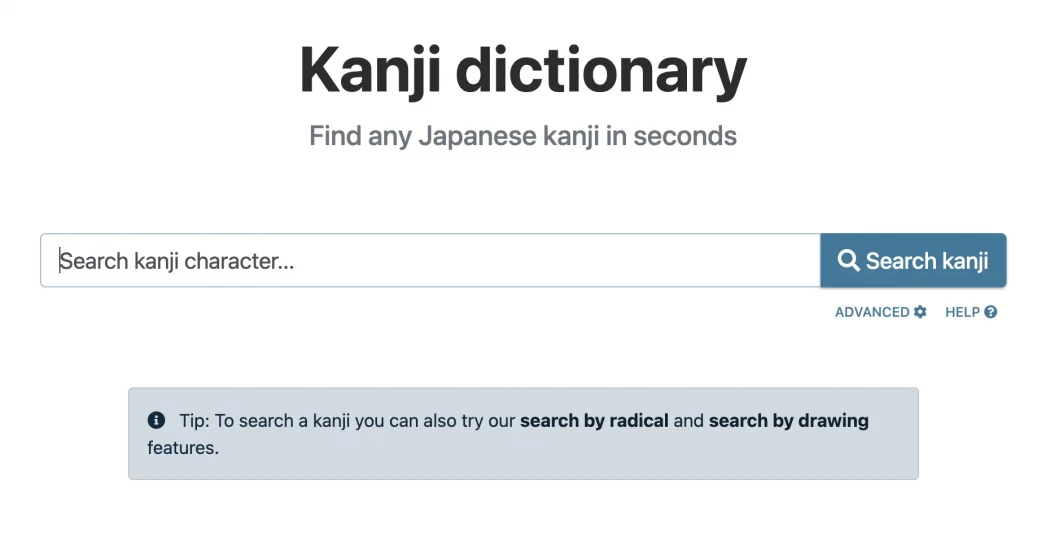
These are all digital tools, but the logic behind them still comes from traditional kanji dictionaries: identify what you know about the character, then use the best index to narrow it down.
The Four Ways to Look Up a Kanji

Figure 3. Different entry points, same goal: get from unknown shape to usable information fast.
1. Search by Radical
This is the old-school method that still works beautifully. A radical is the official component used to classify a kanji in dictionaries. If you can spot a familiar piece inside the character, radical search is often the cleanest path.
Take 海. The left-side 氵 tells you this kanji belongs to the water family. Once you recognize that, you can jump into a radical index and narrow the search fast. This is why radicals are not just trivia — they are lookup tools.
2. Search by Stroke Count
If the radical is unclear but the shape is clear, stroke count can save you. Count the total number of strokes, then search under that number. It is a little fiddly at first, but it becomes much more useful once you understand common stroke patterns.
This is also the method that teaches you very quickly not to overtrust your first count. If you do not find the kanji where you expect, check one or two counts above and below before assuming the dictionary is broken.
3. Search by Reading
If you already know the pronunciation, this is the easiest route by far. Search がくせい and the dictionary hands you 学生. Search ちかてつ and you get 地下鉄. Clean, fast, no drama.
This is why your reading knowledge and dictionary support each other. The more words you already know, the easier lookup becomes. And the more lookups you do, the faster your reading vocabulary grows.
4. Search by Drawing
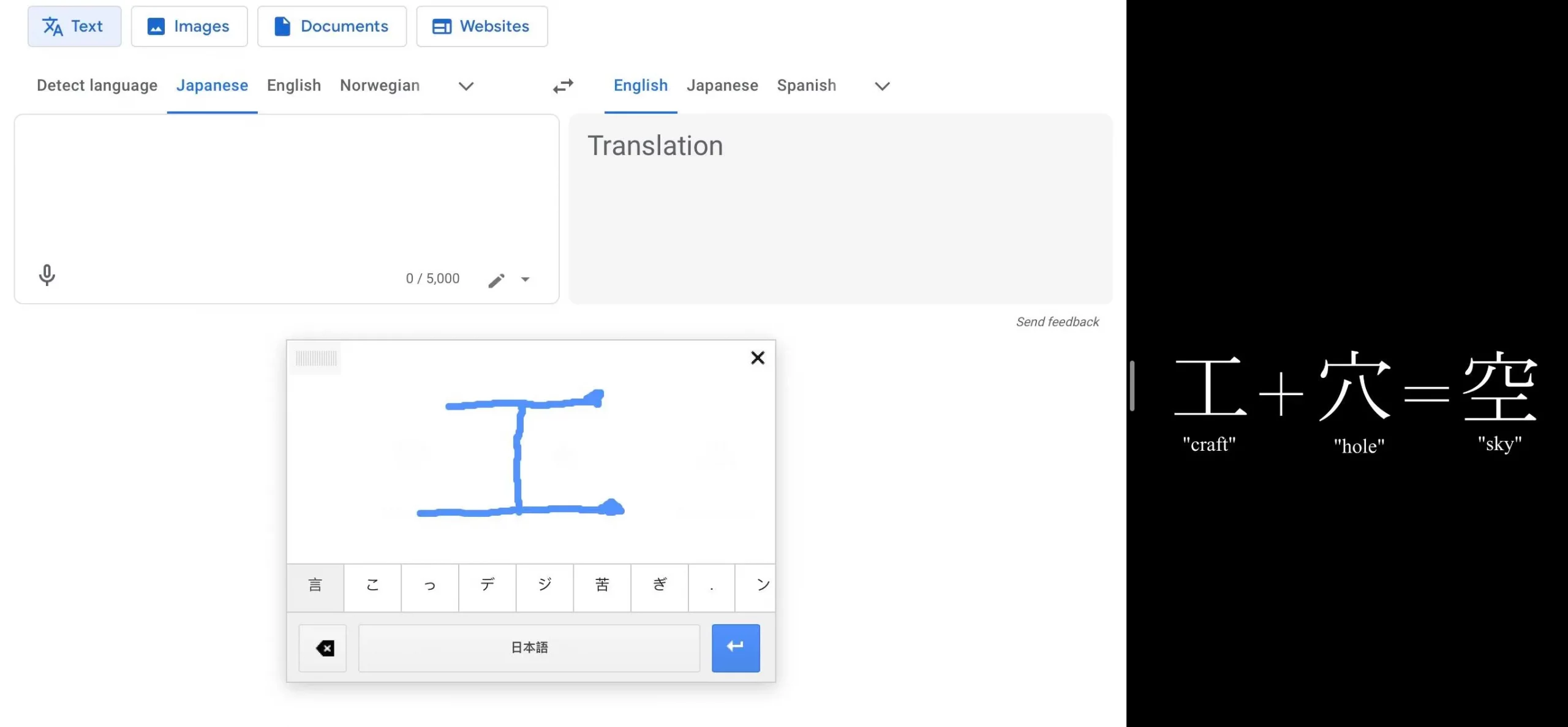
When you cannot identify the radical, are not confident about the stroke count, and definitely do not know the reading, handwriting input is your rescue button. Draw the character as best you can. Modern tools are surprisingly forgiving.
It is not perfect, but for unknown characters in the wild, drawing is often the fastest way back into the dictionary.
| Quick reality check: you do not need to master all four methods on the same day. Learn one dependable route first, then add the others when you keep bumping into situations where they are faster. |
What a Real Lookup Looks Like

Imagine you meet 地下鉄 in a sentence. Maybe you know 地. Maybe you know 下. Maybe the whole thing still feels foggy. A dictionary lets you confirm the reading ちかてつ and the meaning “subway,” then follow the entry into example sentences, related words, and separate kanji entries if you need them.
That is the difference between passive confusion and active learning. A good lookup does not just answer “what is this?” It gives you enough surrounding information to remember it the next time you see it.
How to Get Faster at Kanji Dictionary Use
Learn the common radicals first
A tiny radical vocabulary pays off everywhere. Water 氵, person 亻, tree 木, mouth 口, hand 扌 — these come back constantly.
Look up words, not just lone kanji
Kanji rarely live alone in real Japanese. Prioritize vocabulary and example compounds whenever you can.
Turn lookups into review
After a lookup, test yourself once. Read the word again later. Better yet, fold it into your practice on Kanji123 or your review flow on MochiKanji.
Do not romanticize paper difficulty
Knowing traditional methods is useful. Pretending digital tools are cheating is not. Use the fastest method that teaches you something.
If you want a smoother path from article knowledge to actual retention, pair dictionary lookups with Kanji123 quiz practice, and then use MochiKanji when you want the same characters to come back through spaced review. For broader study structure, the Mochidemy Learn Japanese hub is a good companion path.
Final Thoughts
A kanji dictionary is one of the most practical tools in Japanese study because it turns “I have no idea what this is” into a set of solvable steps. Radical. Stroke count. Reading. Drawing. One of those routes will usually get you home.
The bigger win is not just that you find the kanji. It is that you keep reading. And once you keep reading, Japanese gets much easier to grow.
Ready to make this useful right away?
Bookmark Jisho, keep Tangorin nearby, and use Kanji123 for quick recall after every good lookup.
FAQ
What is the best kanji dictionary for beginners?
A good beginner setup is one general-purpose digital dictionary plus one backup lookup method. Jisho is a strong starting point because it supports standard search, radical search, and handwriting input.
How do you look up a kanji you cannot read?
Use radical search, stroke count, or drawing input. If you know part of the word already, searching by reading is fastest.
Do I need to learn radicals to use a kanji dictionary?
Not strictly, but even a small set of common radicals makes lookup much faster and makes kanji feel less random overall.
Is stroke count still useful in digital dictionaries?
Yes. Even modern tools often use stroke count as a fallback route or supporting filter when other information is missing.