Ask anyone if learning Japanese is hard to learn and you’ll get the same answer every time. “Oh, it’s one of the hardest languages in the world.” “You have to learn three scripts.” “And then there’s kanji.”
Here’s the thing — most of that is fear talking, not fact.
Yes, Japanese looks unfamiliar. Yes, kanji exists. But when you actually break Japanese down piece by piece, you’ll find that a surprising number of things are genuinely easier than in languages people consider “simple.” In fact, several aspects of Japanese are easier than English itself.
So, is learning japanese hard? The honest answer is: much less than you think. This post walks through the most common fears, where they come from, and why they don’t hold up under scrutiny.
Who Says Learning Japanese Is Hard
The most-cited source for Japanese difficulty is the Foreign Service Institute (FSI) — a US government organization that trains diplomats and officials in foreign languages before sending them abroad.
The FSI ranks languages by how long they take native English speakers to reach professional working proficiency. At the easy end sit Romance languages like Spanish, French, and Italian. At the hard end sit Arabic, Cantonese, Korean, Mandarin — and Japanese.
That’s a hard ranking to argue against. The FSI has decades of experience and real data behind it.
However, the FSI measures something very specific: the time to reach professional fluency under classroom conditions. That’s a very high bar. It doesn’t measure how quickly you can start reading menus, understanding conversations, or enjoying Japanese media. By those standards, Japanese gets accessible much faster than the FSI ranking implies.
Let’s Look at What’s Actually Easy
Most people focus on the scary parts of Japanese and never stop to notice the easy ones. Therefore, before getting to the challenges, it’s worth looking at what Japanese gets right for beginners.
Pronunciation Is Genuinely Simple
Japanese phonology — the sound system — is one of the simplest of any major language. While there are 5 basic vowels, their length (long vs. short) changes the word’s meaning. Each vowel stays consistent. Unlike English, where the letter “a” sounds different in cat, cake, care, and father, Japanese vowels never change.
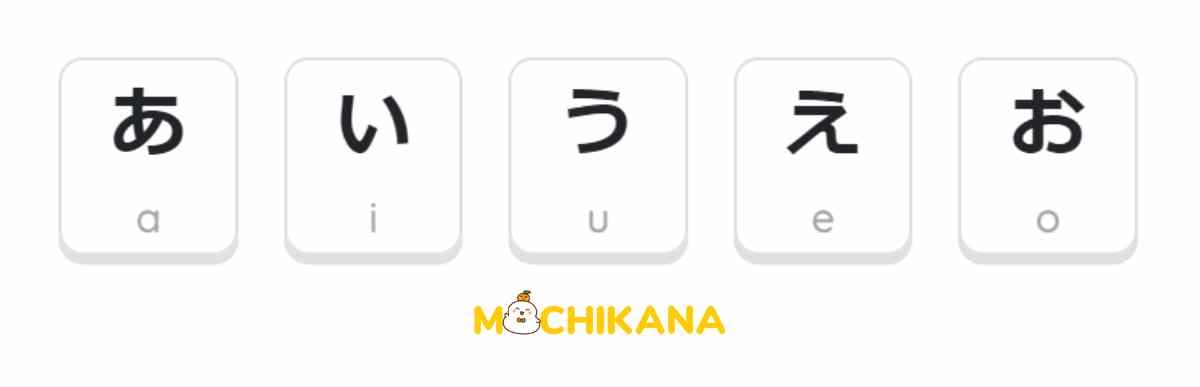
Source: MochiKana
The consonants are equally straightforward. Most of them map directly onto sounds English speakers already use. Because of this, most beginners can produce understandable Japanese pronunciation within their first week of study.
In addition, Japanese is not tonal like Chinese, but it has Pitch Accent (high/low peaks). In Mandarin or Vietnamese, the same syllable means completely different things depending on your pitch. In Japanese, pitch plays a minor role — but nothing close to the level that makes tonal languages so difficult for English speakers.
Grammar Has Almost No Gender or Cases
This one surprises people. Romance language learners spend months learning grammatical gender — whether a noun is masculine or feminine and how that changes every article and adjective around it. Japanese has none of that. A chair is just a chair. A library is just a library. You never have to guess the gender of an inanimate object.
Japanese also has no grammatical cases in the Latin or Russian sense. Furthermore, verb conjugation is remarkably consistent — Japanese verbs don’t change based on who is performing the action. “I eat,” “you eat,” “she eats” all use the same verb form. That alone eliminates an entire category of confusion that trips up learners of European languages.
What About Kanji? That’s the Real Problem, Right?
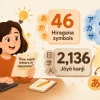
Kanji is the part that scares people most. Honestly, that’s understandable — the idea of learning thousands of characters feels overwhelming before you start.
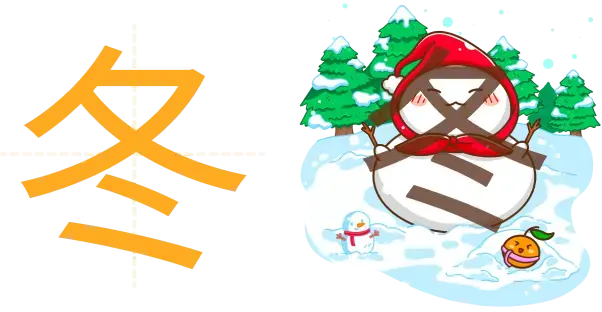
Source: MochiKanji
But here’s what people miss: you don’t learn kanji by staring at a wall of characters. You learn them one at a time, using mnemonics and spaced repetition — the same method that makes Hiragana and Katakana learnable in a week or two. MochiKana uses exactly this approach, and it works because your brain responds to patterns and stories, not raw memorization.
Technology has also made kanji dramatically less intimidating than it used to be. You no longer need to memorize every stroke in order to write a character from scratch. Instead, you type romaji on any device and your IME converts it instantly. If you want to learn how to type in Japanese, that system is easier to set up than most people expect.
Kanji is a long-term project — but it’s a manageable one. Most learners are surprised by how quickly the first few hundred characters start to feel familiar.
The Real Reason Learning Japanese Feels Hard
If Japanese has all these easy aspects, why does the reputation persist? The answer is mostly psychological, not linguistic.
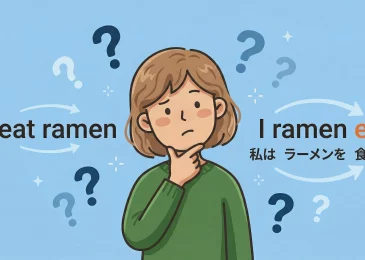
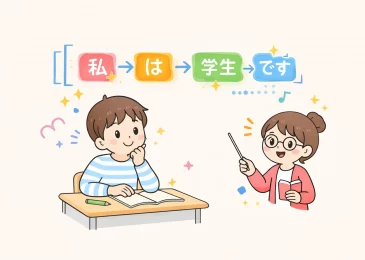
Japanese looks completely foreign to English speakers. The scripts are unfamiliar, the sentence structure runs in a different order (subject-object-verb instead of subject-verb-object), and there’s no shared vocabulary base the way Spanish and English have thousands of cognates.
That unfamiliarity triggers a threat response. However, being unfamiliar is not the same as being difficult. It just means the learning curve feels steeper at the very beginning — before anything clicks.
Once the first script clicks, momentum builds fast. Most learners find that Hiragana learning takes less than a week. After that, to learn Katakana, it takes another week. Suddenly, a huge portion of written Japanese becomes readable. That early win changes everything.
Is Japanese Hard to Learn Compared to Other Languages?
Compared to Mandarin or Arabic, Japanese is arguably easier in several ways — simpler phonology, no tones, and a writing system that at least has a phonetic layer underneath the kanji.
Compared to Spanish or French, learning Japanese is harder in the sense that it requires more total study hours to reach fluency. However, it’s easier in grammar consistency, lack of grammatical gender, and — surprisingly — pronunciation regularity.
The honest comparison is this: Japanese takes longer, but it rewards you faster. You can start reading real Japanese text within your first month. You can recognize words from anime, menus, and signs almost immediately. Therefore, the journey feels productive much earlier than the FSI timeline suggests.
So Should You Try to Learn Japanese?
Straightforwardly, yes.
The fear around learning Japanese is mostly inherited from people who never tried, repeated by people who gave up early, and amplified by the FSI ranking that measures a very specific kind of fluency most learners never need.
If you’re curious about Japanese — the culture, the media, the food, the travel — that curiosity is all the qualification you need to start. The scripts are learnable. The grammar is logical. And kanji, for all its reputation, responds well to the right method.
The best place to start is with the kana scripts. MochiKana walks you through Hiragana and Katakana step by step — one character at a time, with mnemonics that actually stick. Most learners clear both scripts in two weeks.
After that, learning Kanji opens up the rest of the language. One step at a time.
Give it a shot. Japanese might surprise you.
© Kanji123 — Free JLPT Kanji Test Online