
Kanji Radicals: The Easiest Way to Remember Kanji
Kanji radicals are one of those things that sound scary until somebody explains them like a normal person. Then suddenly you realize, oh – these are just the building blocks that make kanji easier to sort, easier to remember, and way less annoying.
If you have ever stared at a character and thought, “Cool, but how am I supposed to remember this tomorrow?”, radicals are where the rescue mission starts. They help you break large characters into smaller chunks, and those chunks are exactly what make mnemonics work. That is why a lot of learners use radicals as the bridge between “I recognize this shape” and “I can actually remember this kanji in real life.”
In this guide, we will unpack what radicals are, how they differ from regular components, and how to use them without turning your study routine into a giant spreadsheet of suffering. While you are learning, you can use Kanji123 to test the common kanji you already know, and pair that with MochiKanji or the broader learn Japanese hub from Mochi when you want a more guided path.
What is a kanji radical, exactly?
A radical is the official part used to classify a kanji in dictionaries and reference systems. Think of it as the filing label. It tells you where the character belongs when you need to look it up.
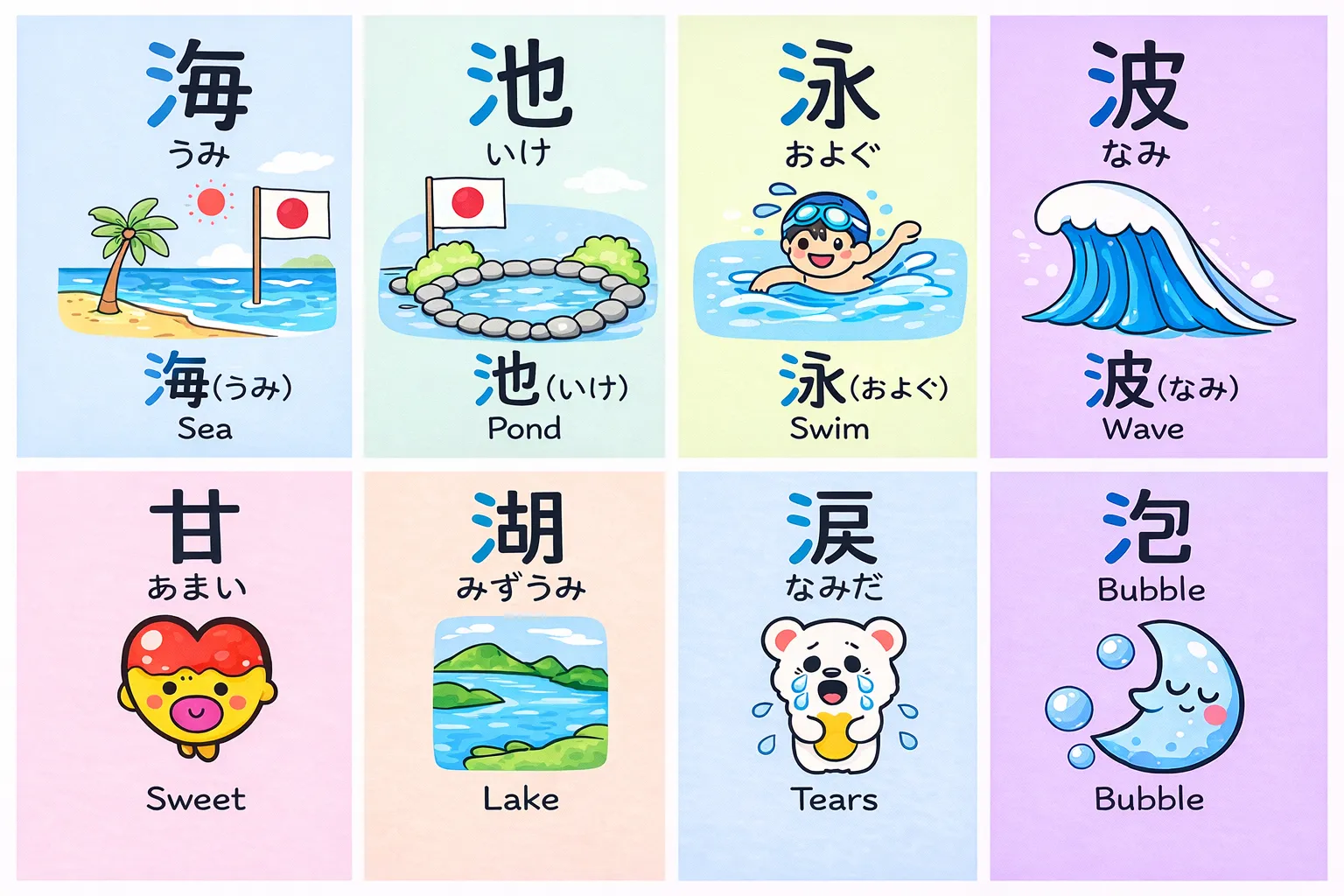
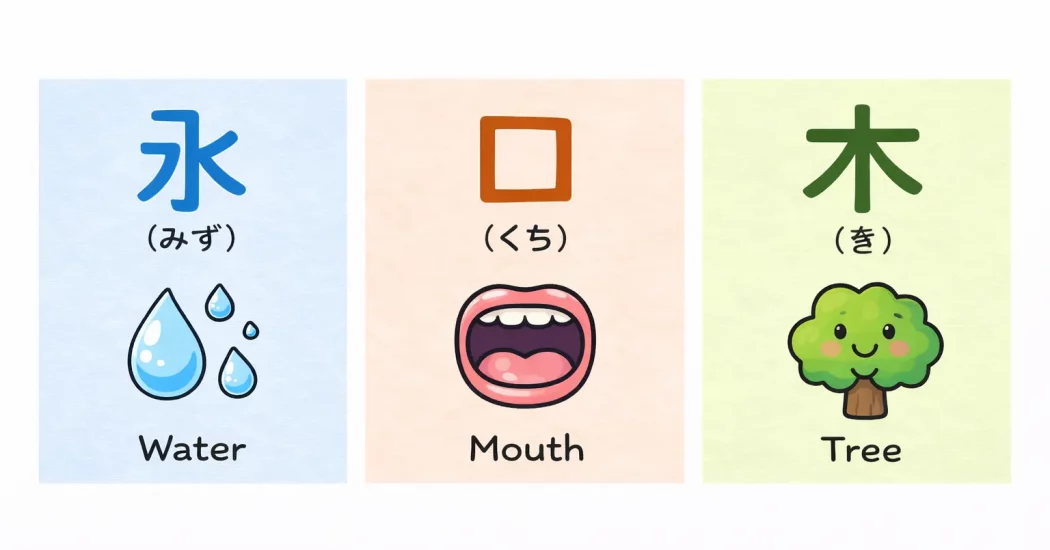
That sounds a little dry, so here is the practical version: radicals are the pieces that stop kanji from feeling like random spaghetti. Once you can spot recurring shapes like 氵 (water), 口 (mouth), or 木 (tree), a lot of characters become much easier to decode.
A radical will not always tell you the entire meaning of a kanji, and it will definitely not magically give you every reading. But it often gives your brain a place to start. That is a huge upgrade from trying to brute-force every character as a completely separate drawing.
Radical vs component: same neighborhood, different job
· A radical is the official dictionary category part.
· A component is any visible chunk inside the kanji that you notice and use.
In real study life, you will use both. The radical helps with lookup and organization. The components help with memory stories. Some parts are both a radical and a useful mnemonic chunk. Some are only one or the other. That is normal.
If you are still getting comfortable with Japanese writing in general, it helps to build that “spot the pieces” habit first with simpler scripts. That is exactly why MochiKana and the beginner Hiragana lessons are useful stepping stones before you go full detective mode on kanji.
Why radicals make kanji easier to remember
The short answer: they give your brain handles.
When you look at a full kanji with no structure, it feels like one giant abstract shape. When you break it into parts, your brain goes from “memorize this blob” to “recognize these smaller familiar pieces.” That switch is everything.
· reduce visual overload
· make similar-looking kanji easier to compare
· create better mnemonic stories
· give you a reliable lookup method when you get stuck
This is also why radicals pair so well with spaced repetition. You are not just reviewing a shape. You are reviewing a shape plus a pattern. If you want a deeper beginner-friendly overview of how that system fits into kanji study overall, the best way to learn kanji guide from Mochi makes a good companion to read.
The radicals + mnemonic method, in plain English
1. Spot the biggest parts inside the kanji.
2. Give each part a plain-English label.
3. Turn those labels into a tiny story.
4. Attach the kanji to a real word so it stops floating in outer space.
The story does not need to be poetic. It does not need to be academically correct. It just needs to be sticky enough that your brain remembers it during review. Weird is fine. Short is even better.
For example, if a character contains a person radical and a tree component, you might picture somebody leaning on a tree. That image is easier to remember than a pile of disconnected strokes.
Three easy examples
休 – rest
You can see a person next to a tree. A person leaning on a tree feels like rest. That is the kind of image your brain actually keeps.
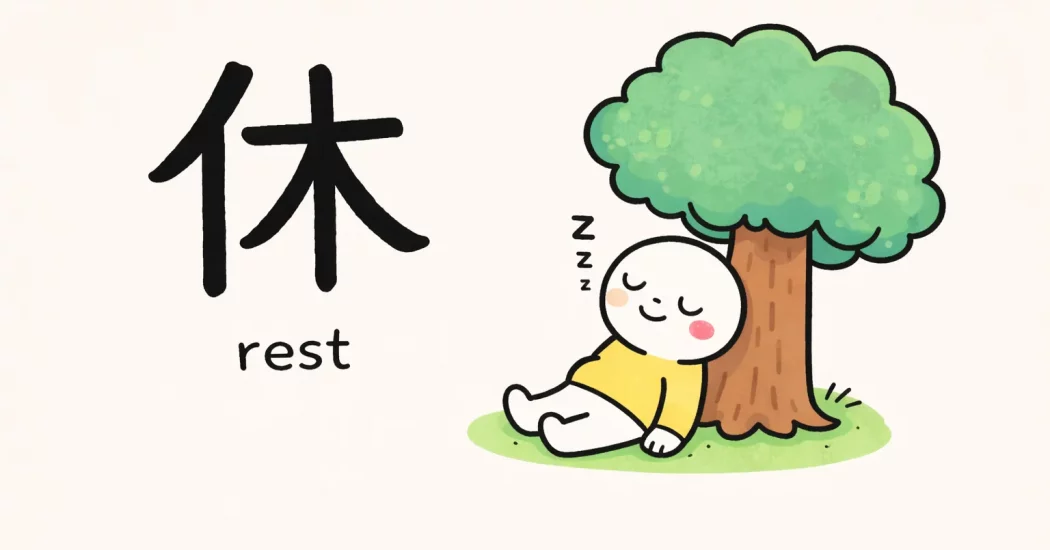
The radical is 人 (person), specifically the 亻 (human) form, and the other component is 木 (tree)
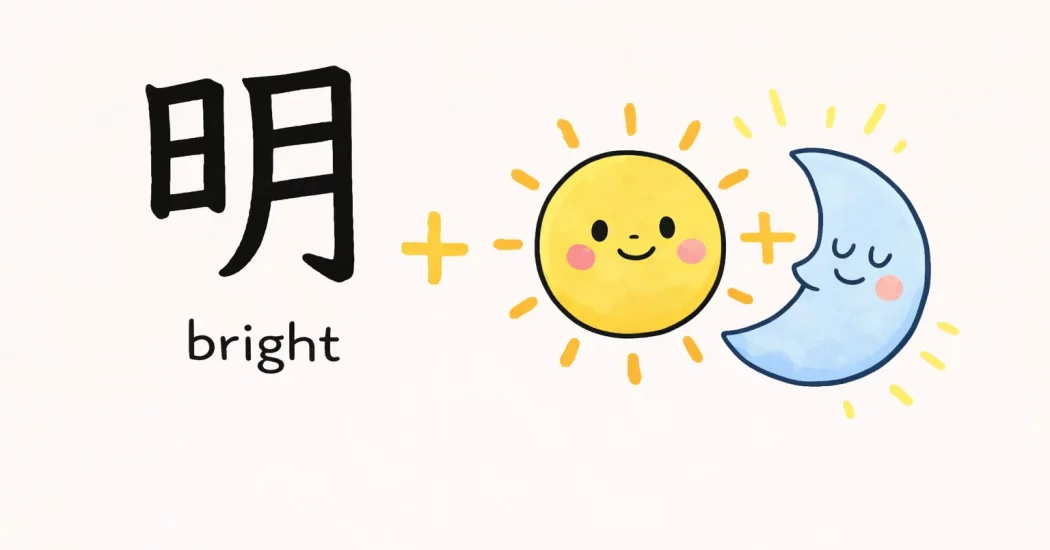
明 – bright
You get sun plus moon. Put two big sources of light together and “bright” makes intuitive sense.
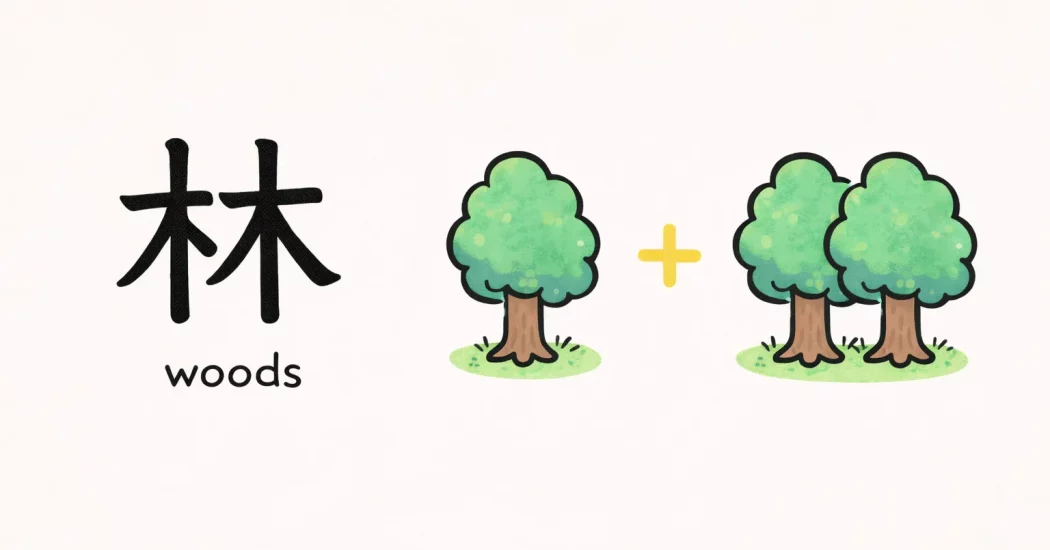
林 – woods
One tree is a tree. Two trees together feel like woods. Clean, simple, memorable.
Do these stories explain the full historical origin of every kanji? Not always. That is not the point. The point is recall. You are building a memory hook that helps you recognize and reuse the character later.
Wait, are radicals always the meaning?
Nope. And honestly, that is one of the healthiest things to accept early. Sometimes a radical hints at meaning. Sometimes it is mostly there for classification. Sometimes a different component gives a sound clue. Sometimes the whole thing just feels rude and refuses to be neat. Kanji contains a lot of logic, but it is not a perfect machine.
That is why radicals work best when you use them as helpful clues, not as a magical one-rule-fixes-all system.
Which radicals should beginners learn first?
Do not try to memorize every official radical in one weekend. That is an excellent way to become enemies with Japanese. Start with the ones you will see all the time.
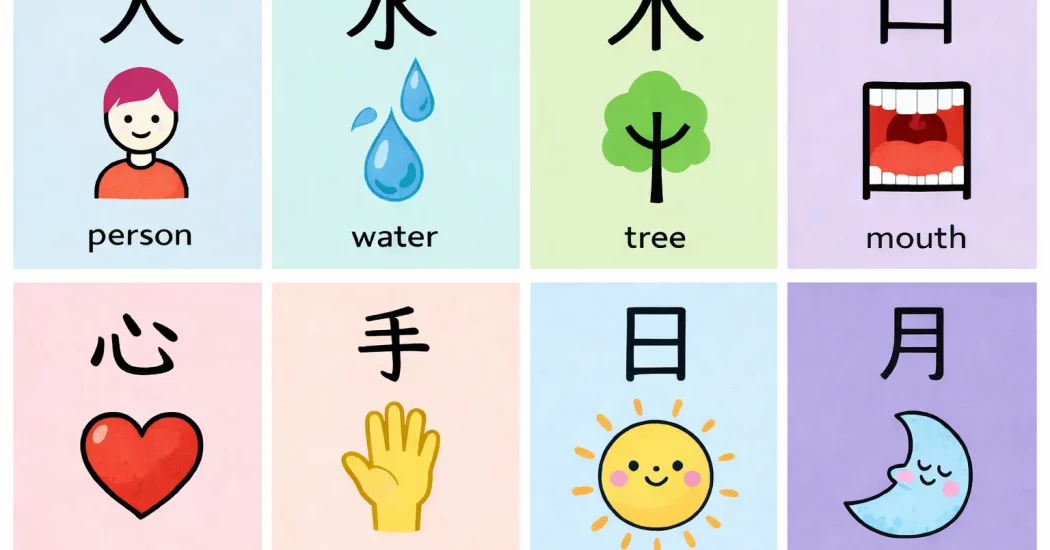
· 人 / 亻 – person
· 水 / 氵 – water
· 木 – tree
· 口 – mouth
· 心 / 忄 – heart
· 手 / 扌 – hand
· 日 – sun/day
· 月 – moon/month
These appear constantly in beginner material, including the kind of kanji you run into in N5 quizzes and N4 practice. Once you see them again and again, they stop being trivia and start becoming real tools.
How to use radicals in your actual study routine
A lot of learners understand radicals in theory, then forget to do anything with them. So here is the practical version.
Step 1: Learn a small batch of common radicals
Five to ten is enough to start. Seriously.
Step 2: Notice those pieces inside beginner kanji
Use easy material first. The basic kanji page from Mochi is good for this because it keeps the entry point beginner-safe.
Step 3: Create one tiny story for each new kanji
Not five stories. One. Your goal is recall, not literary greatness.
Step 4: Review with quizzes, SRS, and real words
This is where the memory becomes durable. Use Kanji123 for quick recall checks, and use MochiKanji courses if you want the characters to show up inside a larger structured study flow. The MochiKanji dictionary also helps when you meet a kanji in the wild and want example-rich context fast.
Step 5: Keep moving instead of over-polishing
If a mnemonic works, great. If it does not, make a new one and move on. The perfect story is less important than the next review.
Common mistakes when learning radicals
Treating radicals like a separate school subject
Radicals are useful because they support kanji learning. Do not study them in a vacuum forever. Use them on real characters.
Trying to memorize every official name immediately
You can start with plain-English labels like water, heart, or tree. Formal names can come later.
Confusing helpful clue with absolute rule
Radicals often help. They do not explain every detail of every kanji.
Making mnemonics too long
If your story has three plot twists and a supporting cast, it is probably doing too much.
Skipping real usage
A kanji should eventually live inside words, sentences, and quizzes. Otherwise it stays fragile.
A simple study plan for this week
· Day 1: learn 5 common radicals
· Day 2: find those radicals inside 10 beginner kanji
· Day 3: write a short mnemonic for each one
· Day 4: review them with a quick quiz
· Day 5: read example words that use those kanji
· Day 6: test recall again
· Day 7: keep only the mnemonics that still work and throw out the bad ones
If you want extra beginner resources around that routine, the Mochi learning resources page is a nice side door to worksheets, charts, and practice materials.
Final thoughts
Kanji radicals are not a cheat code, but they are very close to one. They turn giant scary characters into smaller pieces you can actually work with. That alone makes them worth learning.
The easiest way to remember kanji is not to stare harder. It is to break characters down, give the parts names, build tiny mnemonics, and then review them in real study situations. Radicals are what make that process feel manageable.
So start small. Learn a handful of common radicals. Try them on real kanji. Test yourself. Keep the stories that work. Dump the ones that do not. And when you want to check whether those memory hooks are sticking, jump into a quick round on Kanji123 – then follow it up with a broader Japanese path on Mochi’s learn Japanese hub.
FAQ
What is a kanji radical?
A kanji radical is the official part used to classify a character in dictionaries and lookup systems. It can also help learners remember and compare kanji more easily.
Are radicals and components the same thing?
Not always. A radical is the official classification part, while components are any visible pieces inside the kanji that you use for memory or analysis.
Do radicals tell you the meaning of a kanji?
Sometimes they give a helpful clue, but not always. Radicals are useful hints, not perfect meaning machines.
How many radicals should a beginner learn first?
Start with around five to ten common radicals that appear often in beginner kanji. That is enough to make your study feel easier without becoming overwhelming.
Are mnemonics really useful for kanji?
Yes. A short memorable story built from radicals or components often makes a kanji much easier to recall, especially during early study.


Pingback: 7 Ways to Learn Kanji: Which Study Method Is Best for You?
Pingback: Look Up Kanji: 5 Fast Methods Every Learner Should Know - Kanji123
Pingback: Kanji Stroke Order: The Beginner-Friendly Rules
Pingback: Kanji Learning Mistakes Every Beginner Should Avoid
Pingback: How to Find the Kanji Radical: A Literal Life-Saver
Pingback: Learn Japanese: A Smart Roadmap That Actually Works - Kanji123
Pingback: How Long Does It Take to Learn Japanese? - Kanji123
Pingback: Kanji Radicals and Mnemonics: The Only Strategy That Sticks.
Pingback: The Japanese Writing System: Hiragana, Katakana, and Kanji
Pingback: The "Zero Panic" Beginner Kanji List: 50 Must-Know Characters
Pingback: Best Kanji Learning Program for Beginners