Find the right Katakana charts for where you are — and download it free.
You searched for Katakana charts. That means you’re either just starting out, somewhere in the middle of learning, or trying to lock in what you already know. Either way, you need the right chart — not the first one that shows up.
The problem is there’s no shortage of Katakana charts online.
Basic ones, advanced ones, stroke order charts, mnemonic charts, combination charts. Most sites drop them in front of you without telling you which one fits where you are right now.
That’s what this guide is for. We’ve put together 10 Katakana charts — organized by level and use case, all free to download. Whether you’re looking for a clean 46-character reference to stick on your desk, a stroke order chart to build good writing habits, or a full advanced chart with dakuten and combinations, you’ll find the right one here.
Here’s what’s inside:
- Basic Katakana charts: 46 base characters, clean and printable
- Full Katakana charts: base + dakuten + combinations in one sheet
Pick the one that matches where you are. Download it. Use it.
And if you want to go beyond charts and actually learn Katakana from scratch, our complete Katakana guide walks you through every character step by step — mnemonics, pronunciation, practice exercises, and all.
Basic Katakana Charts
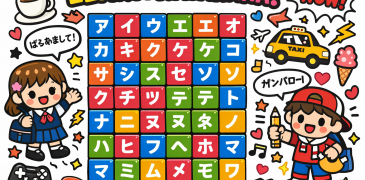
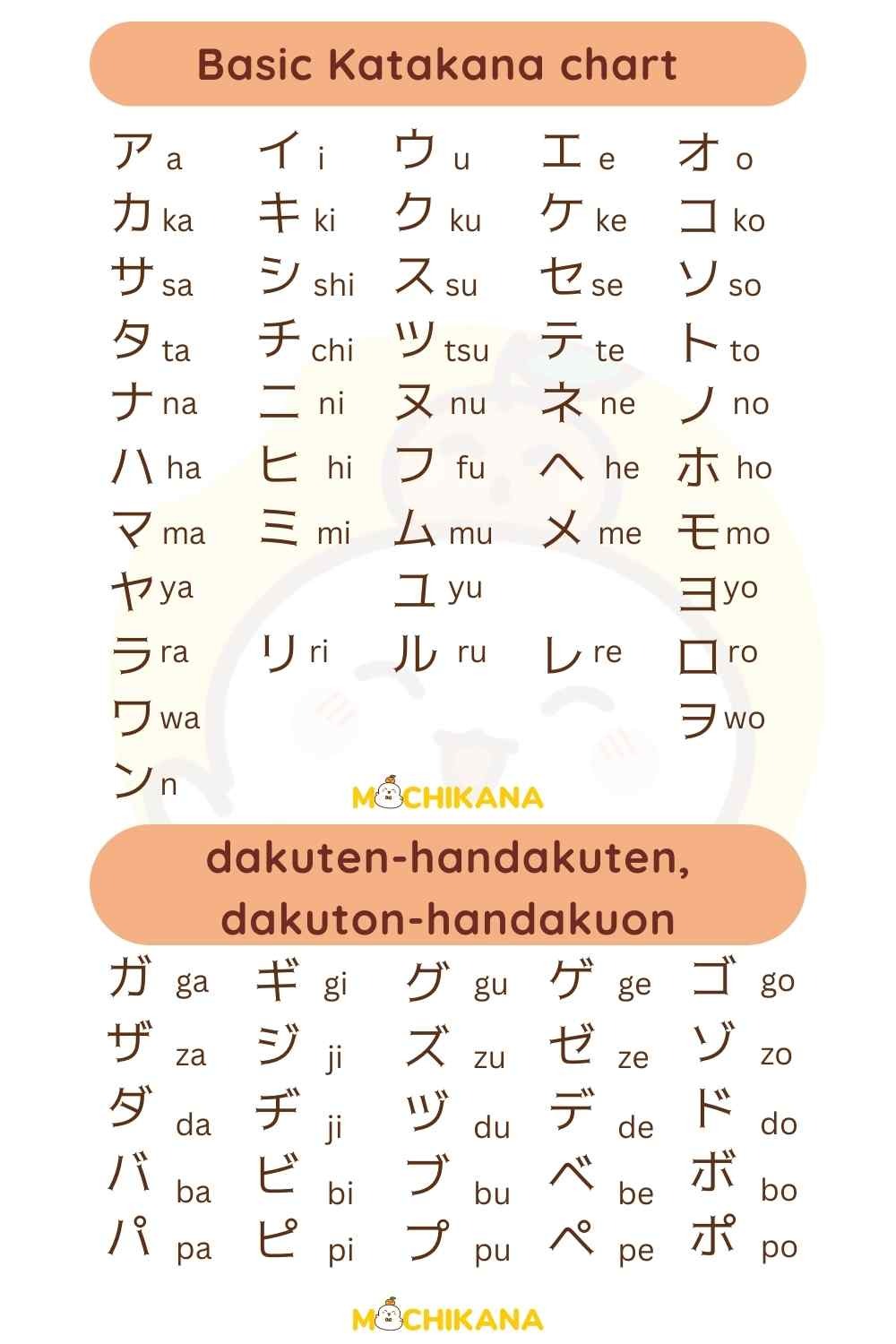
These charts cover the 46 base Katakana characters — from ア (A) row to ン (N) row. No dakuten, no combinations, no advanced features. Just the core chart, clean and printable.
If you’ve just finished Hiragana or you’re starting Japanese from scratch, this is where you begin.
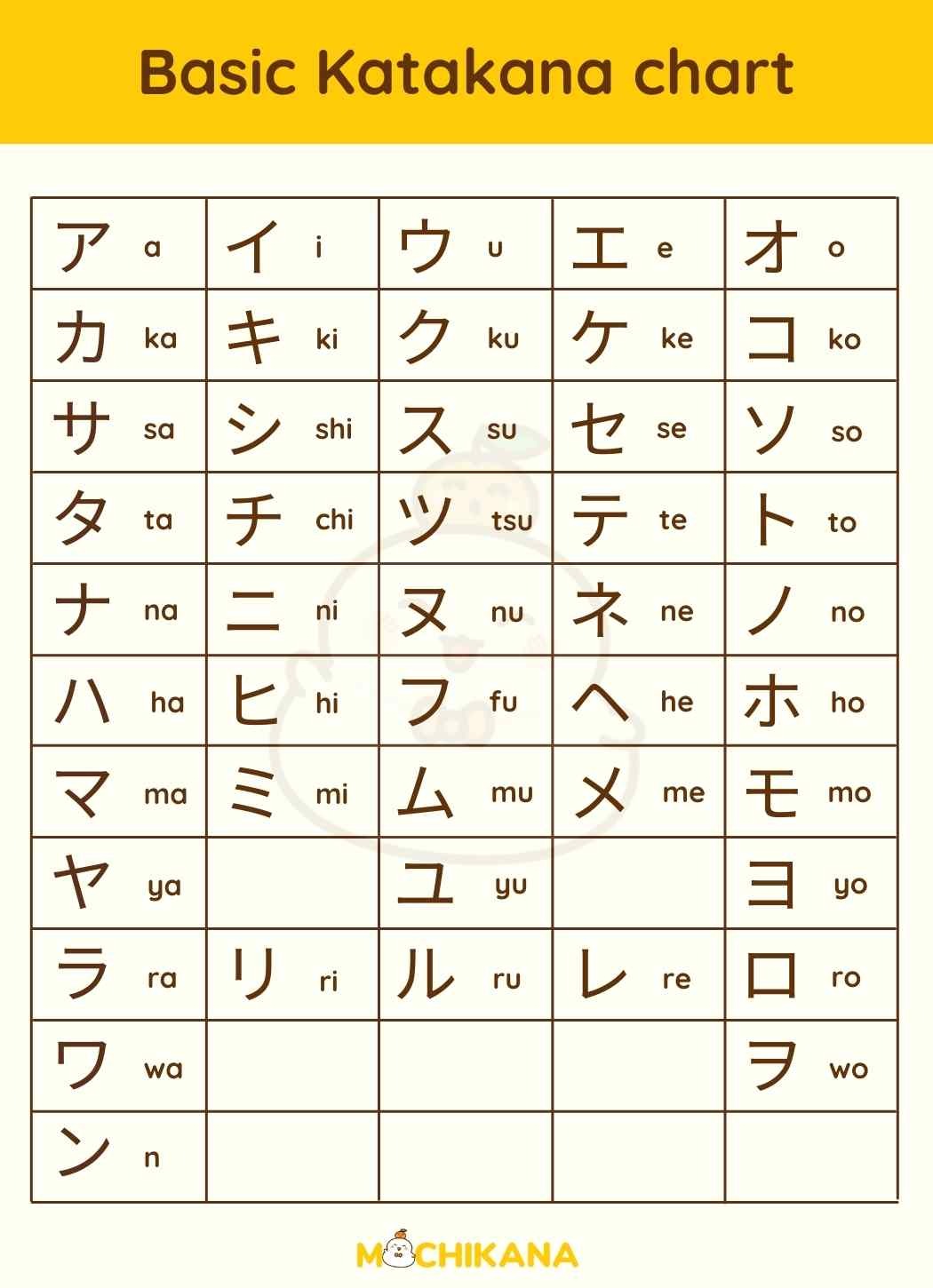
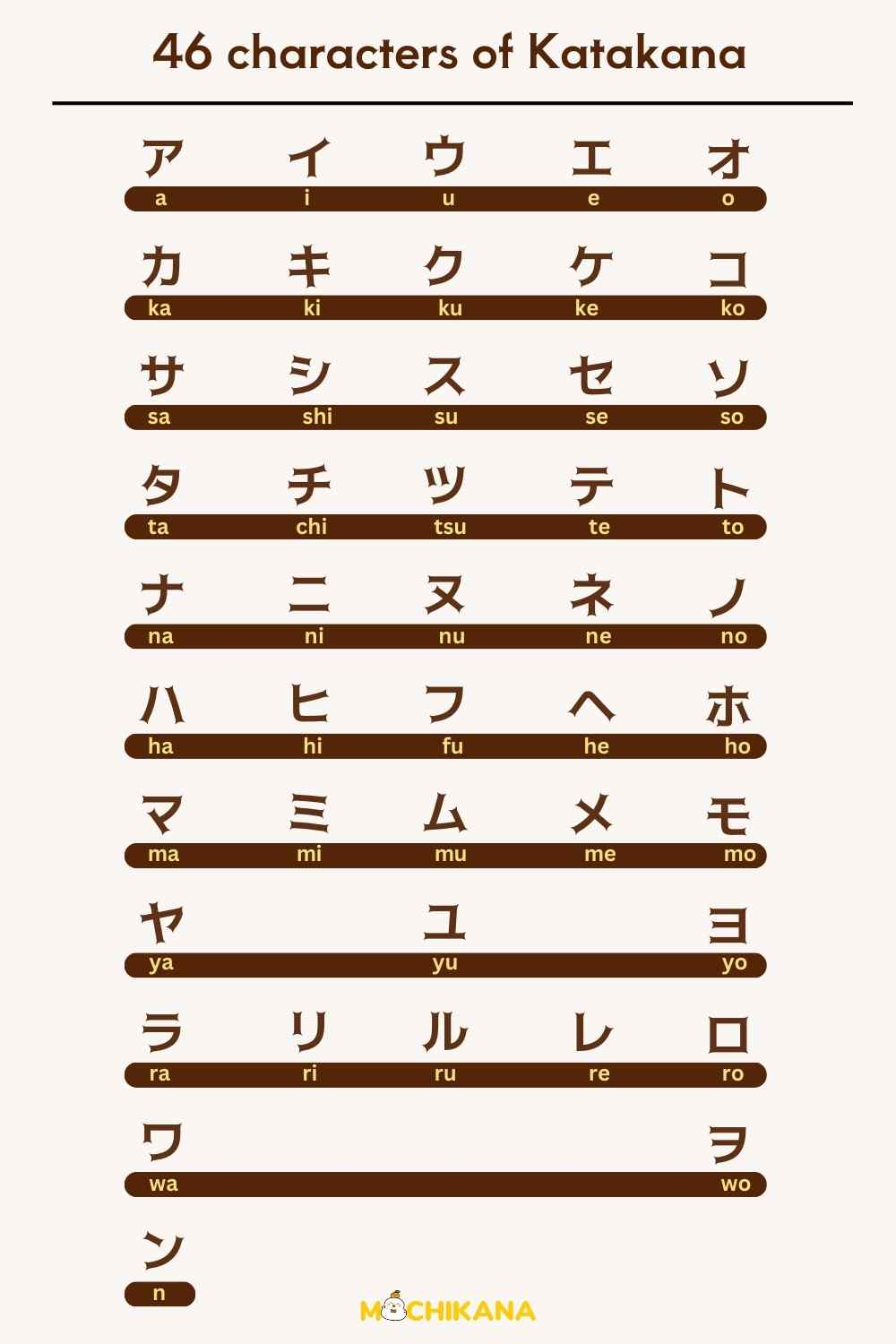
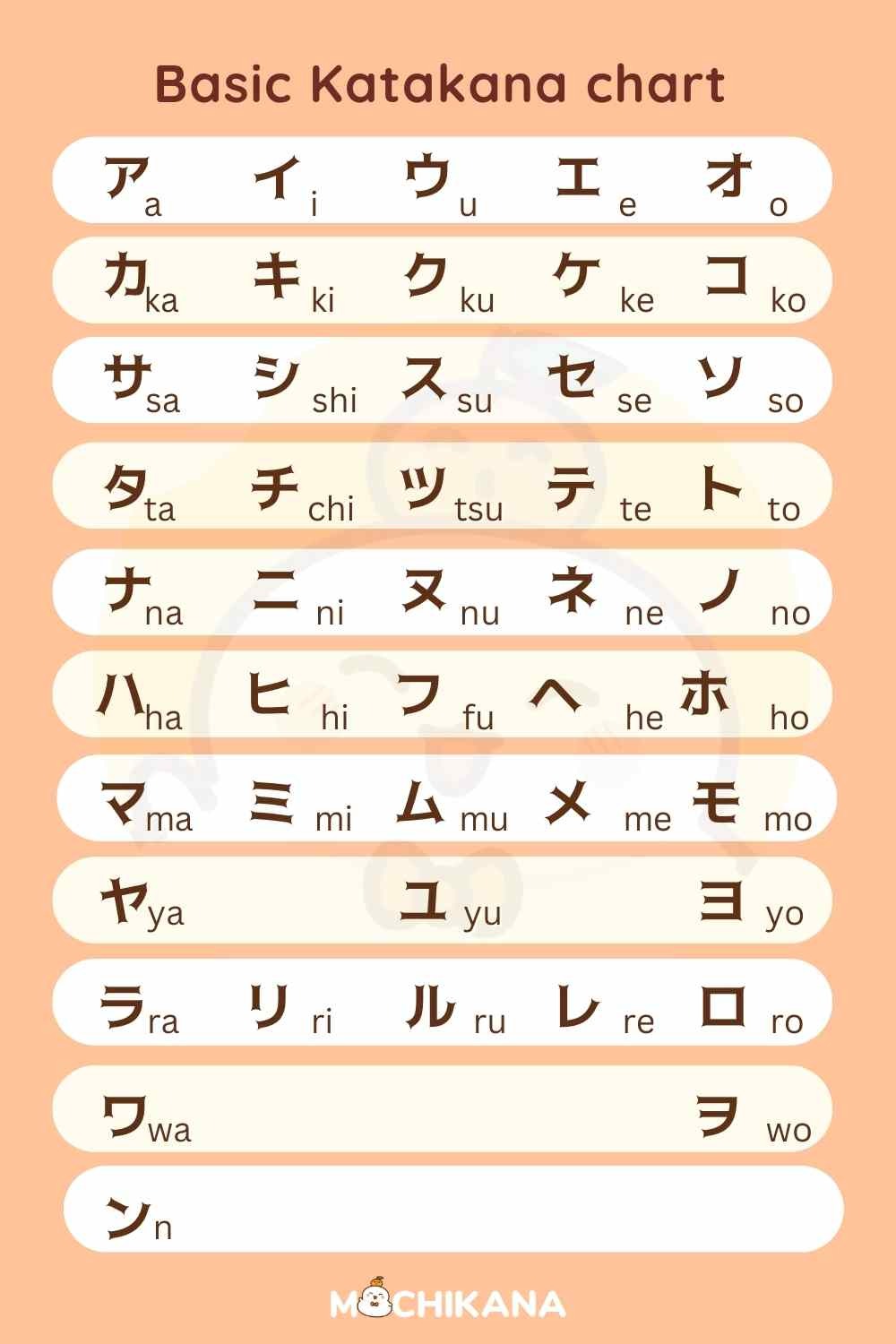
Basic Katakana Chart — 46 Characters
A straightforward grid of all 46 base characters with romaji labels. Nothing extra — just the characters, the sounds, and enough white space to actually read it without squinting.
Best for printing and pinning somewhere you’ll see it every day. Passive exposure adds up faster than you’d think.
Source: MochiKana
Two color versions available — yellow and brown. Click directly on the text or the image below to save whichever one fits your wall better.
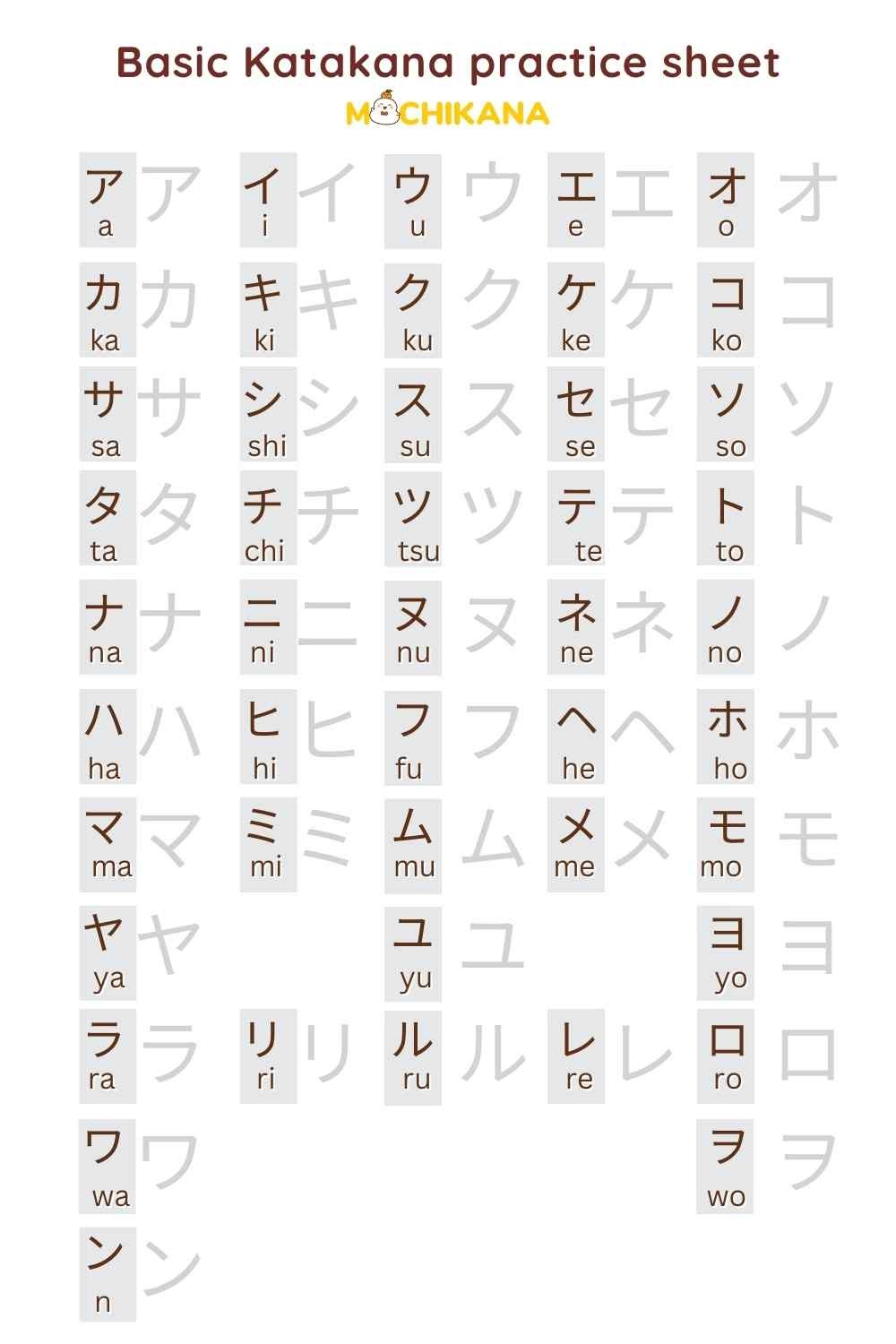
Basic Katakana Chart with Practice Section
Same 46-character reference chart, but with a write-in column next to each character so you can trace and practice on the same sheet you’re reading from.
Best for beginners who want to start building handwriting habits from day one. Print it out — writing by hand beats typing for retention every time.
Source: MochiKana
Print it out, trace each character once, then cover the hint column and try again from memory. Download the practice sheet here — it’s the same chart you just saw, with a write-in column added on the right.
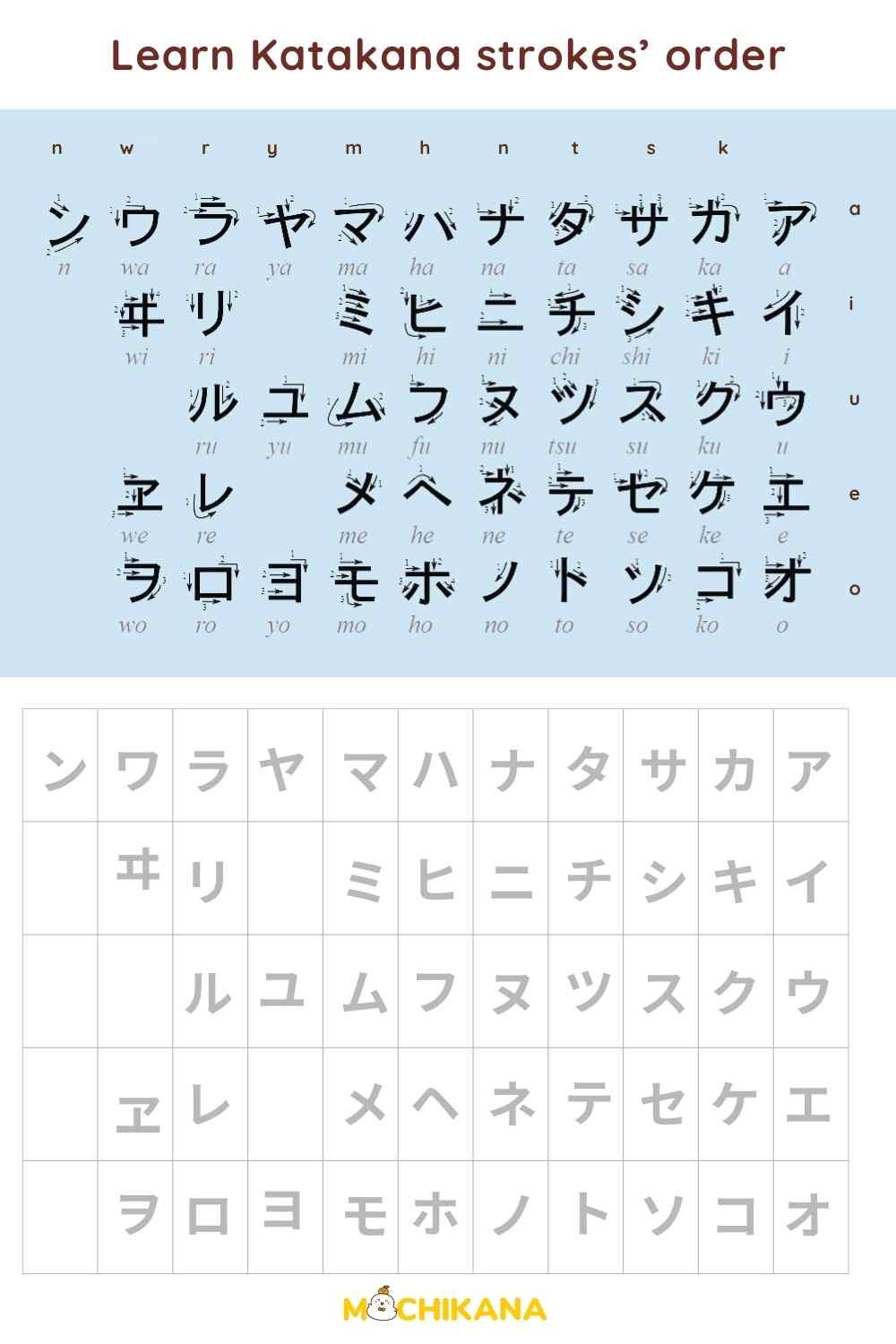
Katakana Chart with Stroke Order
Each character comes with a numbered stroke sequence so you learn not just what the character looks like, but how to draw it correctly from the first time.
Best for learners who plan to write Japanese by hand. Getting stroke order right early means you won’t have to unlearn bad habits later — and a few characters like ツ and シ will genuinely surprise you if you’ve been guessing.
Source: MochiKana
You can get the stroke order chart by clicking the image above, or downloading it at the MochiKana materials page. Print it at full size if you can — the stroke numbers are small.
Katakana Mnemonic Chart
Each character is paired with a visual image to give your brain something familiar to hold onto. Instead of staring at an abstract shape until it sticks, you connect it to something you already know.
Best for learners who’ve tried to memorize the chart before and it didn’t click. Mnemonics don’t replace practice — but they dramatically cut the time it takes to get there.
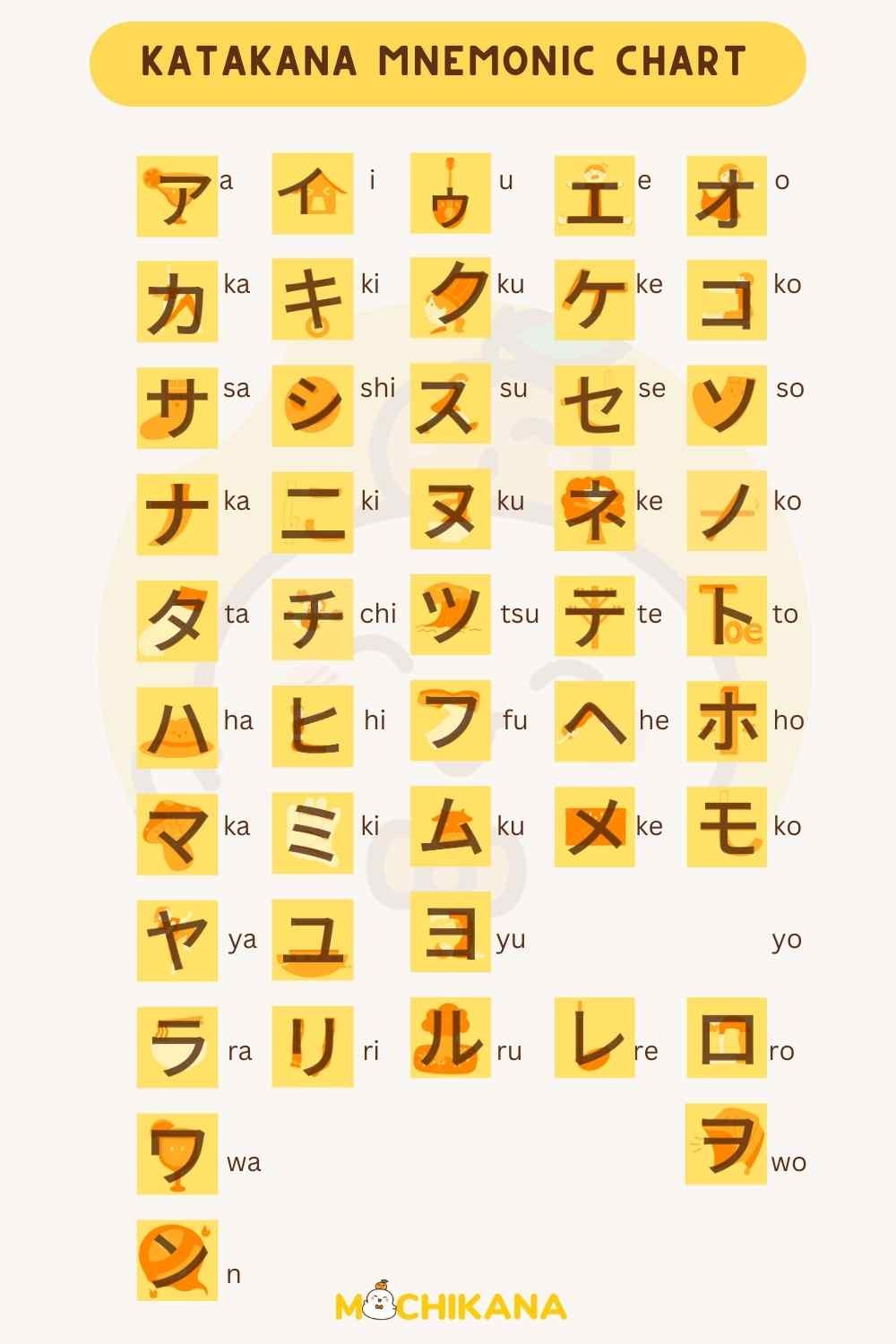
Source: MochiKana
The mnemonic chart is free to download and keep katakana mnemonics chart PDF, then head over to our learn katakana page to see the full method in action — the chart makes a lot more sense once you’ve read how the mnemonics work.
Full Katakana Charts
Once you’ve cleared the 46 base characters, there’s a second layer to learn — and it’s where Katakana really starts to earn its place in everyday Japanese reading.
Full Katakana charts include three things the basic charts leave out: dakuten (゛) and handakuten (゜), which modify base consonants into voiced sounds like G, Z, D, B, and P — and combination characters, where a base character pairs with a small ャ, ュ, or ョ to create blended sounds like SHA, CHU, or KYO.
If the terms dakuten or combination Katakana are new to you, read Sections 9 and 10 of our Katakana learning site before downloading these charts — they’ll make a lot more sense once you know what you’re looking at.
If you already know the base chart and just need a full reference to print, pick one below.
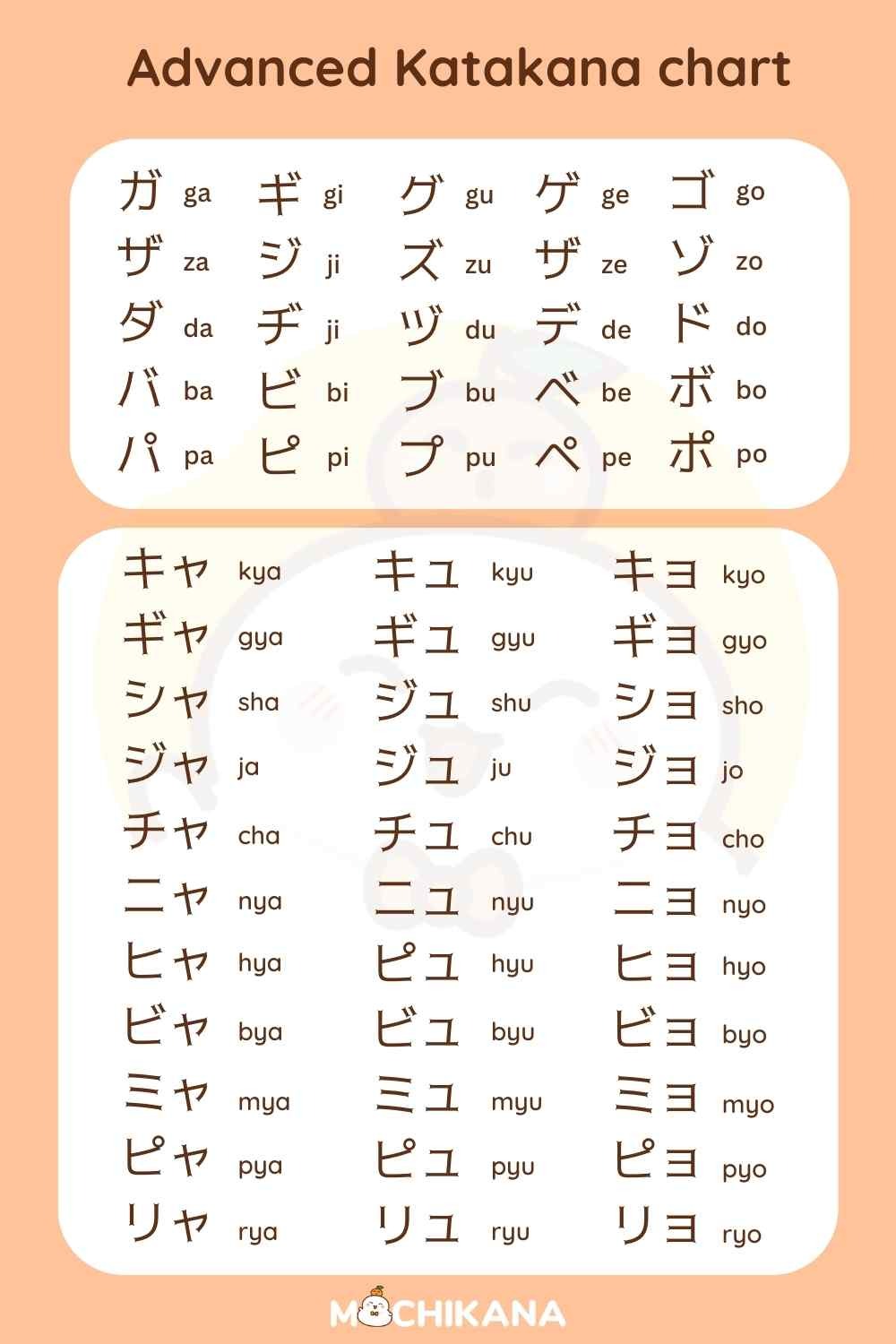
Full Katakana Chart — Dakuon, Handakuon, and Combinations
Everything in one place: all 46 base characters, the full voiced consonant rows (GA, ZA, DA, BA, PA), and the standard combination sounds. Two separate grids on one sheet — base chart on top, advanced sounds below.
Best for your desk once you’ve moved past the basics. This is the chart you’ll reach for most often when reading real Japanese text.
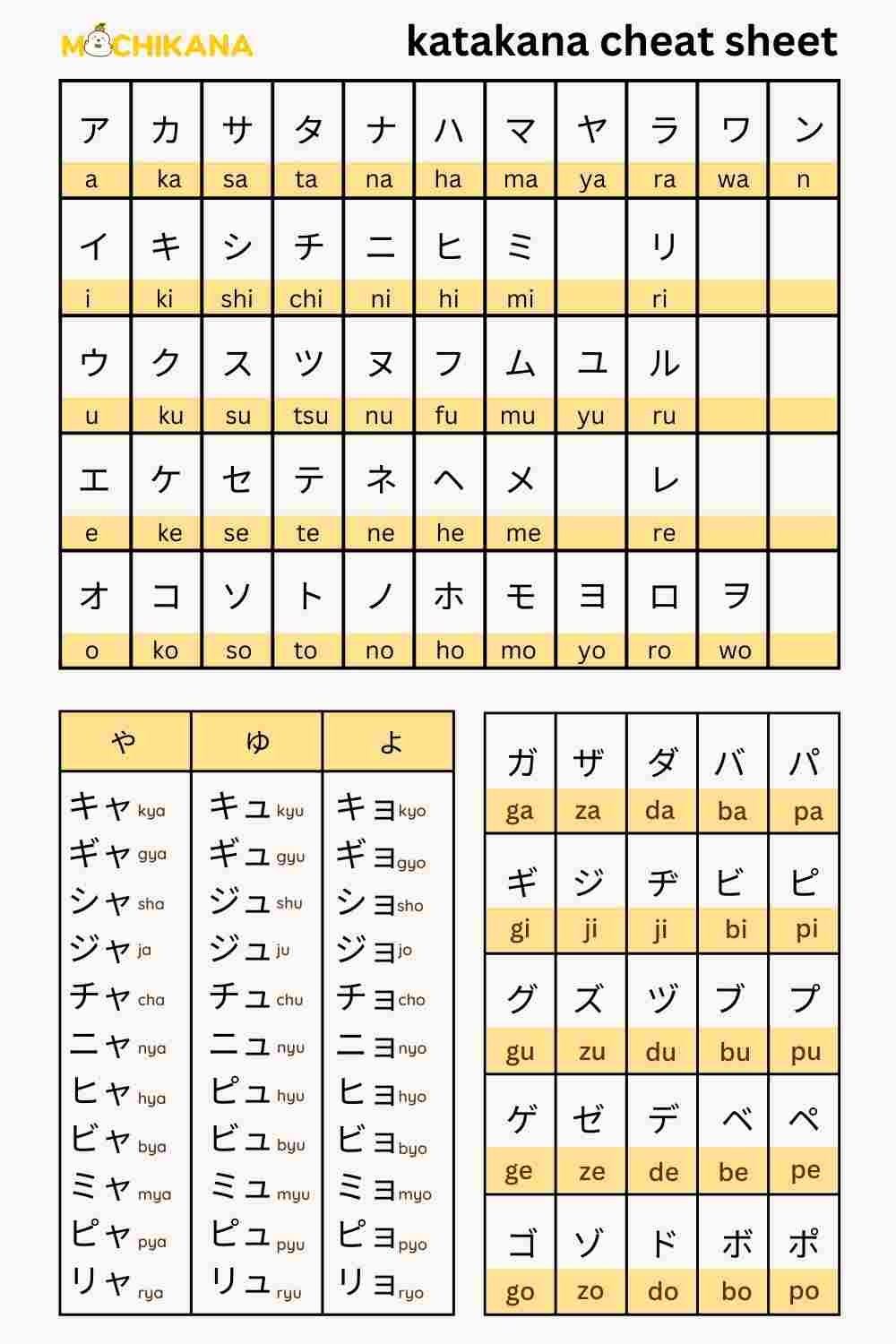
The compact layout works especially well if you’re printing A5 or smaller. Download the cheat sheet here.
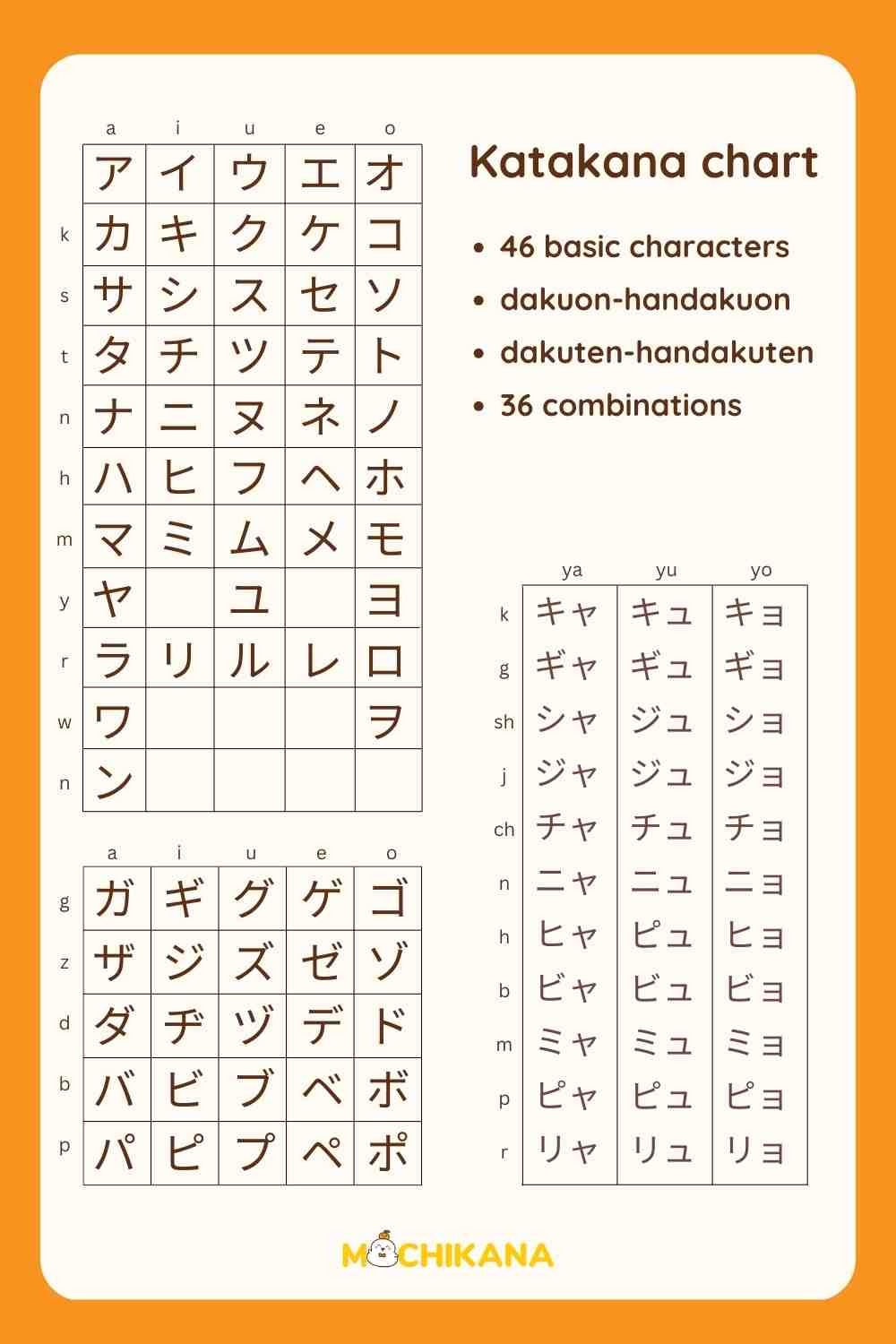
And an orange version, click on the image to get full version of the katakana you can handle.
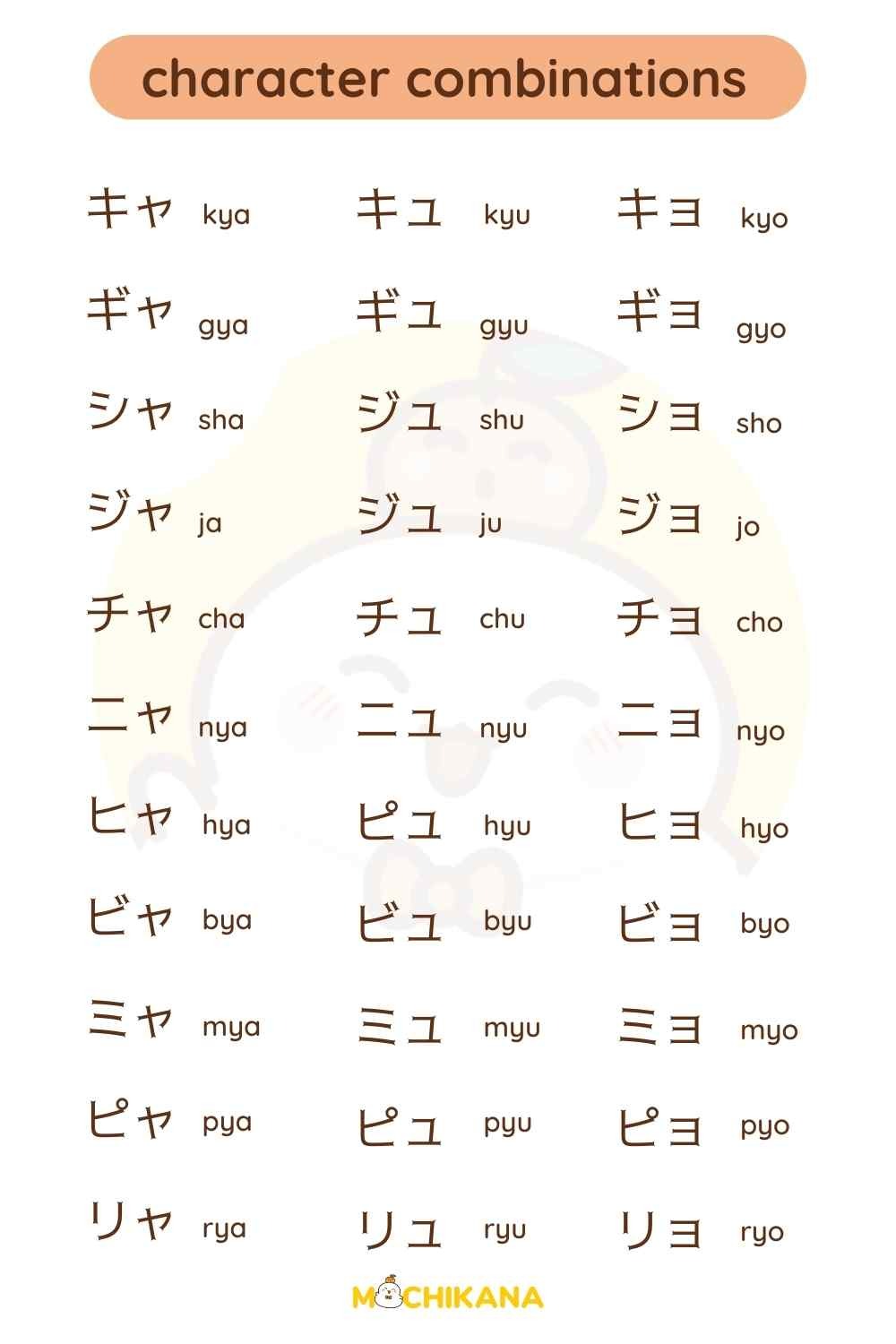
Advanced Katakana Chart — Combinations Only
A dedicated reference for combination sounds only — KYA, SHA, CHA, GYA, JA, and the full set. No base chart attached. Just the combinations, laid out clearly in a ャ / ュ / ョ column structure.
Best for learners who already know the base chart cold and want a standalone reference for the sounds they’re still building speed on. Focused, uncluttered, and easy to scan mid-reading.
Source: MochiKana
No extras, no base chart — just the combinations. Download it here and there and keep it open the next time you’re reading something with a lot of loanwords.
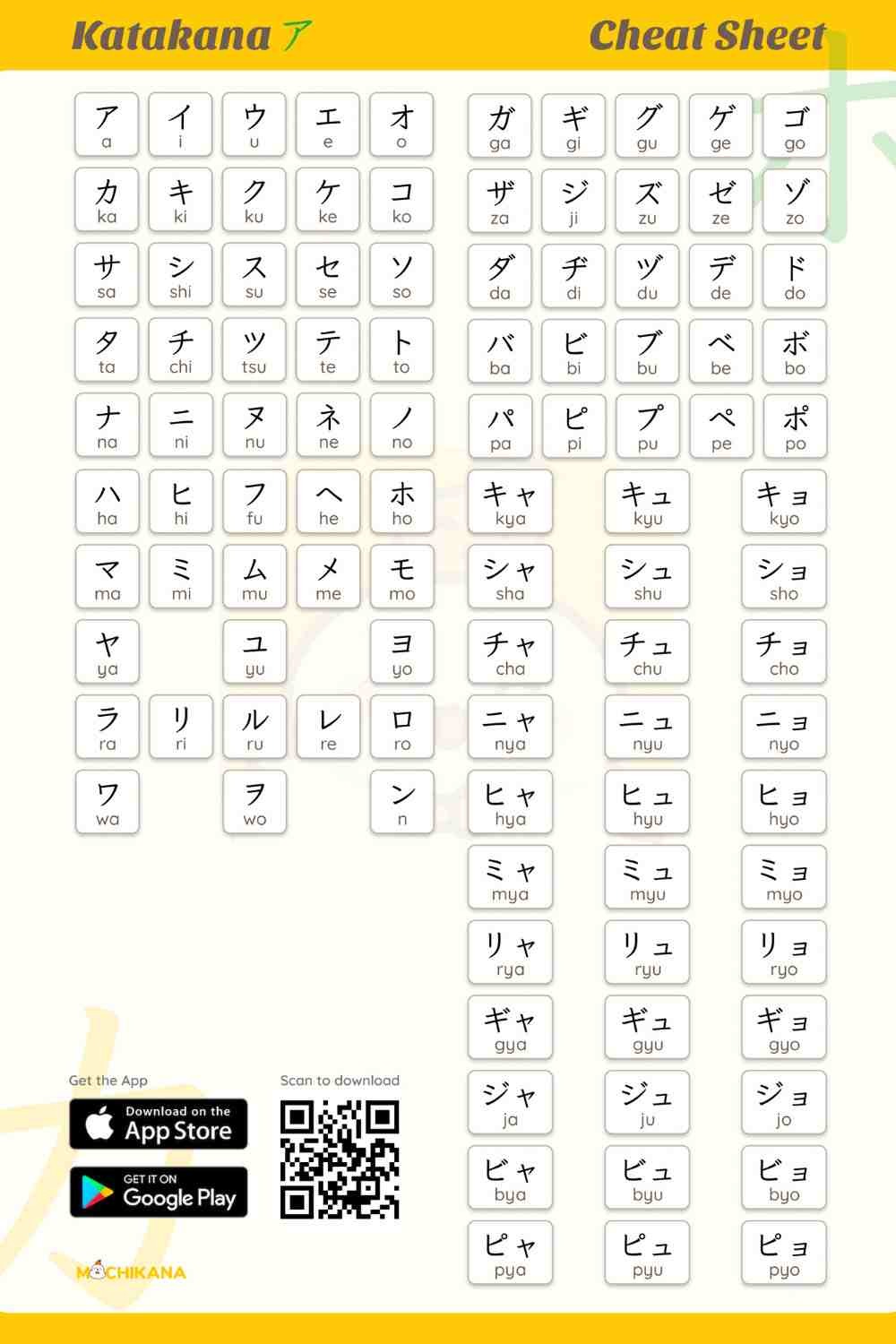
Katakana Cheat Sheet — Compact Full Chart
The same complete character set as the chart above, but arranged in a horizontal layout — consonant columns running left to right instead of the traditional row-by-row grid. More compact, easier to scan quickly.
Best for learners who want every character visible on a single printed page without flipping between sheets. A good option if you’re studying in a tight space or prefer a landscape format.
What’s Next After Downloading Your Chart
Katakana charts are a useful reference — but they won’t actually teach you the syllabary. You have to learn it (get it inside your head) and practice it (recall it without looking). A chart on your desk won’t do either of those things for you.
If you’re ready to actually learn Katakana — not just reference it — our guide walks you through every character using Mnemonics and SRS, the two fastest methods for making characters stick. It’s free, and by the time you finish it, you’ll be able to read every single one.
I hope you found the Katakana chart you were looking for. But don’t spend too long searching for the perfect one. The sooner you start learning, the sooner you can move on to learning Kanji and everything else that actually gets you reading Japanese.
Don’t spend too long looking for the perfect chart. The sooner you start learning, the sooner you can read.
© Kanji123 — Free JLPT Kanji Test Online