Learning to write katakana feels easy — until you realise you’ve been drawing ソ backwards for three weeks. That is why a katakana chart with stroke order exists. It is not just about making your handwriting look pretty. Stroke order actually shapes how your hand remembers each character, and that muscle memory pays off fast.
This guide gives you the complete katakana chart with stroke order for all 46 characters. In addition, it covers the most confusing pairs, how to read stroke diagrams, and what to practice after you finish the chart. If you are new to the Japanese alphabet, our Japanese alphabet for beginners guide is a great place to start before diving in.
What Is a Katakana Chart With Stroke Order?
Before we get into the strokes, let us quickly cover the basics.
Katakana is one of three Japanese writing systems. It looks angular and sharp compared to hiragana — and that is actually intentional. Katakana handles foreign loan words, scientific terms, brand names, and emphasis. Therefore, words like コーヒー (koohii / coffee) and テレビ (terebi / television) appear in katakana everywhere you look in Japan.
A katakana chart with stroke order shows each character alongside numbered arrows. These arrows tell you which stroke to draw first, which direction to move your pen, and where each stroke ends. This level of detail matters more than most beginners expect. Because consistent stroke order builds character recognition alongside writing ability, you learn faster when you follow the correct sequence from day one.
Need a quick visual reference alongside this guide? Our katakana chart has the full 46-character layout ready to bookmark.
Why Stroke Order Matters More Than You Think
Here is a common beginner mistake: drawing katakana in any order that produces the right shape. It works at first. However, as you write faster, wrong stroke habits cause the characters to look off — and your hand stops recognising them from muscle memory alone.
Stroke order also affects how well you remember the character. Because your brain processes movement and shape together, writing a character the standard way creates a stronger memory than tracing its outline freestyle. In addition, stroke-by-stroke diagrams help you decode unfamiliar handwriting. Real Japanese handwriting flows differently from printed text. Therefore, knowing stroke direction helps you read cursive notes and signs that printed fonts cannot prepare you for.
Furthermore, consistent stroke order makes dakuten (the two small marks that modify consonants like カ → ガ) much easier to add correctly. So even small habits compound over time.
The Two Katakana Pairs That Fool Almost Everyone
Before looking at the full chart, let us address the elephant in the room. Two pairs of katakana characters trick nearly every beginner — sometimes even intermediate learners.
ソ (so) vs ン (n)
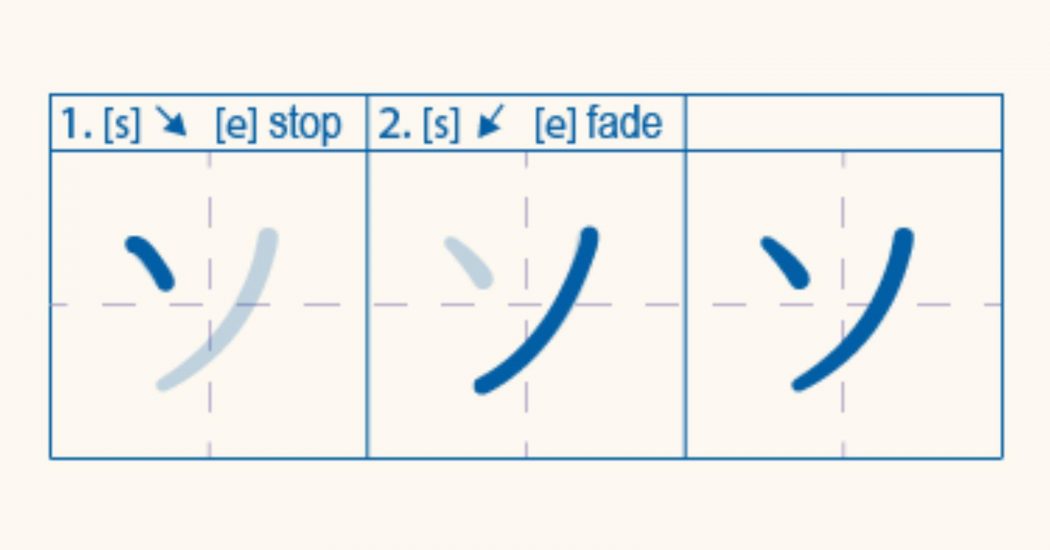
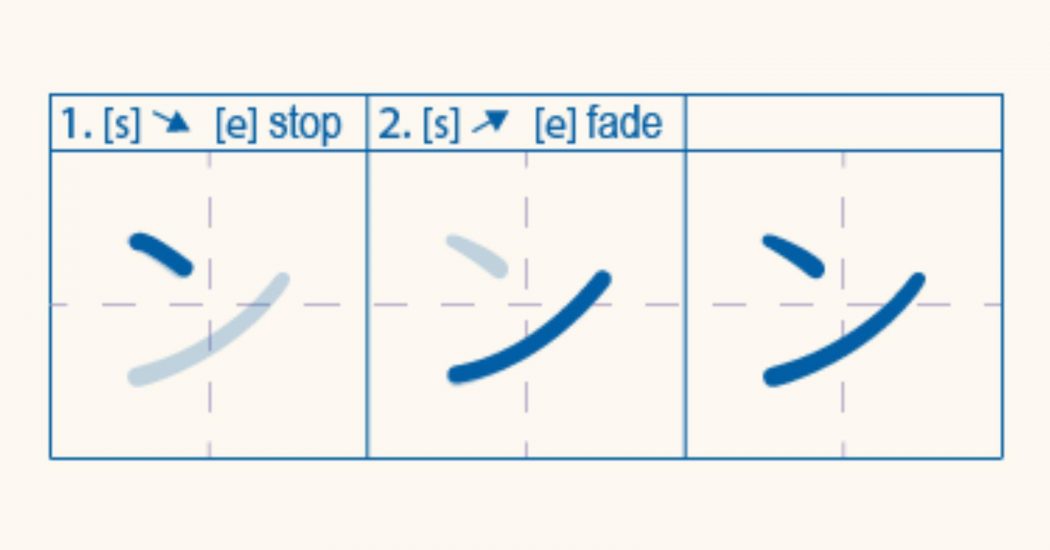
These two look almost identical when printed. However, their stroke order reveals the difference immediately. ソ starts with two short strokes that angle downward from left to right, then ends with a long sweeping stroke curving to the right. ン starts with a short diagonal, then adds a longer stroke that curves inward and hooks to the upper left. In handwriting, the direction of the final stroke is the giveaway.
シ (shi) vs ツ (tsu)
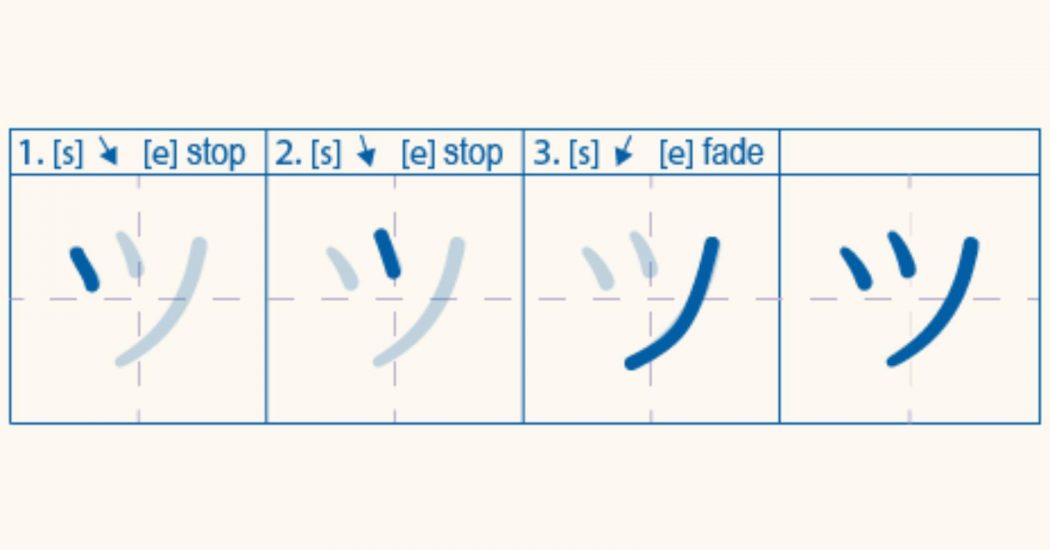
Same problem, different pair. シ has three strokes: two short ones sitting horizontally side by side, then a longer one sweeping to the right. ツ also has three strokes, but the two short strokes sit vertically, stacked, and the final stroke sweeps rightward more steeply. Think of ツ as more “vertical energy” and シ as more “horizontal energy.”
Knowing these pairs before studying the chart saves real frustration. So keep them in mind as you go through each row below.
How to Read a Stroke Order Diagram
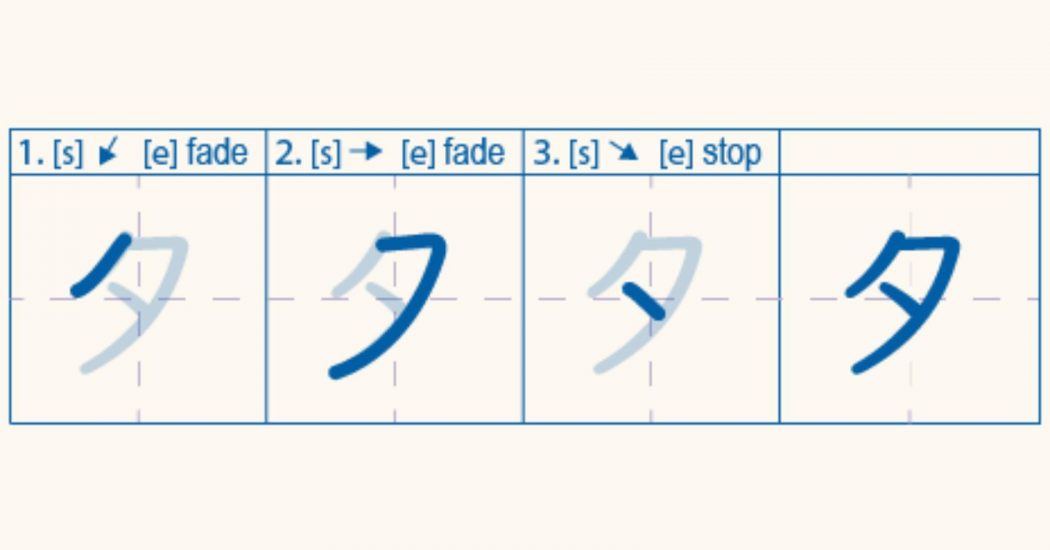
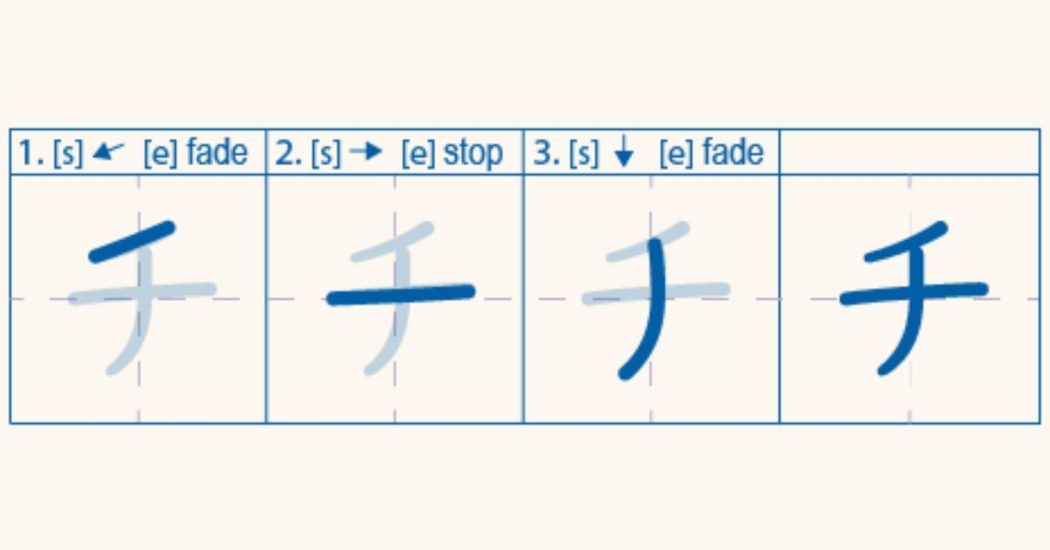
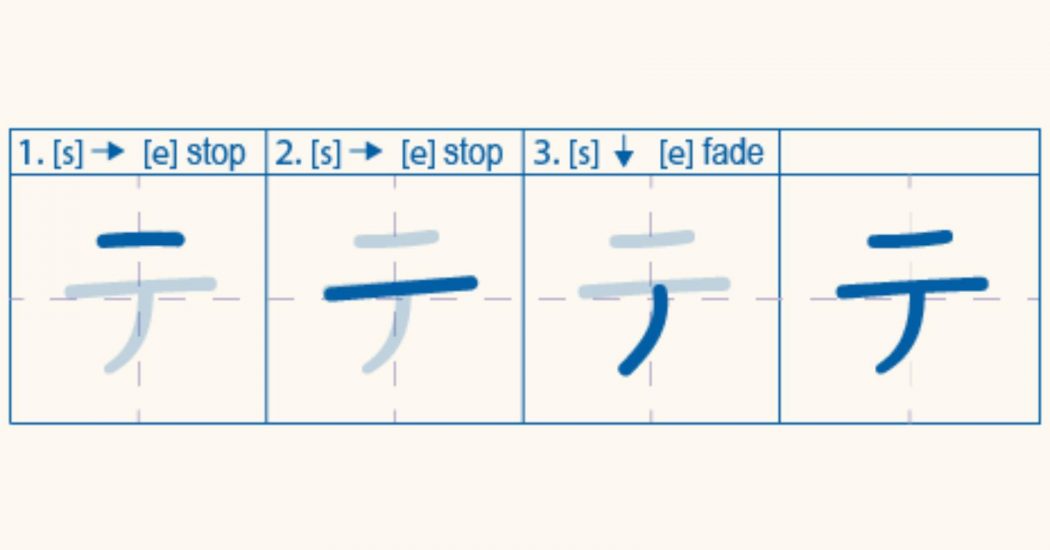
Most katakana stroke charts use a simple notation system. Each stroke gets a number — stroke 1 is always first. In addition, an arrow shows the direction your pen travels during that stroke.
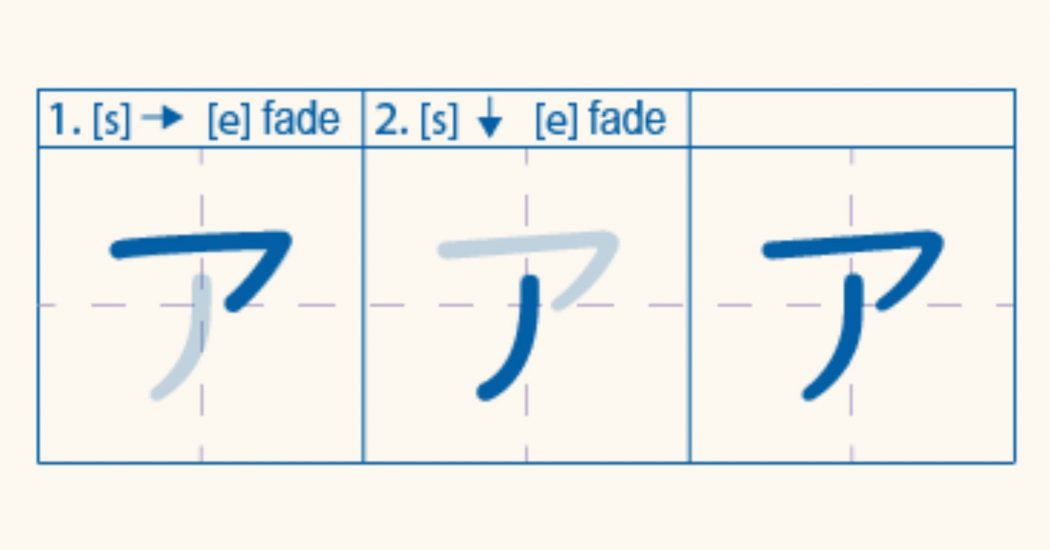
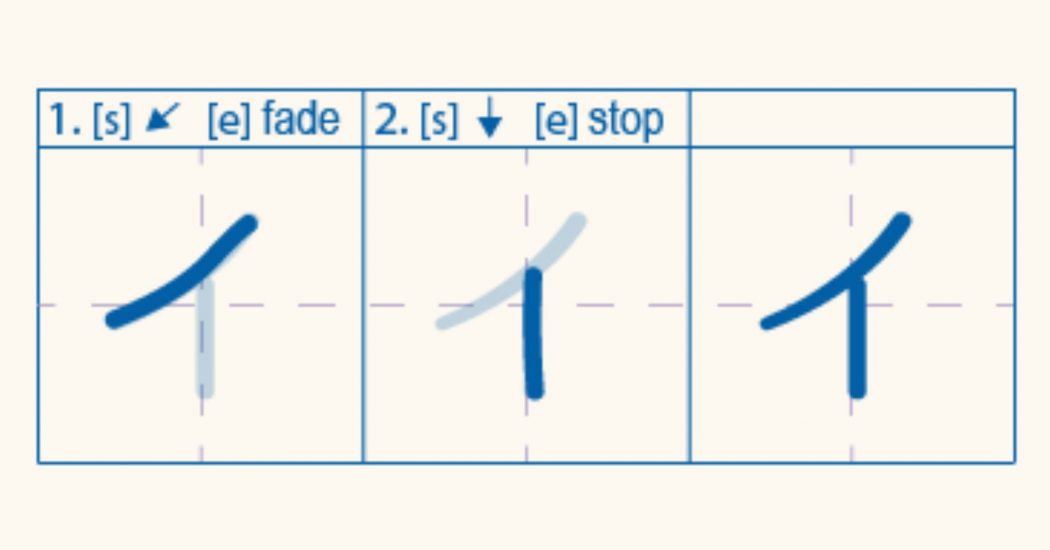
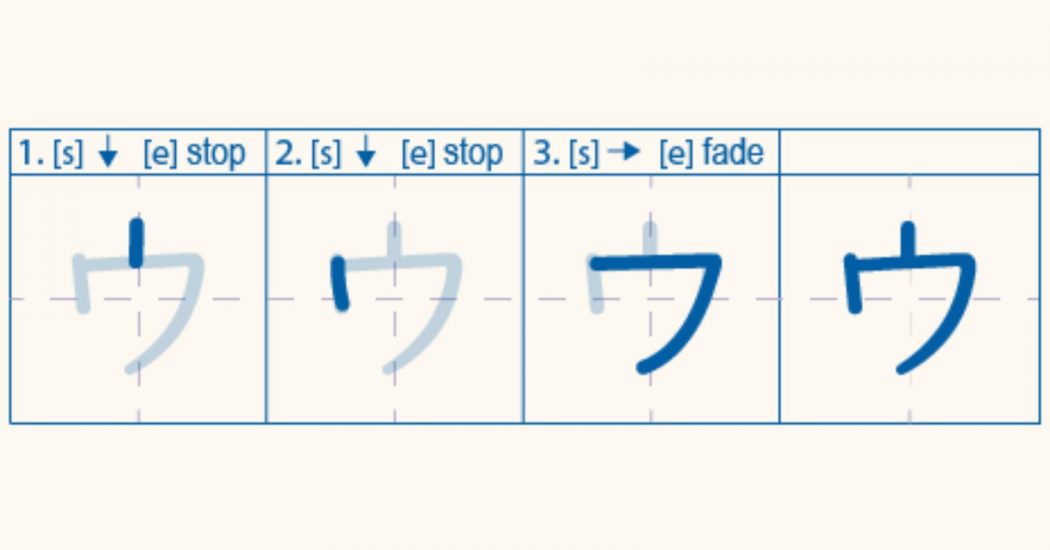
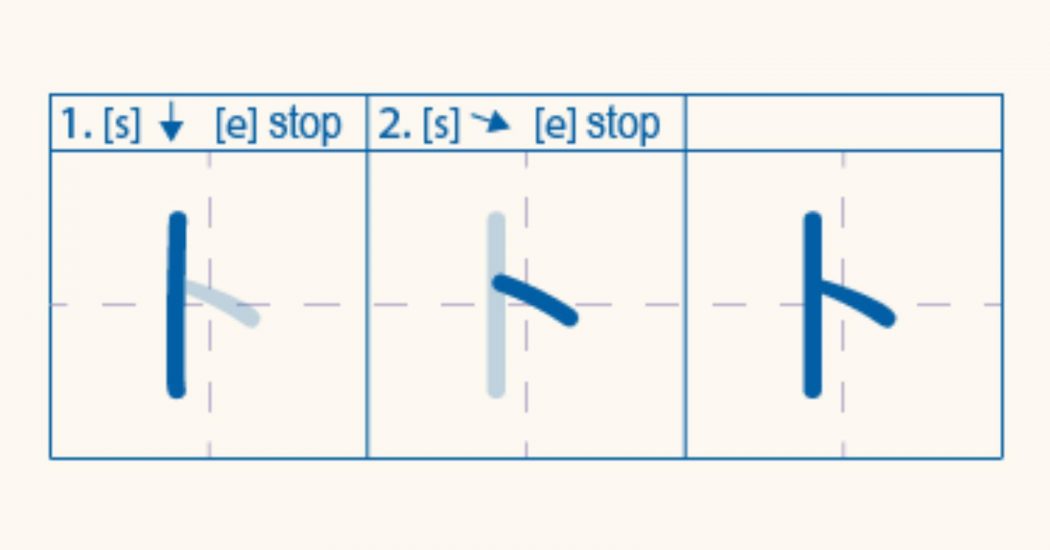
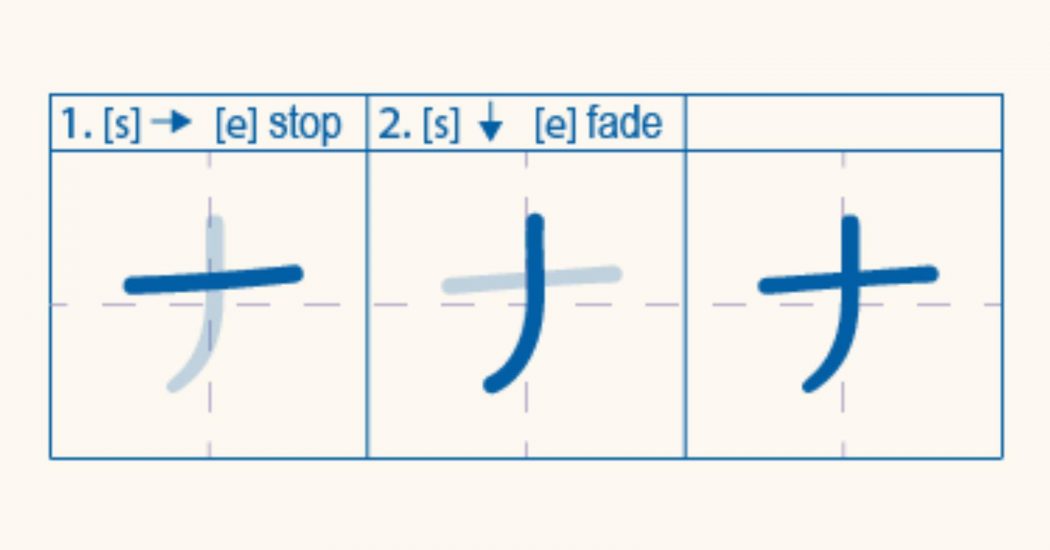
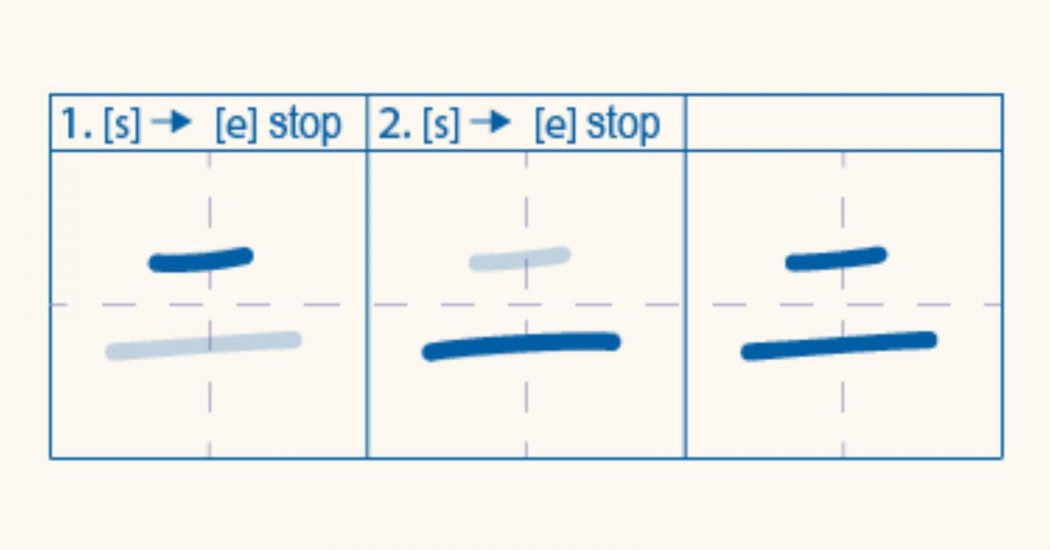
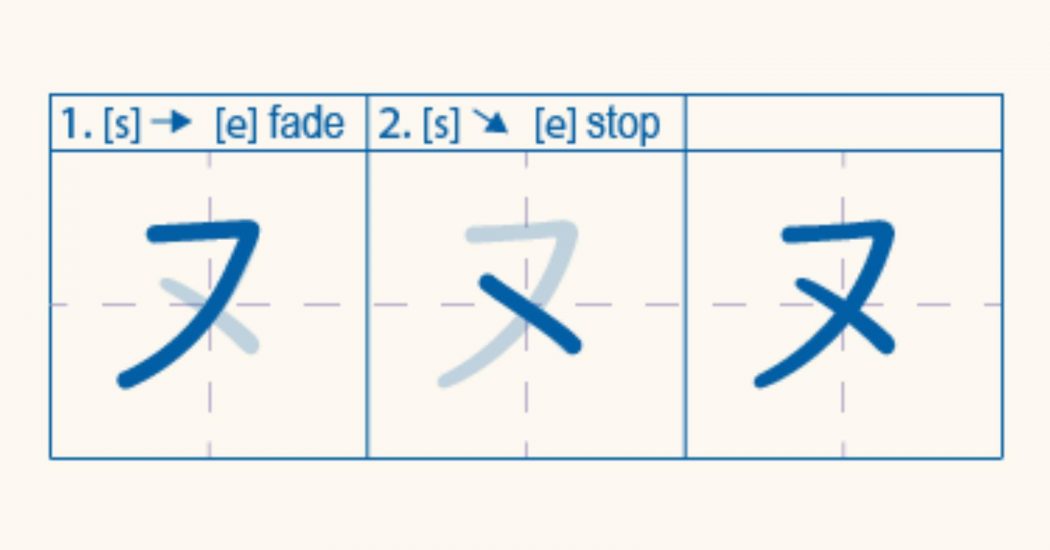
Some diagrams add [s] and [e] markers. [s] marks where the stroke starts. [e] marks where it ends. This is especially helpful for strokes that curve, because the end position is not always where you would guess.
A few general rules apply across almost all katakana:
- Most strokes move left to right or top to bottom. This follows the natural writing direction of Japanese.
- Horizontal strokes almost always come before vertical ones when both appear in the same character.
- Strokes that cross over each other are written in a specific order — learning that order prevents sloppy intersections.
Once you understand the notation, reading any stroke diagram becomes fast and intuitive. In addition, this same system applies to hiragana and kanji later, so the skill carries over. Speaking of which, our hiragana learning guide uses the same approach — useful if you plan to study both alphabets at the same time.
The Complete Katakana Chart With Stroke Order — Row by Row
Below is the full katakana chart with stroke order for all 46 basic characters, organised by row following the standard Japanese syllabary order.
Each character in the chart comes with a numbered stroke sequence. Therefore, you learn not just what the character looks like — but exactly how to draw it correctly from the first time. Getting stroke order right early means you avoid unlearning bad habits later. And as the chart makes clear, a few characters like ツ and シ will genuinely surprise you if you have been guessing.
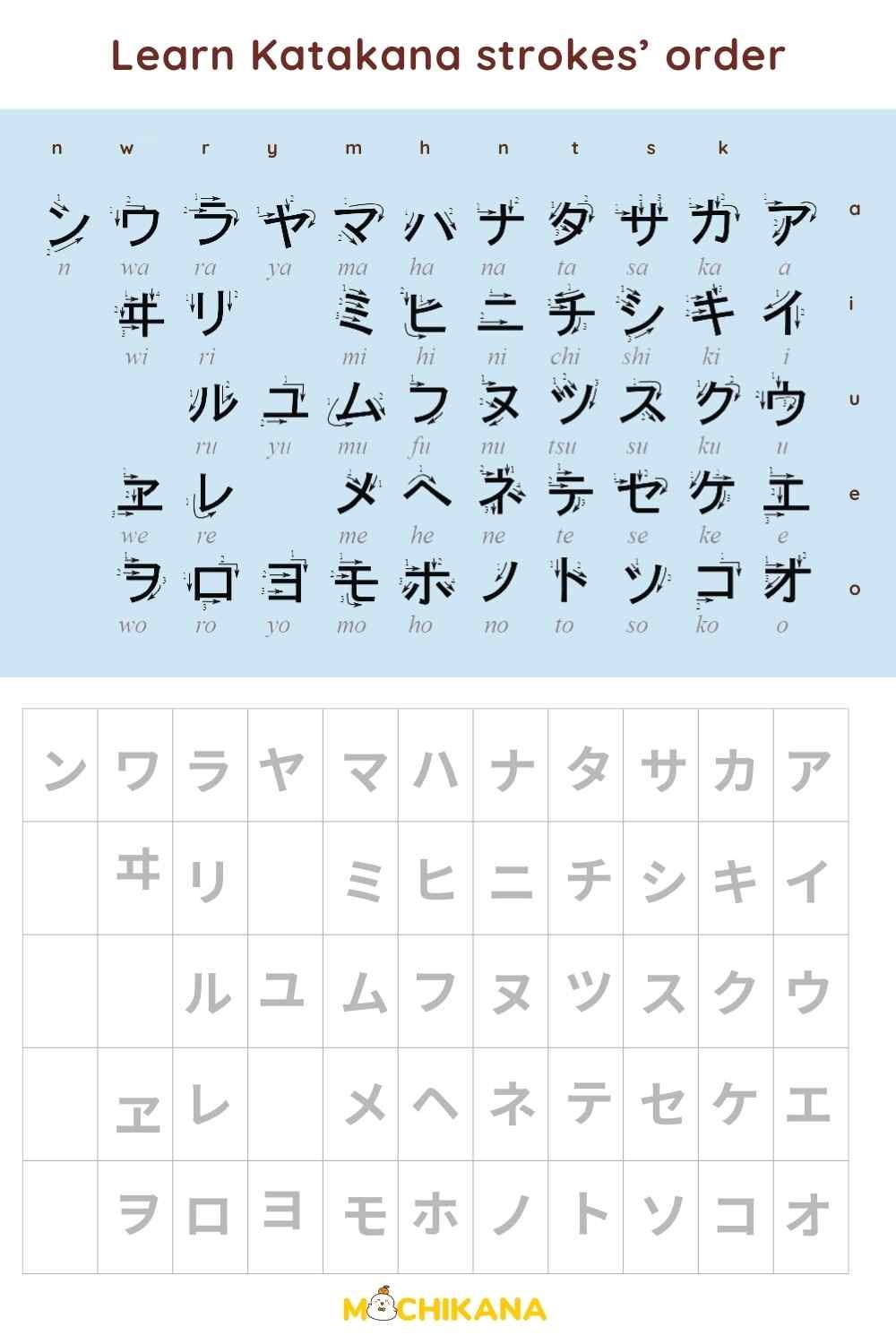
💾 Download the full katakana stroke order chart (PDF) Want to practice offline or print it for your desk? Download the complete katakana chart with stroke order here — free, no sign-up required.
A-row: ア イ ウ エ オ
ア (a): 2 strokes. First: a short diagonal stroke from upper left to lower right. Second: a longer stroke crossing over the first, curving down and to the left.
イ (i): 2 strokes. First: a short diagonal stroke from upper right to lower left. Second: a longer vertical stroke dropping straight down, slightly curving at the bottom.
ウ (u): 3 strokes. First: a short horizontal stroke at the top. Second: a curved stroke that hooks left from the center. Third: another short stroke closing the bottom.
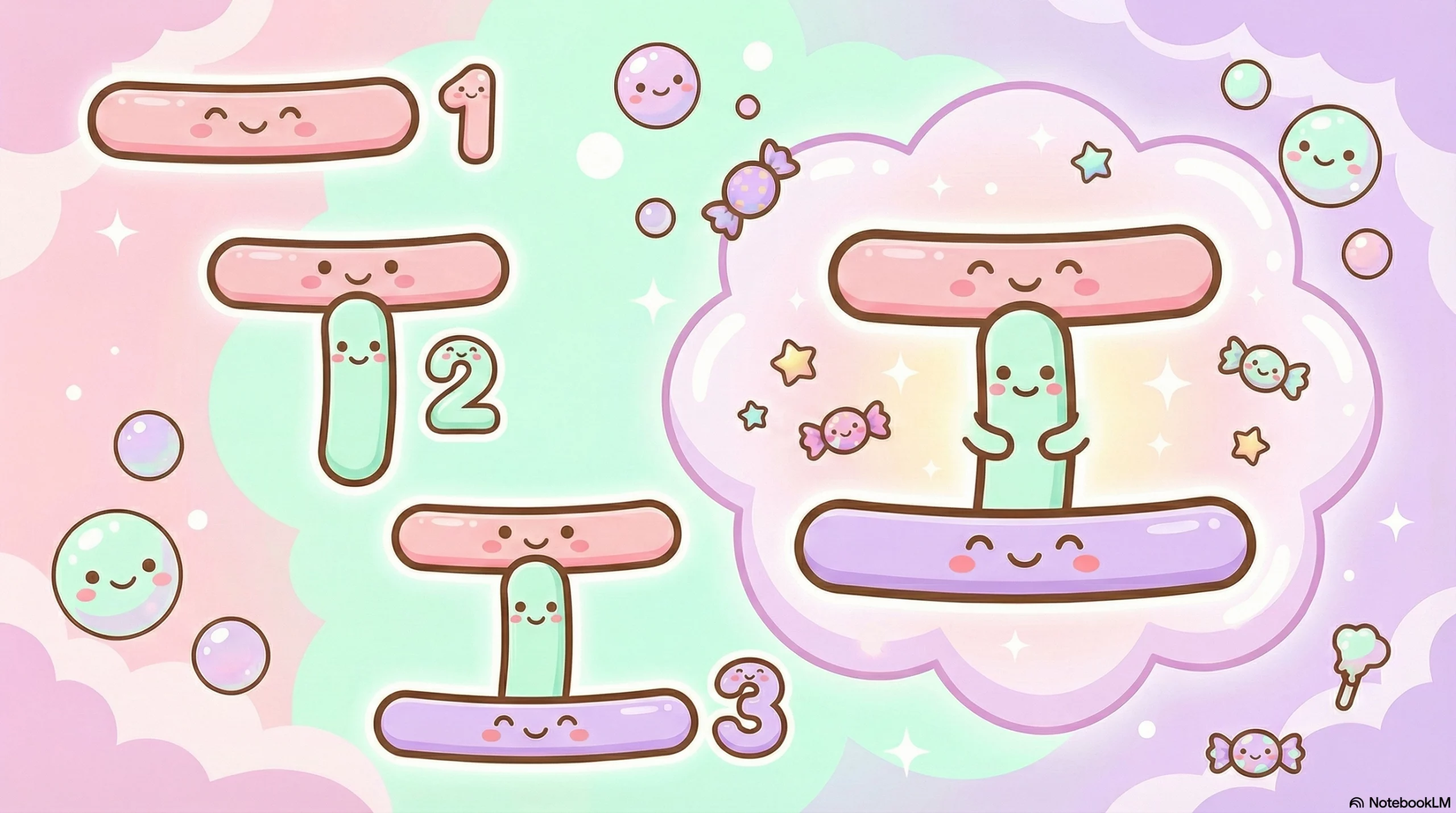
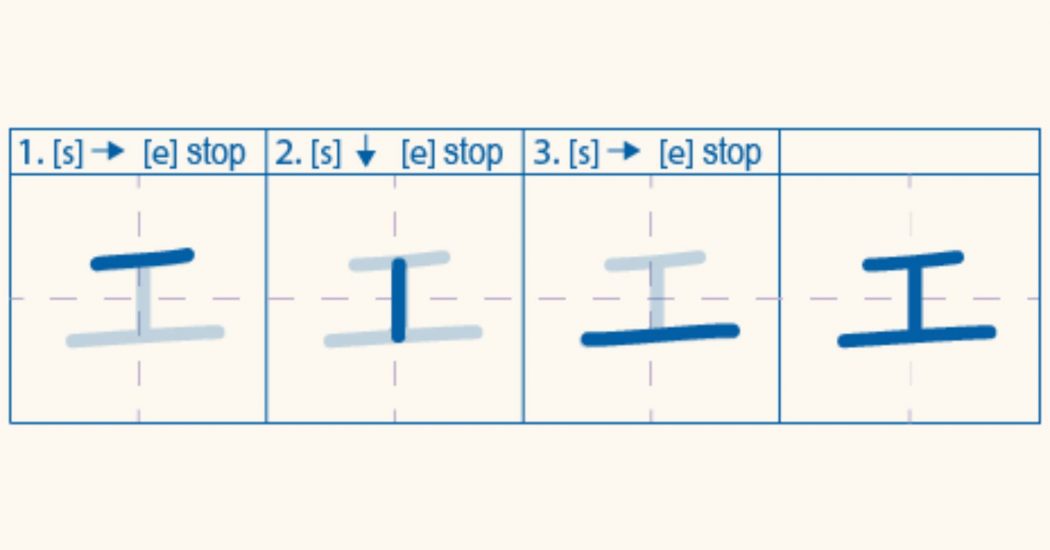
エ (e): 3 strokes. First: a horizontal stroke at the top. Second: a vertical stroke down the center. Third: a horizontal stroke at the bottom, slightly longer than the first.
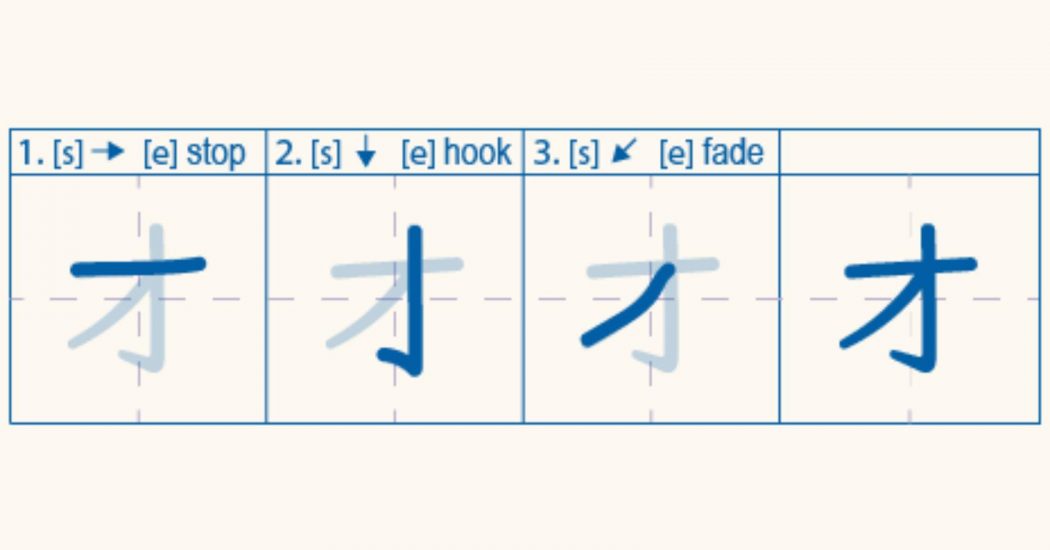
オ (o): 3 strokes. First: a horizontal stroke. Second: a vertical stroke crossing the first. Third: a diagonal stroke sweeping from the upper center down and to the right.
K-row: カ キ ク ケ コ
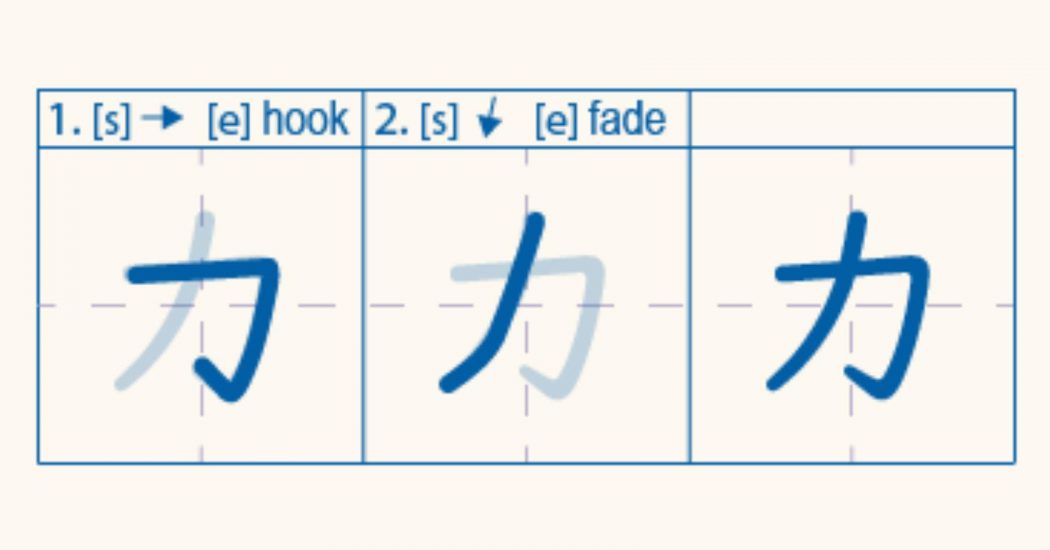
カ (ka): 2 strokes. First: a horizontal stroke. Second: a vertical stroke that crosses the first and hooks slightly at the bottom right.
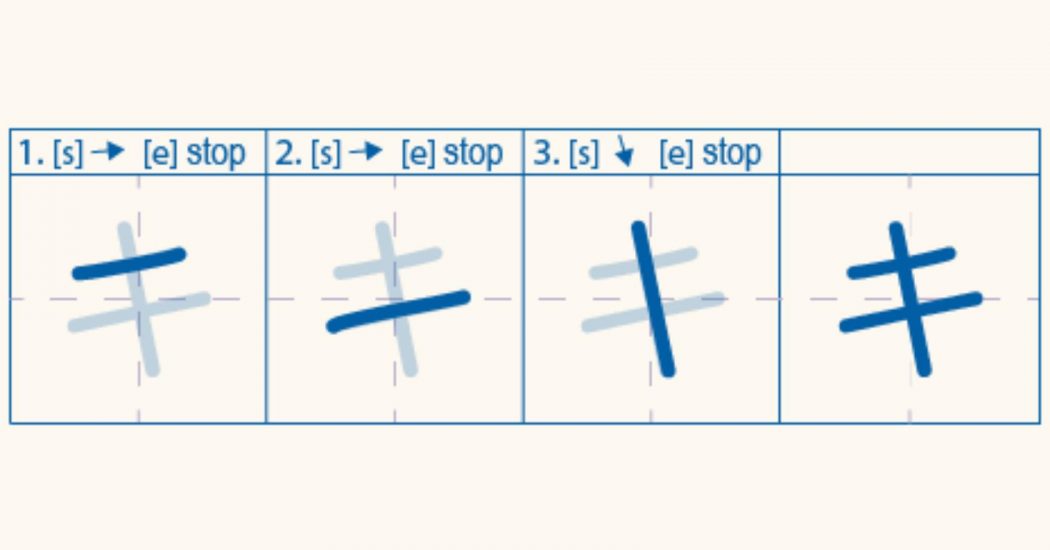
キ (ki): 3 strokes. First: a short horizontal stroke at top. Second: a longer horizontal stroke in the middle. Third: a vertical stroke crossing both horizontals.
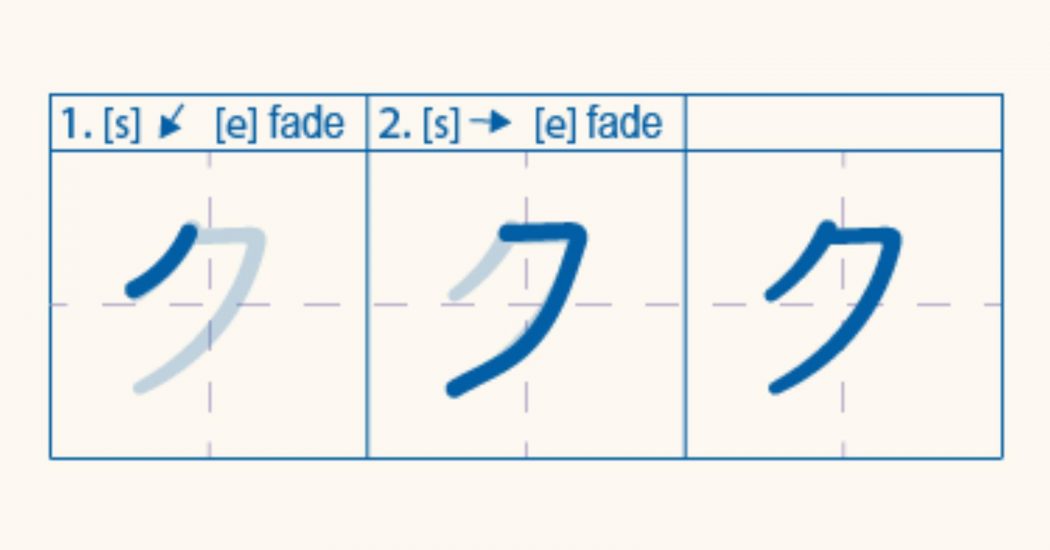
ク (ku): 2 strokes. First: a short diagonal from upper left. Second: a longer stroke curving down from the top and sweeping right.
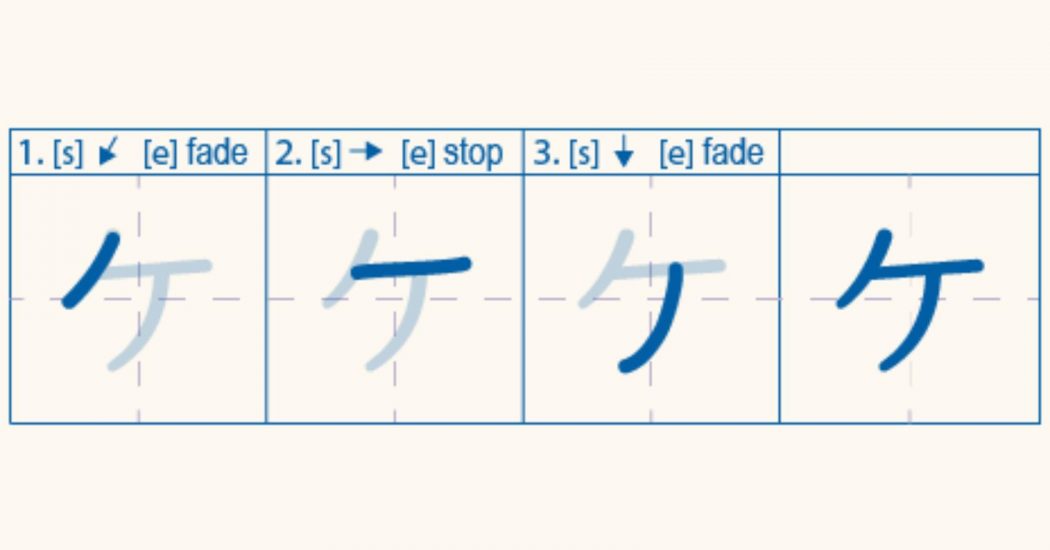
ケ (ke): 3 strokes. First: a vertical stroke. Second: a horizontal stroke crossing it from the right. Third: a short diagonal dropping from the junction.
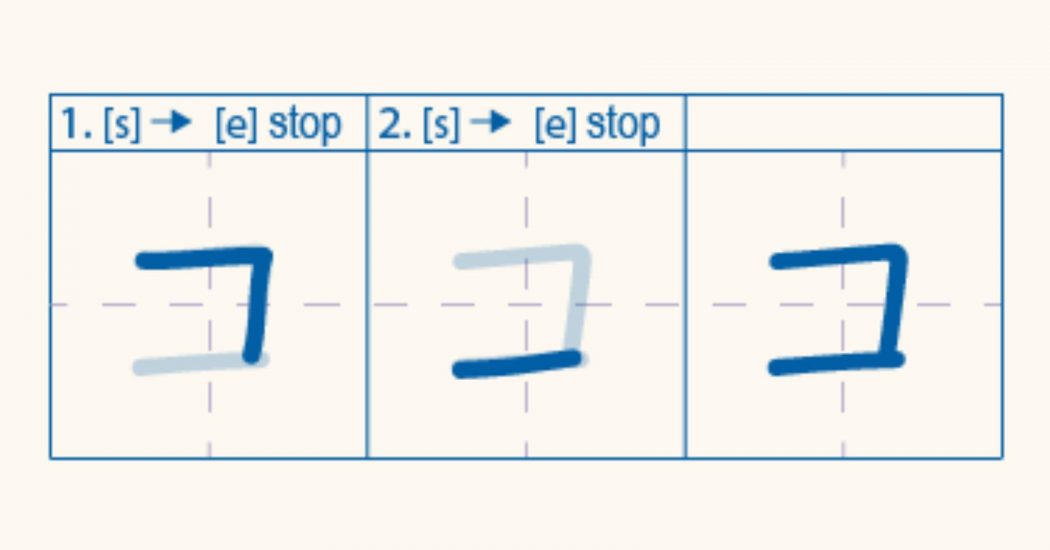
コ (ko): 2 strokes. First: a horizontal stroke at top. Second: a vertical stroke dropping from the right end, then turning left along the bottom.
S-row: サ シ ス セ ソ
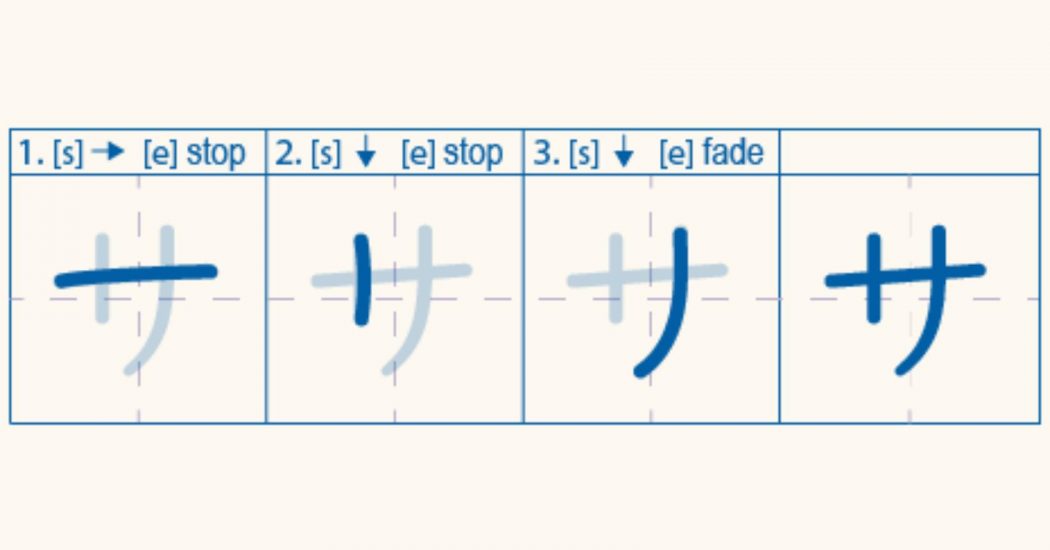
サ (sa): 3 strokes. First: a short horizontal. Second: another short horizontal below it. Third: a long vertical crossing both, with a hook at the bottom right.
シ (shi): 3 strokes. Two short strokes sitting side by side horizontally (stroke 1 left, stroke 2 right). Third: a long sweeping stroke from upper left curving to the lower right. Remember: horizontal energy.
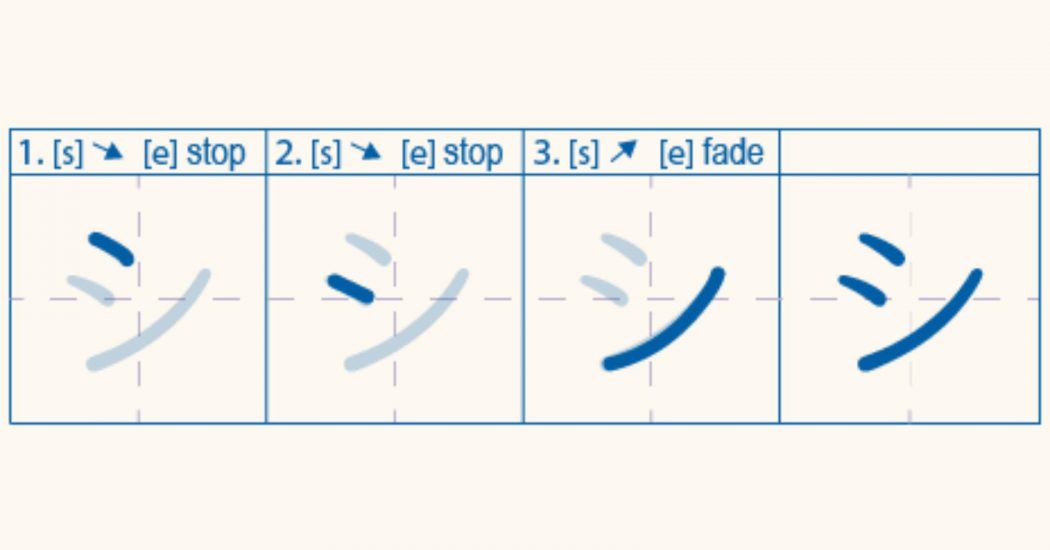
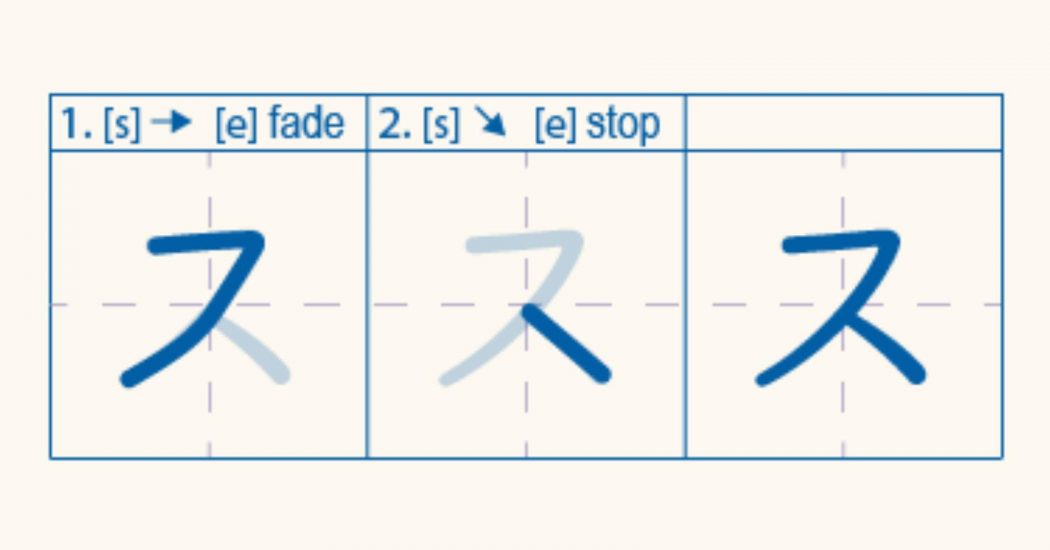
ス (su): 2 strokes. First: a short horizontal at top. Second: a curved stroke starting below, looping left then curving back right at the bottom.
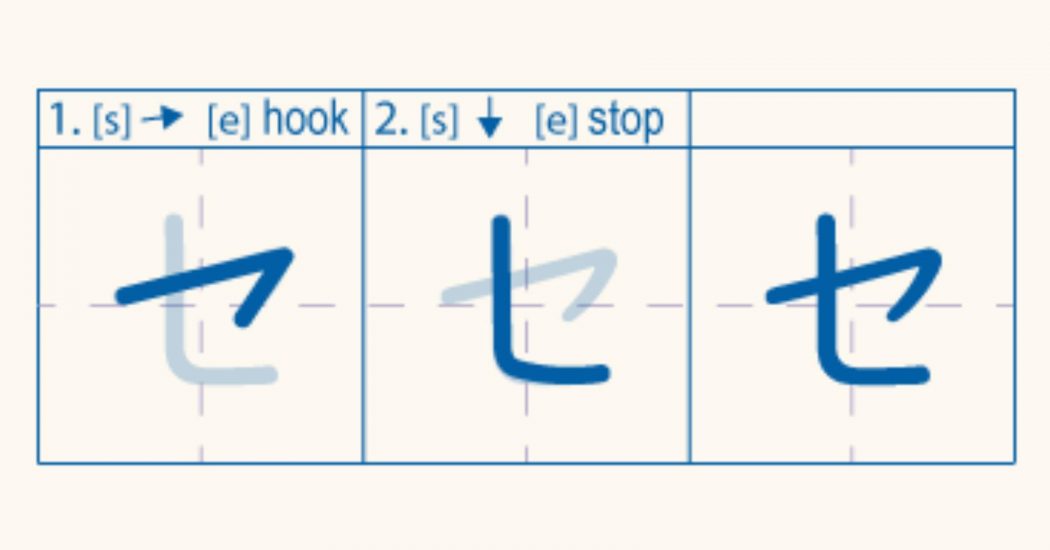
セ (se): 2 strokes. First: a horizontal stroke. Second: a stroke dropping from the left side of the first, then angling right and curving upward.
ソ (so): 2 strokes. First: two short diagonal strokes angling down-right (these are actually drawn as separate passes). Second: a long curving stroke sweeping right and downward. Remember: rightward sweep at the end.
T-row: タ チ ツ テ ト
タ (ta): 3 strokes. First: a diagonal. Second: a longer diagonal crossing below. Third: a curved stroke sweeping from the upper right downward.
チ (chi): 3 strokes. First: a horizontal. Second: another horizontal below it. Third: a vertical crossing both, curving at the bottom.
ツ (tsu): 3 strokes. Two short strokes, vertical orientation (stroke 1 at top left, stroke 2 below it). Third: a sweeping diagonal from upper right downward. Remember: vertical energy.
テ (te): 3 strokes. First: horizontal. Second: a vertical dropping from the center. Third: a short angled stroke crossing the vertical.
ト (to): 2 strokes. First: a vertical stroke. Second: a short horizontal stroke pointing right from the lower portion of the vertical.
N-row: ナ ニ ヌ ネ ノ
ナ (na): 2 strokes. First: a horizontal stroke. Second: a vertical crossing it, with a slight hook right at the bottom.
ニ (ni): 2 strokes. First: a short horizontal at top. Second: a longer horizontal at the bottom.
ヌ (nu): 2 strokes. First: a horizontal. Second: a curved stroke crossing the first, looping and curving back under itself.
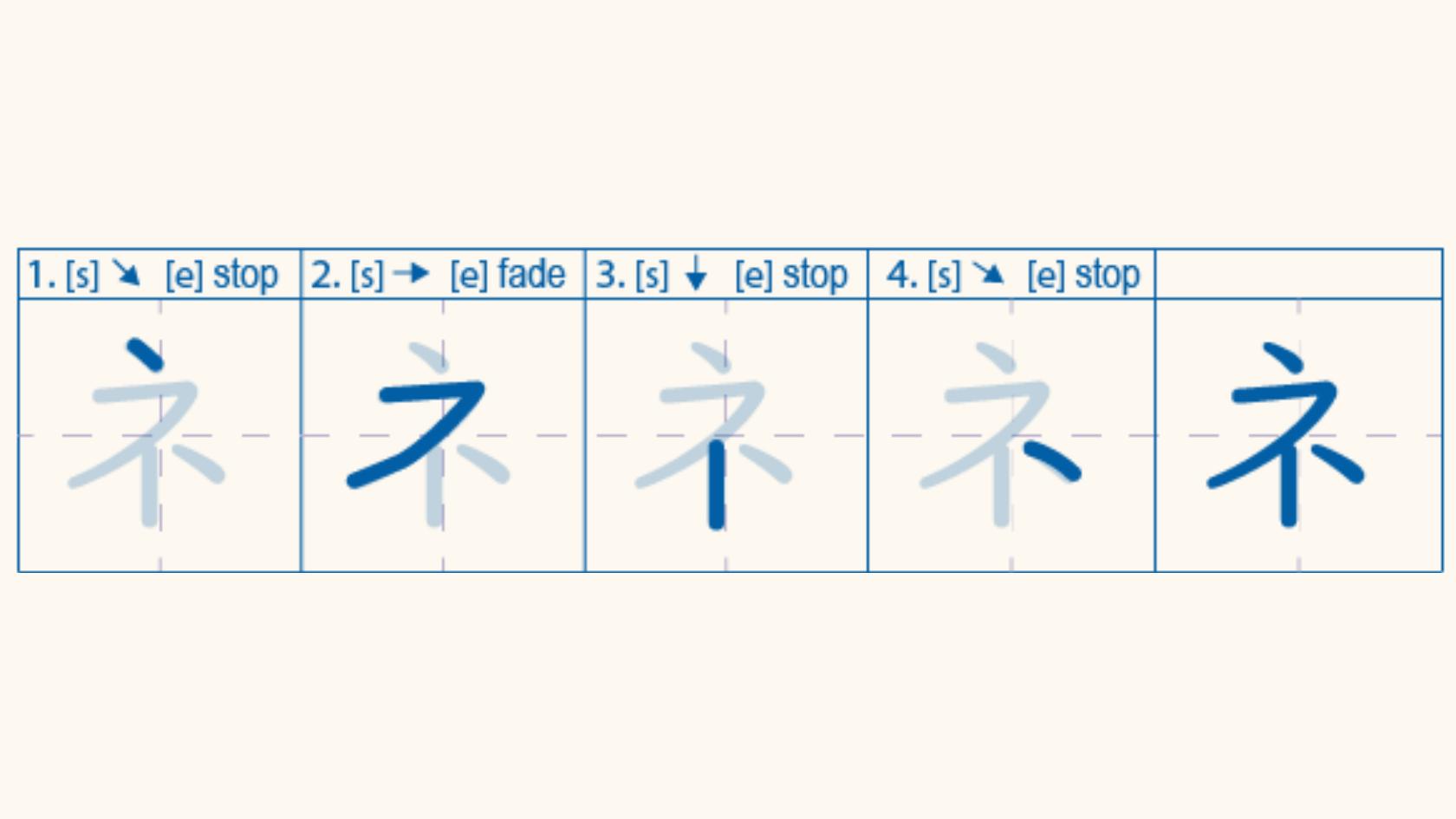
ネ (ne): 4 strokes. First: a horizontal. Second: a vertical crossing it. Third: a short diagonal to the left. Fourth: a short diagonal to the right at the bottom.
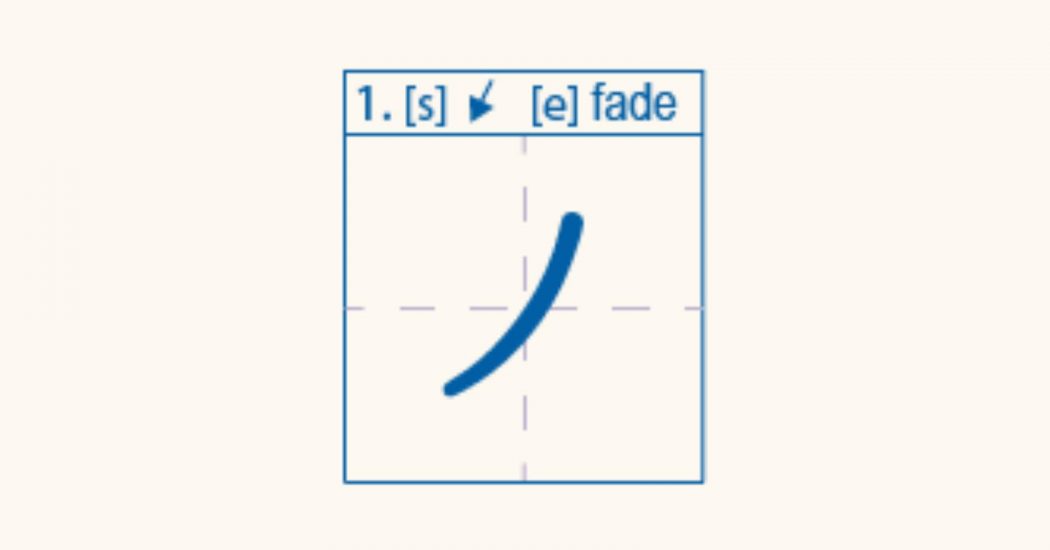
ノ (no): 1 stroke. A single sweeping diagonal from upper left to lower right, curving at the bottom.
H-row: ハ ヒ フ ヘ ホ
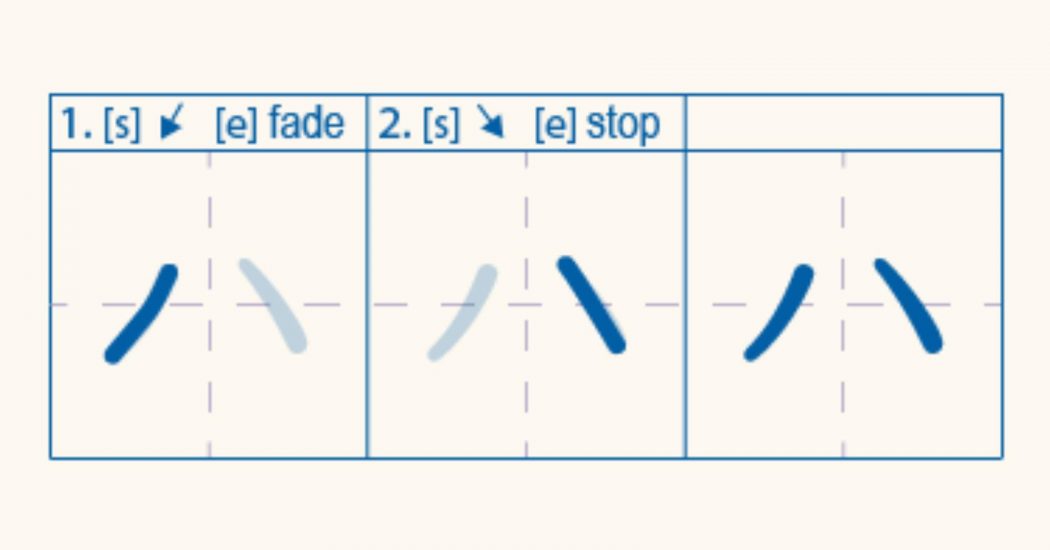
ハ (ha): 2 strokes. First: a left-leaning diagonal. Second: a right-leaning diagonal, slightly longer, forming an open V shape.
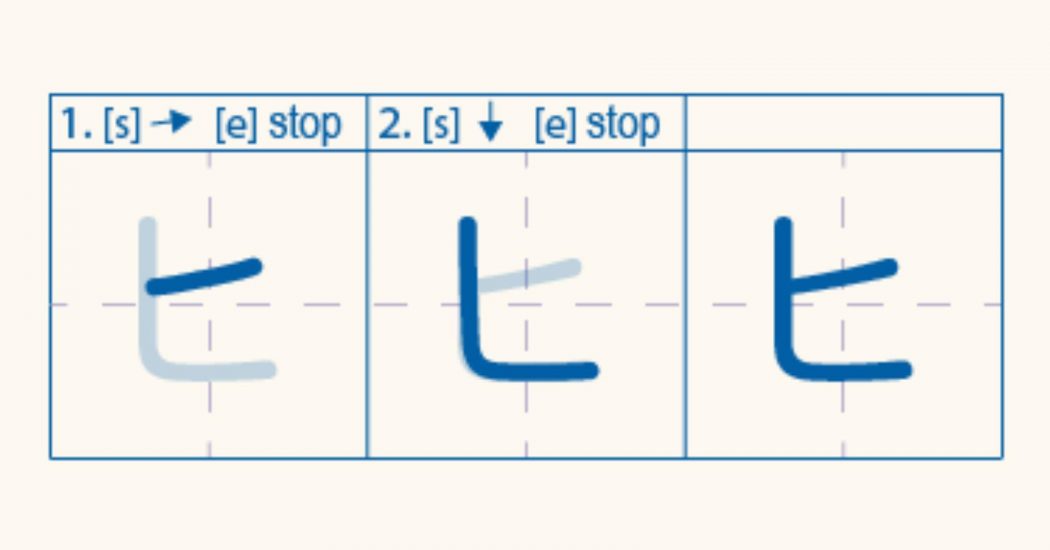
ヒ (hi): 2 strokes. First: a vertical stroke. Second: a horizontal connecting at the top, then another at the bottom.
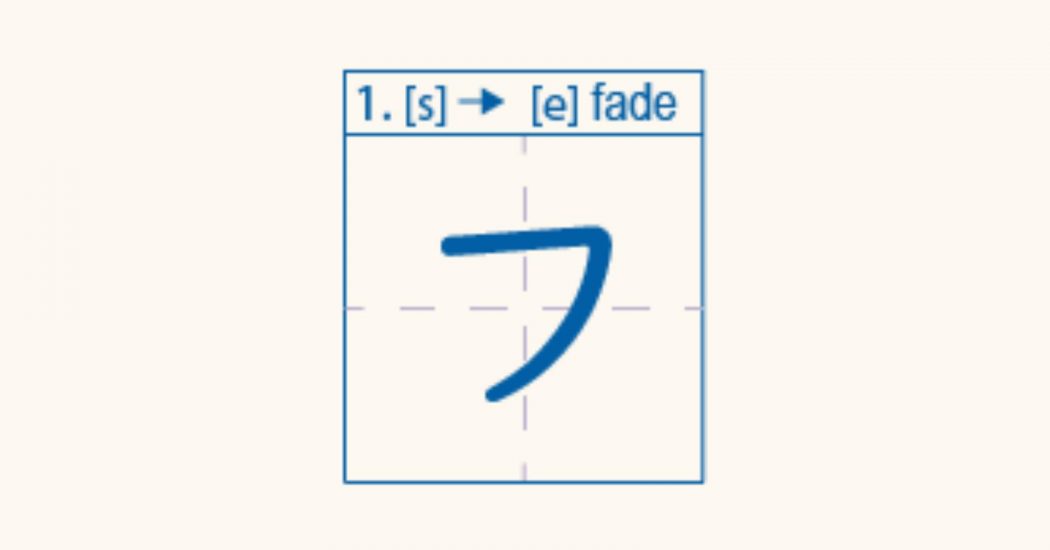
フ (fu): 1 stroke. A single sweeping stroke: horizontal at top, then curving down and sweeping left.
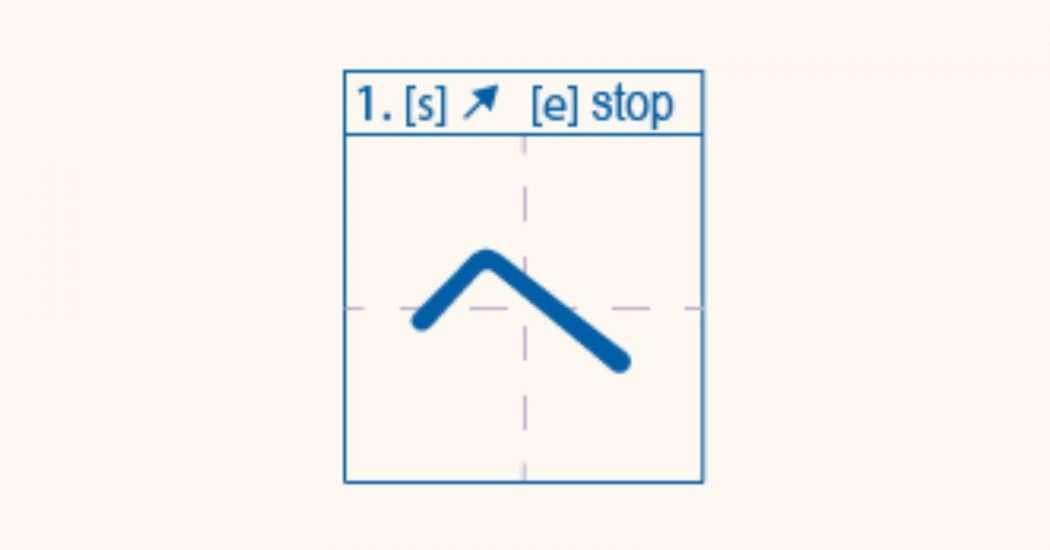
ヘ (he): 1 stroke. A single upward angle – like an inverted V, drawn in one smooth movement.
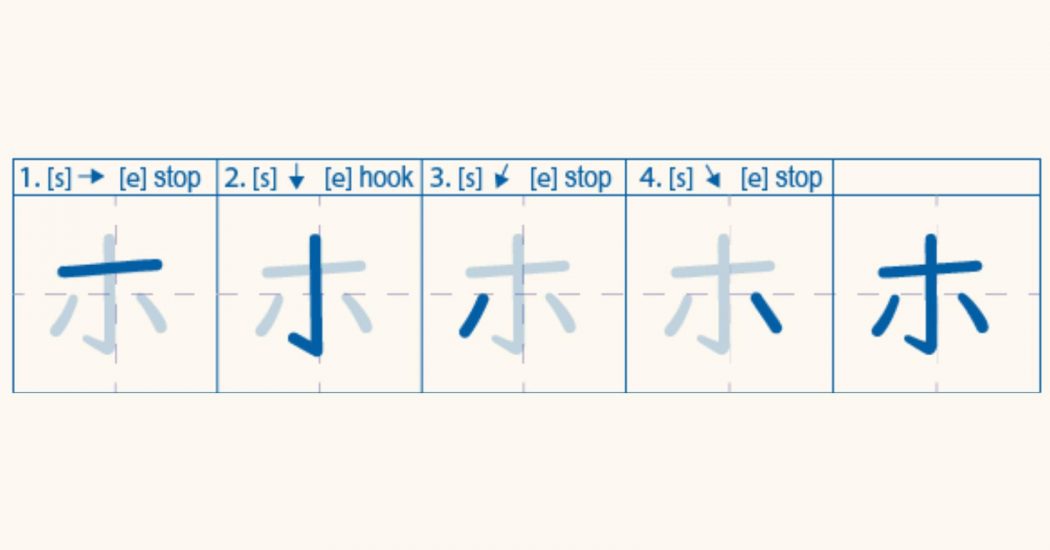
ホ (ho): 4 strokes. First: a horizontal. Second: a vertical crossing it. Third: a short diagonal left. Fourth: a short diagonal right.
M-row: マ ミ ム メ モ
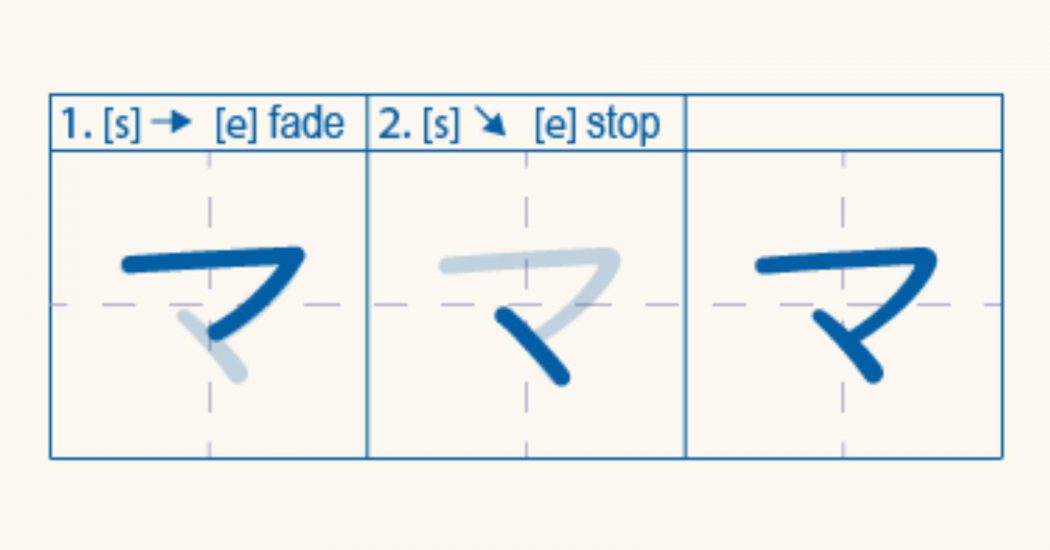
マ (ma): 2 strokes. First: a horizontal. Second: a diagonal dropping from the right end, sweeping left at the bottom.
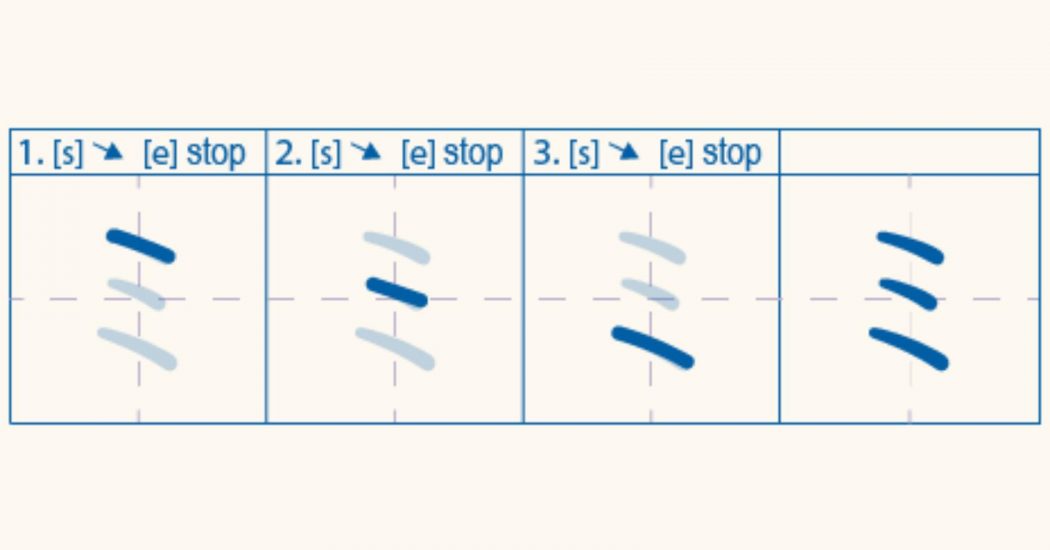
ミ (mi): 3 strokes. Three horizontal strokes stacked, each slightly longer than the one above. Short, medium, long.
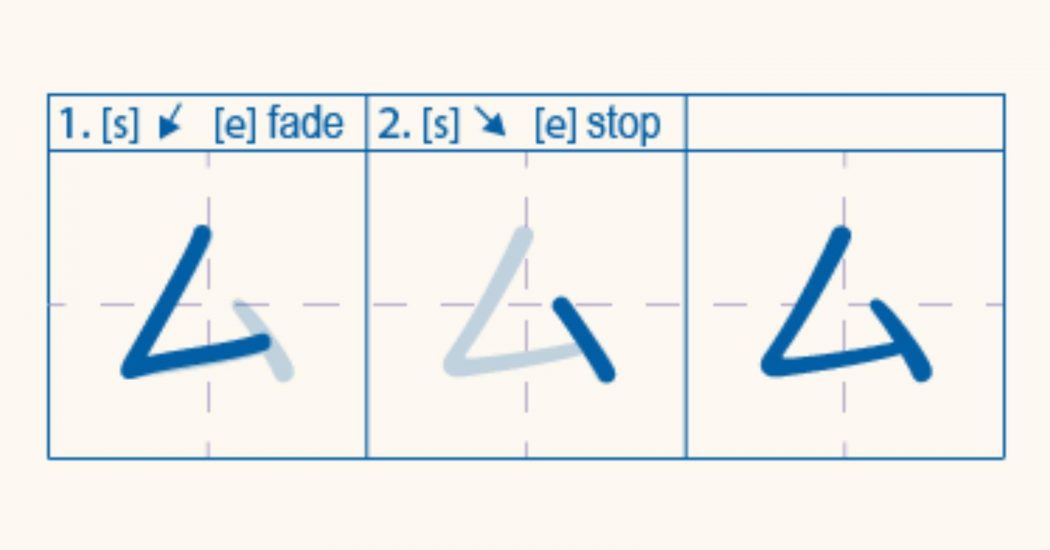
ム (mu): 2 strokes. First: a short angular stroke at the top. Second: a curved stroke sweeping from upper left downward and looping back right.
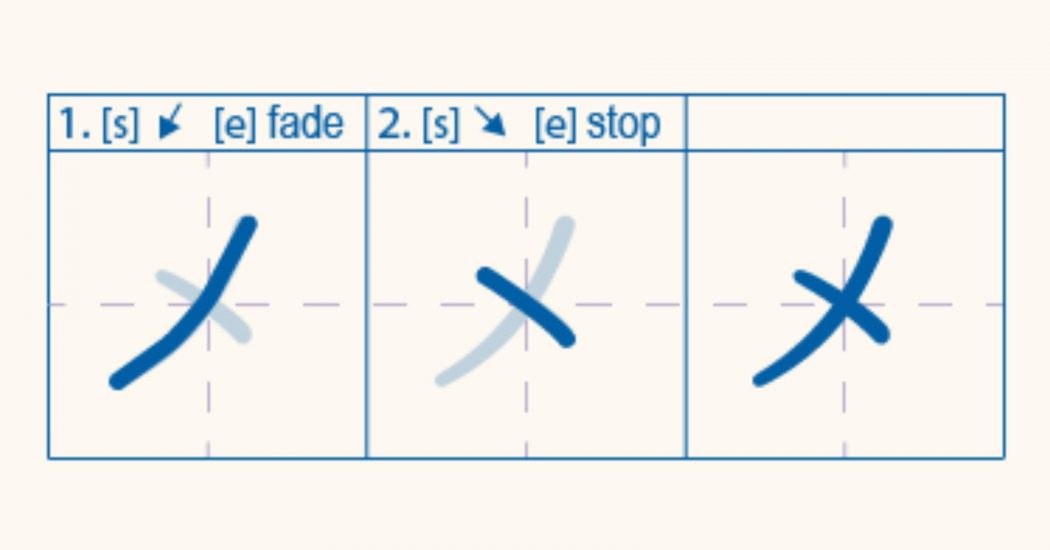
メ (me): 2 strokes. First: a diagonal from upper left. Second: a crossing diagonal from upper right, hooking left at the bottom.
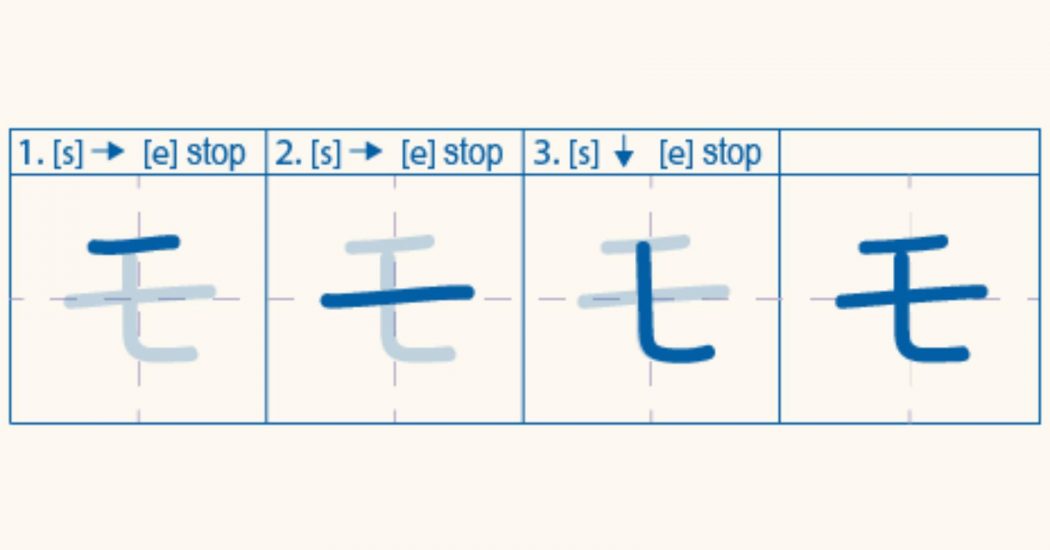
モ (mo): 3 strokes. First: a short horizontal. Second: a longer horizontal below, with a vertical dropping from it. Third: a horizontal at the bottom.
Y-row: ヤ ユ ヨ
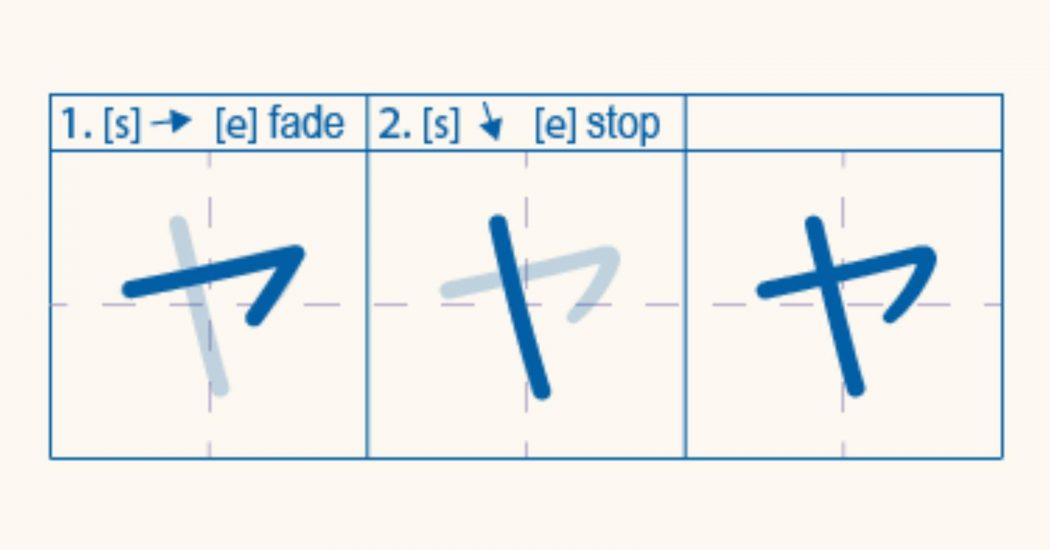
ヤ (ya): 2 strokes. First: a short diagonal to the left. Second: a longer stroke going right then curving under and to the right.
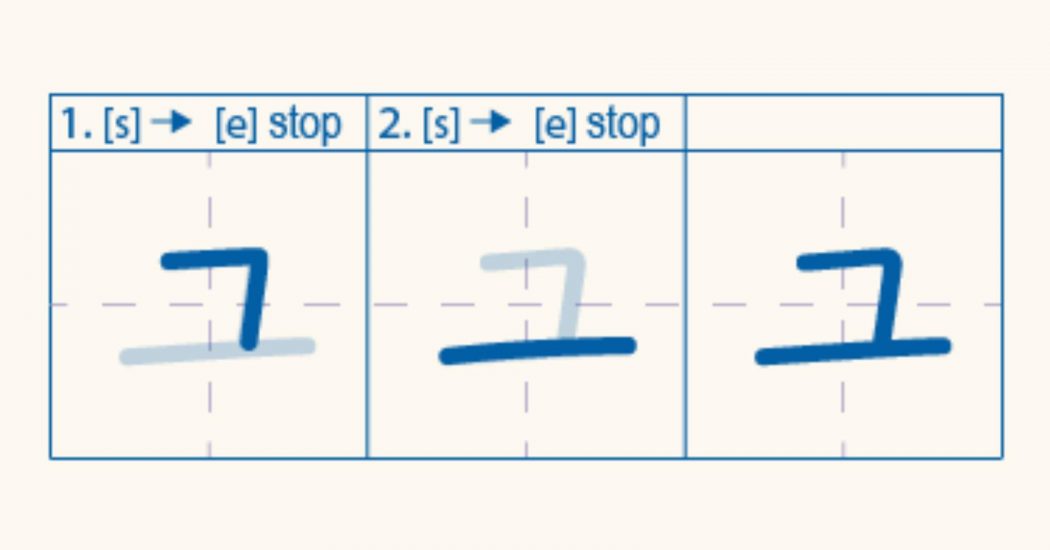
ユ (yu): 2 strokes. First: a short horizontal at top right and a vertical. Second: a longer horizontal at the bottom.
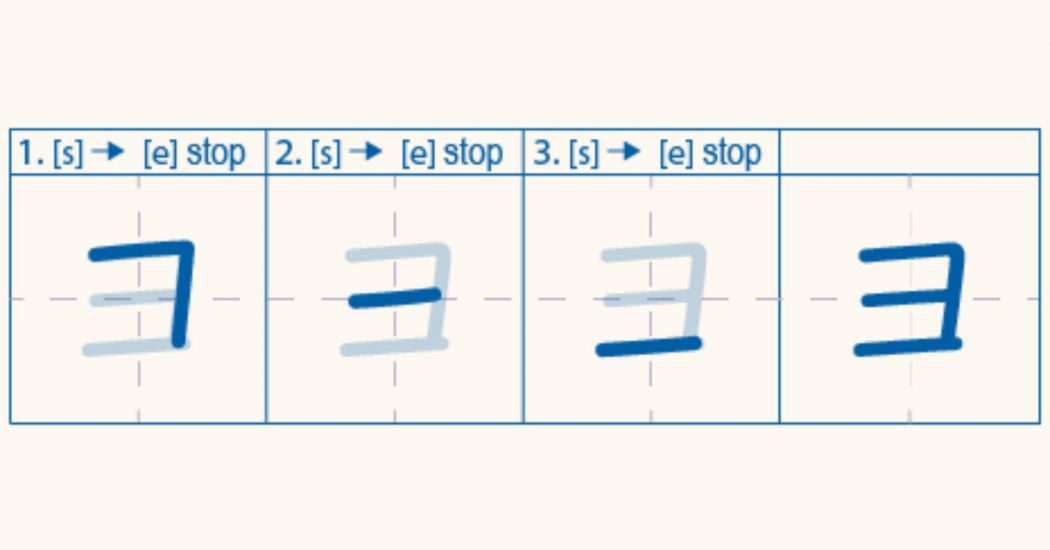
ヨ (yo): 3 strokes. First: a horizontal at top. Second: a vertical on the right, with a horizontal in the middle connecting to it. Third: a horizontal at the bottom.
R-row: ラ リ ル レ ロ
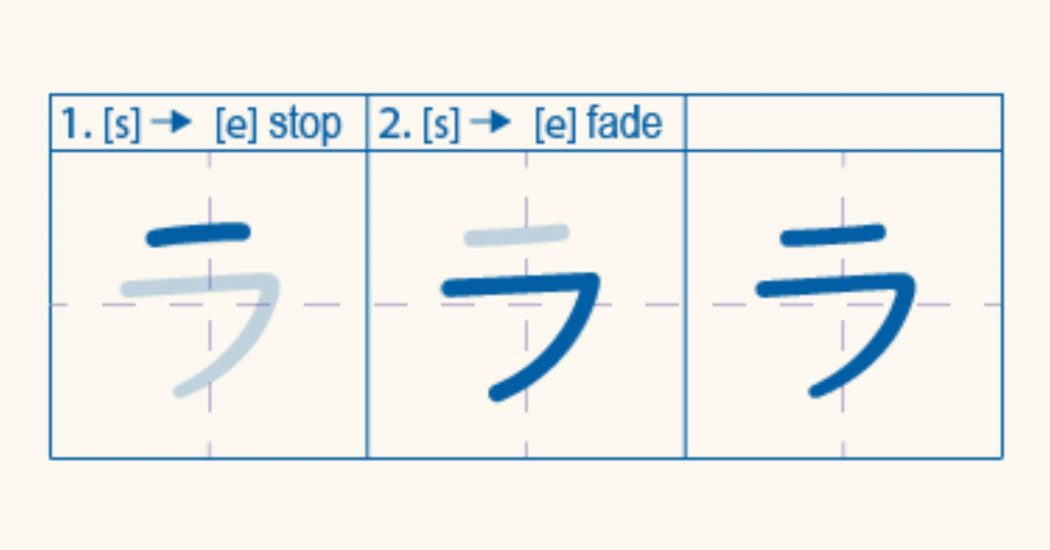
ラ (ra): 2 strokes. First: a horizontal. Second: a stroke dropping from the center, curving left and sweeping out.
リ (ri): 2 strokes. First: a short vertical with a hook right. Second: a longer vertical, straight.
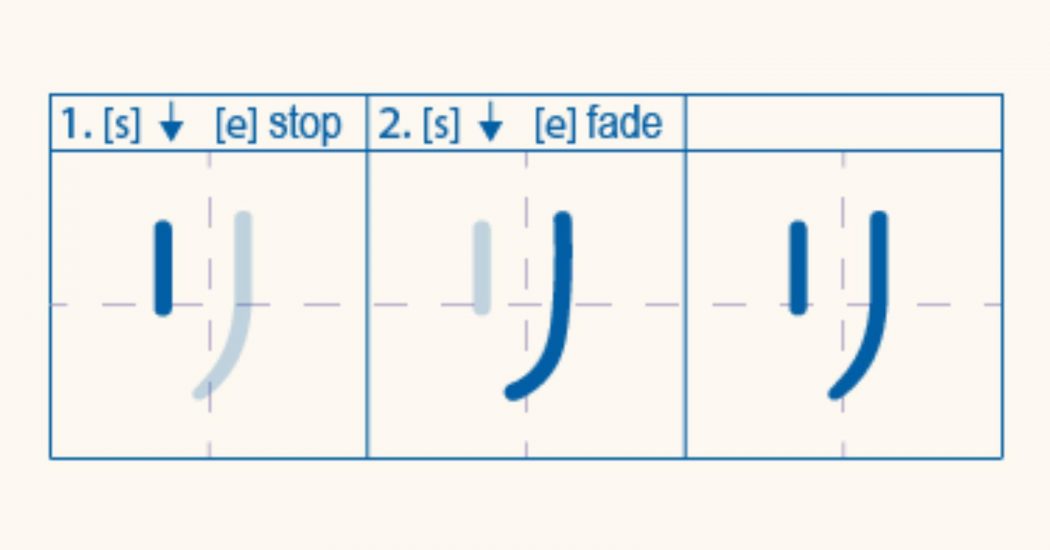
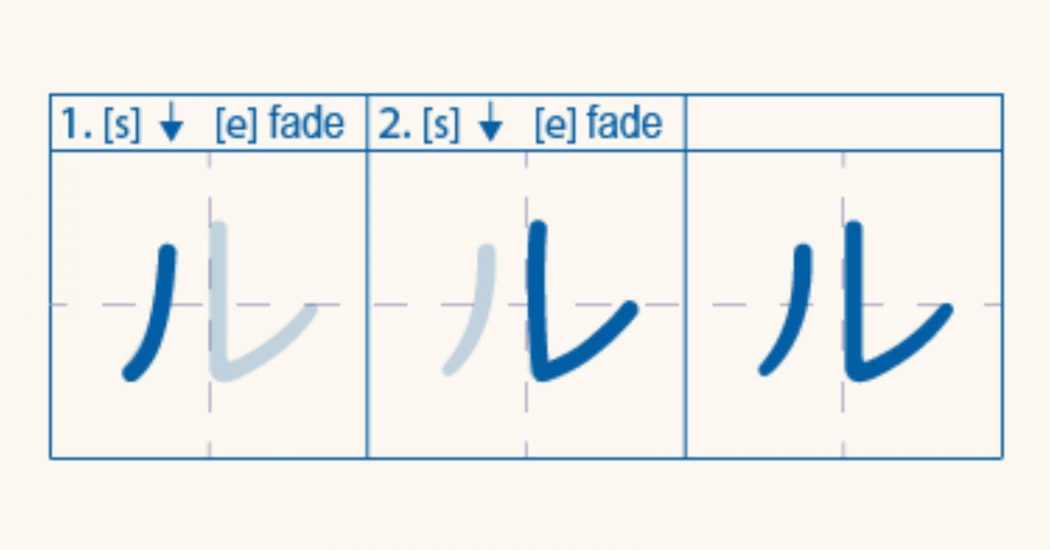
ル (ru): 2 strokes. First: a short vertical. Second: a stroke that angles right then curves back left and sweeps right again at the bottom.
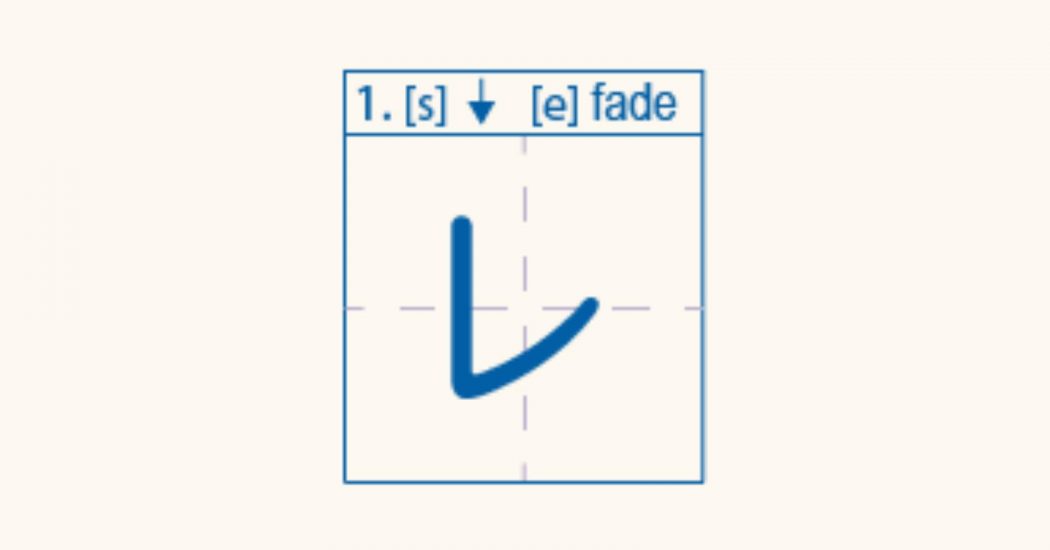
レ (re): 1 stroke. A single stroke: down then turning right and curving upward at the end.
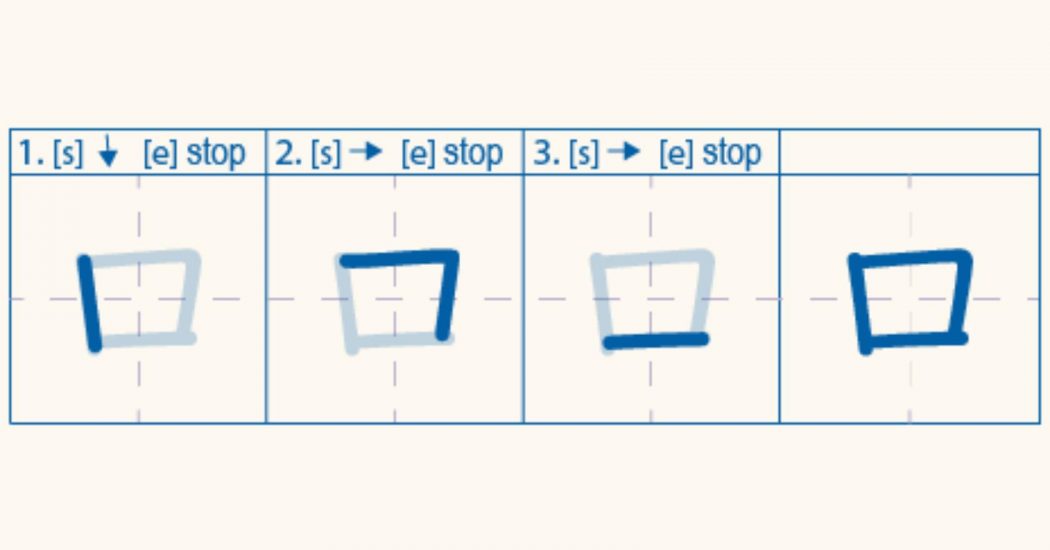
ロ (ro): 3 strokes. First: a horizontal at top. Second: a vertical on the left. Third: a stroke forming the right side and bottom, connecting back.
W-row + ン: ワ ヲ ン
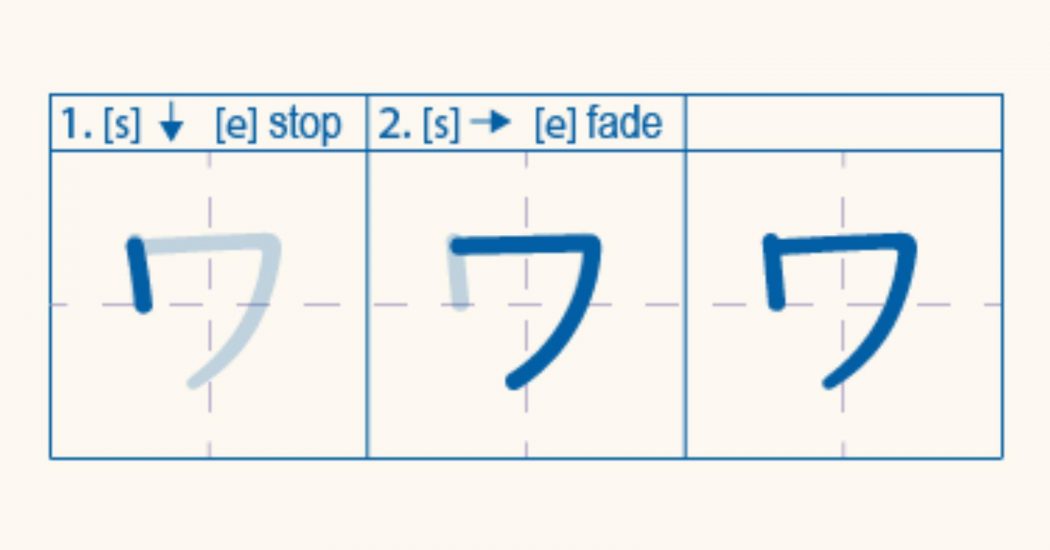
ワ (wa): 2 strokes. First: a horizontal. Second: a vertical dropping from the right end, curving left at the bottom.
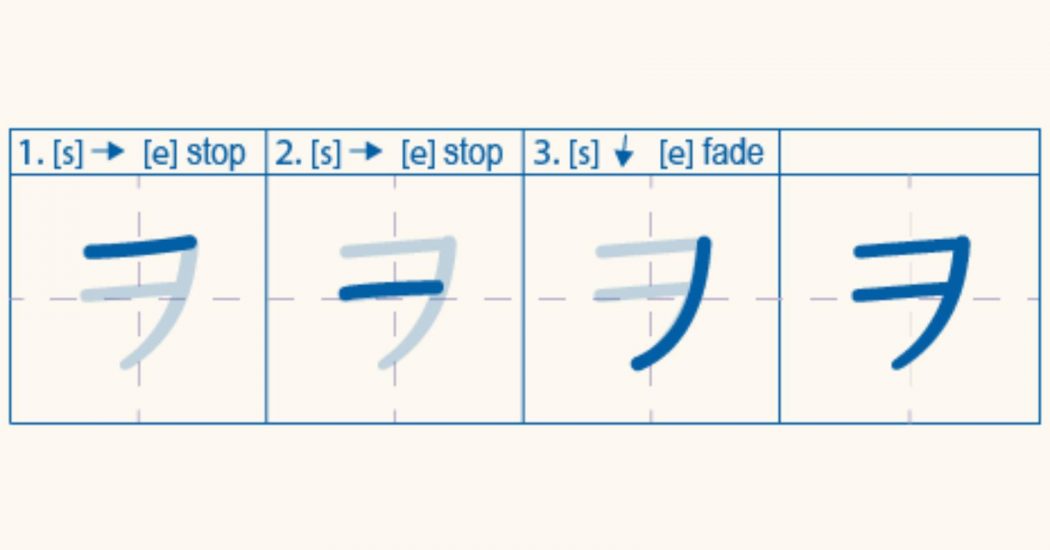
ヲ (wo): 3 strokes. First: a horizontal at top. Second: a short horizontal below it and to the right. Third: a sweeping stroke dropping from the upper area.
ン (n): 2 strokes. First: a short diagonal to the lower right. Second: a longer stroke arcing from left, curving inward and hooking upper left. Remember: leftward hook at the end — opposite of ソ.
How to Practice After Studying the Chart

Now you have the complete katakana chart with stroke order. However, reading about strokes is only the first step. Writing them is where the learning actually happens.
Start by writing each character five times in the correct stroke order. Focus on direction, not speed. Speed comes naturally with repetition. In addition, say the sound out loud as you write — this links the phonetic value to the written form, which dramatically speeds up recognition.
After each row of five characters, pause and test yourself. Cover the chart and write the row from memory. This active recall approach beats passive copying every time. For a structured way to drill each row, MochiKana builds quiz sessions around exactly this approach — short, frequent, and spaced so your memory has time to settle.
Furthermore, practice the confusing pairs deliberately. Write ソ and ン side by side, then シ and ツ. Compare the final strokes and say each sound. That deliberate contrast fixes the confusion faster than any passive review.
What Comes After Katakana?
Once you finish the katakana chart with stroke order, you have two paths forward — and both are worth taking in parallel.
First, learn some katakana vocabulary. Katakana exists to write foreign words, so almost every English word you already know has a katakana version. コーヒー, レストラン, アイスクリーム — start collecting them. The faster you meet katakana in real words, the faster the characters become permanent.
Second, explore hiragana if you have not already. Hiragana is the rounded, cursive alphabet that handles native Japanese words and grammar. Because hiragana and katakana cover the same sounds, knowing one makes learning the other much faster. Our hiragana learning guide follows the same stroke-by-stroke approach and pairs naturally with this guide.
After both alphabets, kanji waits — roughly 2,136 characters used in everyday Japanese. It sounds daunting. However, Learn Kanji and Japanese Vocabulary teaches kanji alongside vocabulary from the start, so you never study characters in a vacuum. And if you want to see the full picture of how to learn Japanese from the very beginning, that guide maps out the whole journey.
FAQ: Katakana Chart With Stroke Order
Does stroke order really matter for katakana?
Yes — more than most beginners expect. Because correct stroke order shapes muscle memory, it makes your writing faster and more consistent. In addition, it helps you recognise handwritten Japanese, where stroke direction is clearly visible and different from printed fonts.
How many strokes does each katakana character have?
Most katakana characters have 1 to 4 strokes. Simple characters like ノ (no) and フ (fu) have just one stroke. More complex ones like ネ (ne) and ホ (ho) have four. Therefore, katakana is significantly simpler than kanji, which can have 20 or more strokes.
How long does it take to learn all 46 katakana characters?
Most learners who practice daily for 15 to 20 minutes can recognise all 46 characters within one to two weeks. Writing them correctly takes a little longer. Therefore, aim for recognition first, then writing fluency. Our learn katakana guide includes a study plan that fits both goals into a realistic timeline.
What is the difference between katakana and hiragana stroke order?
Both systems follow the same general rules — left to right, top to bottom, horizontals before verticals. However, katakana strokes tend to be sharper and more angular, which makes the direction of each stroke more visually obvious. Because katakana is more angular, beginners often find its stroke order easier to remember than hiragana’s softer curves.
Where can I take a katakana practice quiz after studying the chart?
Kanji123 offers free JLPT kanji tests from N5 to N2, and the broader Mochidemy ecosystem covers kana practice through MochiKana. No account required to start — open the quiz and go.
Ready to Write?
A katakana chart with stroke order is the most practical tool you can use at this stage of learning Japanese. Now that you have the full 46-character breakdown, the next step is simple: pick up a pen and start with the A-row. Write ア five times, say “a” out loud each time, then move on.
The characters that look confusing today will feel obvious in two weeks. In addition, every stroke you practice now builds the foundation for hiragana and kanji later. So start with one row. That is all it takes to begin.
© Kanji123 — Free JLPT Kanji Test Online